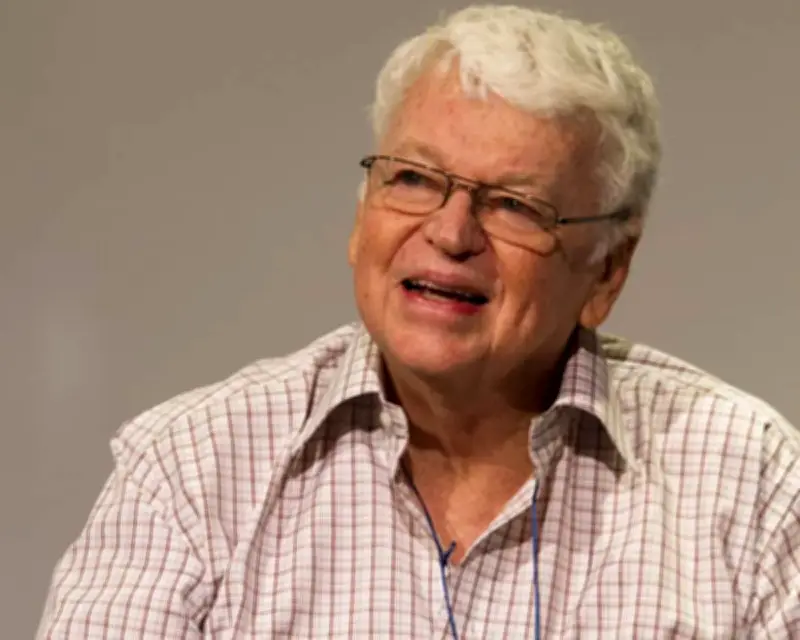
Ian McDonald, the Trinidad-born author and poet whose novel The Humming-Bird Tree is considered a classic of Caribbean literature, has died at the age of 93. His only novel, published in 1969, is set in Trinidad in the late 1940s and tells the story of Alan, a young white boy who befriends Kaiser, his family's yard-boy of Indian extraction, and falls in love with Kaiser's younger sister, Jaillin, who works for Alan's wealthy parents.
A tale of racial boundaries and post-war Trinidad
The novel explores the confusion of mutual attraction and the disapproval of Alan's parents, set against the backdrop of Trinidad's struggle for independence from British rule. Alan's affection for Jaillin leads him to unapproved visits to her village, a vibrant contrast to his stiff home life. Their relationship is forcibly ended after an innocent moonlit tryst. The book is a gently heartbreaking tale about racial boundaries and a haunting evocation of postwar Trinidad, capturing both its beauty and ugliness as it emerges into a new era.
Poet more than novelist
McDonald was more a poet than an author, with eight collections of poetry and appearances in numerous anthologies. His work celebrated the sensuous joy of Caribbean life while acknowledging its darker sides. Jamaican poet Ann-Margaret Lim noted his "caring heart," a quality he shared with contemporaries like Mervyn Morris, Eddie Baugh, and Derek Walcott. Baugh described McDonald's poetry as "irradiated by his celebration of life, his gratitude for happy days and for earth's bounty of joy."
Early life and tennis career
Born in St Augustine, Trinidad, on 18 April 1933, McDonald was the eldest of six children. His father John worked as an agricultural director, and his mother Thelma (née Seheult) was a housewife. He excelled at Queen's Royal College in Port of Spain, both academically and as a tennis player. In 1951, he traveled to the UK to study history at Cambridge University, where he captained the university tennis team and competed at Wimbledon singles championships for several years. He played for the West Indies in their first Davis Cup match in 1953.
Career in Guyana and writing
After Cambridge in 1955, McDonald returned to the Caribbean to work for the Booker group in British Guiana (now Guyana), managing sugar estates. He eventually considered himself "Trinidadian by birth, Guyanese by adoption." His writing career began with the poem Jaffo the Calypsonian in 1955, followed by others like The Stick-Fighters and The Cane-Cutter, which celebrated ordinary folk and appeared in Caribbean literary magazines. He also wrote short stories and a one-act play, The Tramping Man, first performed in 1969.
Success of The Humming-Bird Tree
In 1969, The Humming-Bird Tree won the Royal Society of Literature's Ondaatje prize (then the Winifred Holtby Memorial Prize) and became a set text in schools across the Caribbean. The novel's success boosted interest in his poetry, leading to his first collection in Guyana. In 1975, Faber & Faber included 11 of his poems in Poetry Introduction series. Collections followed, including Essequibo (1992) and Jaffo the Calypsonian (1994). The novel was adapted into a film in 1992, directed by Noella Smith for the BBC Screen One series, starring Tom Beasley and Desha Penco.
Later poetry and career
Later collections include Mercy Ward (1998), inspired by visits to dying patients, Between Silence and Silence (2003), and The Comfort of All Things (2012). He also edited anthologies like The Heinemann Book of Caribbean Poetry in English (1992) and They Came in Ships (1998). A selection of his newspaper columns was published as A Love of Poetry (2014), followed by An Abounding Joy (2019). McDonald continued in the sugar industry through nationalization, retiring as chief executive of the Sugar Association of the Caribbean in 2007. He later served on a panel for the West Indies Cricket Board.
Personal life and death
McDonald is survived by his second wife, Mary (née Callender), whom he married in 1983, their two children, Jamie and Darren, and a son, Keith, from his first marriage to Myrna Foster, which ended in divorce. He died on 24 July 2026. His New and Collected Poems (2018) included verse written in his 80s, reflecting on the ephemeral nature of life with greater urgency. In the opening poem to Mercy Ward, he wrote that death comes "sudden/quick as light/skin shine/then bone white."