Paleontologists have made a groundbreaking discovery using an ice age fossil that was excavated 120 years ago from an underground cave in Victoria. The fossil, which had been stored in museum collections for over a century, has finally revealed that extinct giant echidnas once roamed the region, filling a significant gap in the fossil record.
The Hidden Fossil in Plain Sight
Tim Ziegler, the collection manager of vertebrate paleontology at the Museums Victoria Research Institute, made the remarkable find while sorting through a tray of unsorted fossils. The skull fragment, originally excavated in 1907 from Foul Air Cave in the Buchan cave complex of East Gippsland, had been overlooked for decades, possibly mistaken for a small kangaroo bone.
"I remember plucking out this one bone fragment, which isn't much longer than your finger," Ziegler recalled. "It was just one among many – I think it had probably been mistaken for a hind limb of a small kangaroo."
Identifying the Giant Echidna
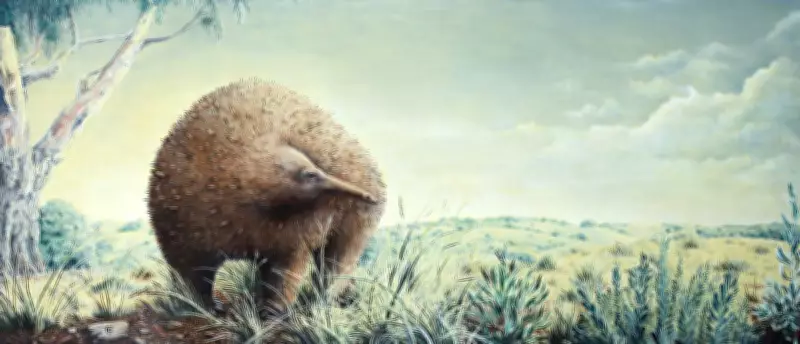
Ziegler noticed key features that set the fossil apart: its symmetry, the arch of a palate, and internal spaces that would have facilitated breathing. "These basic features said to me: this is an echidna beak, and it's huge," he explained. The fossil belonged to the Owen's giant echidna, Megalibgwilia owenii, a species that lived during the Pleistocene epoch, which began 2.5 million years ago.
This extinct monotreme grew to about 1 metre in length and weighed up to 15kg, making it roughly twice the size of modern Australian echidnas. While specimens had been found across Australia, from Western Australia to Tasmania, they were mysteriously absent from Victoria's fossil record until now.
Confirming the Discovery
Ziegler first identified the fossil in 2021, but confirming the discovery required extensive work. This included 3D scans of modern and fossil echidna specimens from museum collections nationwide. "I knew what I was looking at in an instinctive sense, but then the job is to document it, to demonstrate it and to prove it," he said.
Using historical archives, Ziegler traced the specimen back to museum officer Frank Spry, who collected it during an expedition to Foul Air Cave over a century ago. The research has been published in Alcheringa: An Australasian Journal of Palaeontology, providing scientific validation for the find.
Filling the Distribution Gap
The identification of the Buchan specimen fills a 1,000km gap in the known distribution of the species. Giant echidna fossils have been found in New South Wales since the 1860s, as well as in South Australia, Western Australia, and Tasmania, which was likely connected by a land bridge during the ice age.
"The earliest collected fossils are from New South Wales in the 1860s," Ziegler noted. "Since then, they've been located in south-west Western Australia, at the Mammoth Cave, for example, and in the Naracoorte region in South Australia."
Lifestyle and Habitat of the Giant Echidna
The Owen's giant echidna was comparable in size to the long-beaked echidnas (Zaglossus) found in New Guinea today, but its skeleton was more robust. "Its bones, particularly in the limbs, have deeper, more prominent muscle scars and larger attachments for ligaments that showed it was using much greater force when it interacted with the landscape," Ziegler explained.
This suggests the giant echidna was a powerful digger, possibly foraging for buried larvae, larger prey like beetles or bogong moths, or even tearing tree bark to access food. The discovery in Victoria's historically temperate and forested habitat raises questions about why these animals were previously thought to be absent from the region.
"It turns out they were there all along. And we just needed the right moment to recognise their presence," Ziegler concluded, highlighting the importance of re-examining historical collections in paleontology.