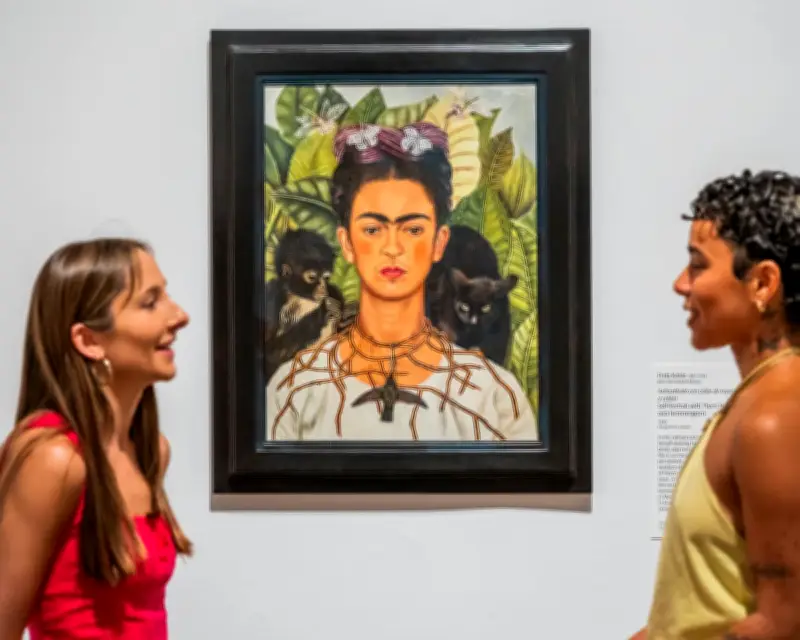
Tate Modern's new exhibition, Frida: The Making of an Icon, has already become a record-breaking success before its official opening. With more than 50,000 advance tickets sold, it is the highest pre-selling show in Tate history, surpassing David Hockney's 2017 exhibition. The show explores what curators call 'Fridamania' — the phenomenon of Frida Kahlo's transformation from a little-known Mexican artist into a global cultural icon.
From Obscurity to Global Phenomenon
During her lifetime, Kahlo lived in the shadow of her husband, the painter Diego Rivera. However, her posthumous fame has skyrocketed. Last year, the sale of one of her self-portraits broke the record for the most expensive work by a female artist. But her image is not confined to galleries. More than 100,000 objects bearing her face are available for purchase online, ranging from candles to sanitary towels to a controversial Barbie doll, which features a whiter complexion and a toned-down monobrow. This doll also appears at the Design Museum's Barbie: The Exhibition in Glasgow.
The Meaning of Icon
Icon is an overused term, but for Kahlo, who died at age 47 in 1954, it is fitting. Her many self-portraits draw on Mexican devotional art, and her image is venerated as a symbol of political defiance and personal freedom. Over time, her feminism, gender fluidity, and disability have made her a figurehead for marginalised audiences. According to the exhibition, Kahlo's influence has supplanted even Che Guevara's as a symbol of rebellion.
Artistic Legacy
Kahlo's impact extends beyond commercial merchandise. Tracey Emin's retrospective A Second Life, showing on the same floor at Tate Modern, demonstrates Kahlo's influence on contemporary art. Like Kahlo, Emin uses her own life as raw material, exploring themes of abortion, miscarriage, sickness, and heartbreak. 'This is mine, I own it,' Emin said after surgery for cancer. Next month, an exhibition of pioneering Cuban artist Ana Mendieta, a champion of female artists of colour and a Frida fan, will join these blockbusters at Tate Modern.
The Thin Line Between Art and Merchandising
The exhibition raises questions about when an icon becomes a brand. Andy Warhol painted both Monroe and Barbie, blurring the lines between canonisation and commercialisation. Cristina Kahlo, the artist's great-niece, recently commented on the ethics of Kahlo kitsch: 'Frida can't give her opinion and say, I like this, I don't like that.' Similarly, Marilyn Monroe, celebrated at the National Portrait Gallery for what would have been her 100th birthday, struggled with commodification. 'I don't look at myself as a commodity, but I'm sure a lot of people have,' she said shortly before her death.
Transcending Victimhood
Despite endless appropriation, these artists were creators of their own iconography. Through their work, they transcended victimhood to become heroic. This is why they have such ardent followings. But their iconic status should not eclipse their artistic achievements. As the exhibition suggests, the true legacy of Kahlo lies not in the merchandise but in the enduring power of her art to inspire and challenge.