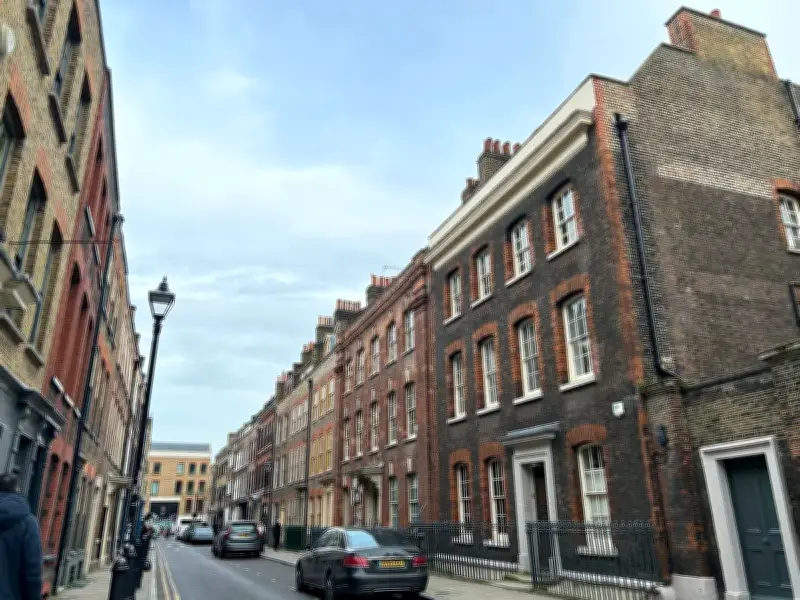
Hidden in the shadow of Christ Church's soaring spire, between Commercial Street's McLaren-emblazoned scaffolding and Brick Lane's thriving curry restaurants, lies Fournier Street in Spitalfields, Tower Hamlets—a London thoroughfare where time appears to have frozen. This captivating road features 18th-century houses with uniform windows and chimney stacks clustered together, forming one of Britain's finest-preserved collections of early Georgian domestic townhouses.
A Street Preserved in Time
Fournier Street serves as a centre for restoration and conservation, with Instagram models photographing themselves against elegant wooden door cases being the sole indication we're in the 21st century—well, that and the Gherkin peeking out from behind the chimneys. The thoroughfare takes its name from Huguenot George Fournier and was chiefly inhabited by Huguenots (Calvinist Protestants fleeing persecution in France) during the 1700s.
Their silk-weaving expertise converted numerous properties into workshops—legend even has it that the silk for Queen Victoria's Coronation gown was woven at number 14. This charming street held considerable importance in the history of the East End's rag trade.
From Silk Weaving to Fashion Hub
Nowadays, fashion devotees use Fournier Street as a historic shortcut to Brick Lane's market stands and boutiques, frequently spotted carrying thin white bags filled with hand-painted denim jackets and vintage flares on their way back. At the Commercial Street end of Fournier Street, you'll find the Ten Bells pub, a venue steeped in history and notorious as the last sighting of Jack the Ripper's final victim.
In the very heart of Spitalfields, the old and the new merge effortlessly. Nearby, artists and chefs are busily conjuring up culinary treats, including apple crumble, at the thriving market. You could stroll past Fournier Street on numerous occasions without ever registering its remarkable historical significance.
Historic Significance and Modern Life
The street's preservation stands as a testament to Spitalfields' layered history, from Huguenot refugees to the rag trade to today's vibrant market culture. Its Georgian architecture, protected and maintained, offers a tangible link to 18th-century London, while its location—sandwiched between modern developments and bustling commercial areas—highlights the contrast between old and new. For visitors and locals alike, Fournier Street remains a unique destination, blending historical depth with contemporary urban life, and its legacy continues to attract those interested in London's rich heritage.