Face of a 'Vampire' Reconstructed After Centuries-Old Ritual
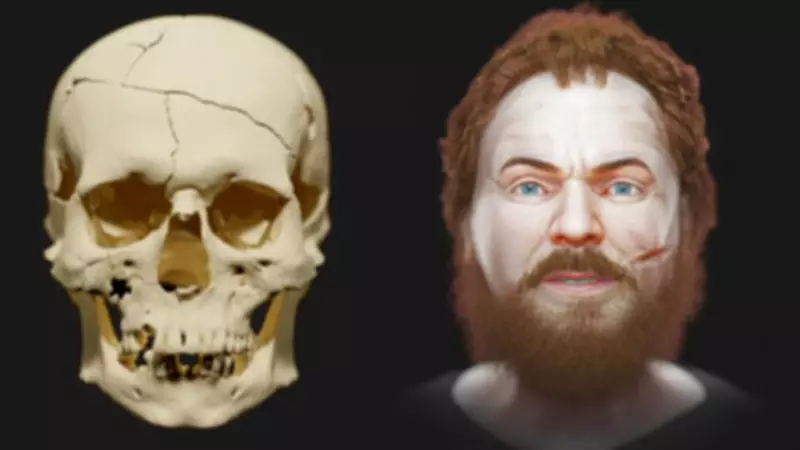
For the first time in over 400 years, the face of a man whose remains were subjected to posthumous mutilation to stop him returning as a vampire has been revealed through scientific reconstruction. Discovered in a grave at Racesa fortress in eastern Croatia, the body had been exhumed, beheaded, and reburied face down under heavy stones, a practice experts attribute to anti-vampire beliefs prevalent in the region during the 15th or 16th century.
Violent Life and Fearsome Death
Archaeologist Natasa Sarkic, part of the excavation team, explained that the fear this man inspired in death likely stemmed from his turbulent life. Bioarchaeological analysis indicates he frequently engaged in violent conflicts and died a violent death, experiencing at least three serious episodes of interpersonal violence. One attack left his face disfigured, potentially causing fear and social exclusion. Before recovering from the penultimate trauma, he sustained a fatal head wound.
Dr Sarkic noted, "Individuals who died violently, behaved violently in life, or were considered socially deviant were believed at risk of becoming vampires. His facial disfigurement and marginal lifestyle, marked by repeated violence, may have led to him being viewed as a supernatural threat." In Slavic tradition, the soul remains attached to the body for about 40 days after death, during which preventative measures like staking, burning, or beheading were used to avert vampiric returns.
Scientific Reconstruction Process
To rebuild his likeness, graphics expert Cicero Moraes used data from a CT scan to virtually reconstruct the skull, which was fragmented but recoverable. Techniques included plotting facial feature placement and soft tissue thickness from living donors, and anatomical deformation, where a donor's head is adjusted to match the skull. This produced an objective face based solely on skull shape, without subjective elements like hair or skin tone.
A second, more artistic version added speculative features for a lifelike recreation. Mr Moraes described the result as "hostile, threatening," with facial scars highlighting a turbulent existence. The man was roughly 5ft 4in tall, aged 40-50 at death, and may have been a soldier or someone accustomed to violence. His grave, found in 2023 among over 180 burials at the fortress 70 miles southeast of Zagreb, was in a disfavoured spot along a church wall, with evidence suggesting his head was pulled off rather than cut.
Broader Context of Vampire Beliefs
This case reflects wider European vampire folklore. In Serbia, Petar Blagojevic was staked and burnt in 1725 as a suspected vampire, while Croatian villager Jure Grando Alilovic, who died in 1656, is historically recorded as a vampire. Racesa itself was occupied by the Templars, Knights Hospitaller, and local nobility, adding to its historical intrigue. The study, published in OrtogOnLineMag, underscores how science can illuminate ancient fears and rituals, offering a glimpse into a past where the line between life and supernatural threat was perilously thin.