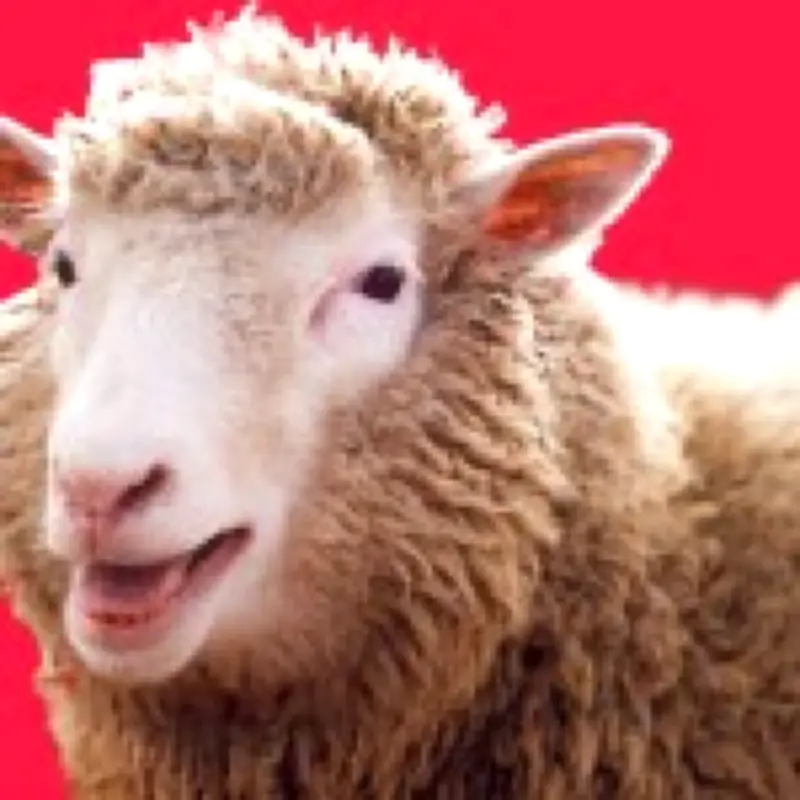
Dolly the sheep, born on July 5, 1996, at Edinburgh University's Roslin Institute, became the first mammal cloned from adult DNA, a breakthrough that reshaped science and ignited global ethical debates. Known initially as 6LL3, she was cloned from a mammary gland cell of a Finn Dorset sheep using somatic cell nuclear transfer, proving that clones could be made from adult cells, not just embryonic ones.
The birth of Dolly and media frenzy
Led by Professors Ian Wilmut and Keith Campbell, the team kept Dolly hidden for months until The Observer broke the story in February 1997. Embryologist William Ritchie, who witnessed her birth, recalls: 'By Monday the car park at the Roslin Institute was full of vans with dishes. People had flown in from America in 24 hours to get the story.' Dolly, named after Dolly Parton, became a media sensation, charming visitors with her habit of demanding edible gifts. 'She was a real madam – if you didn't bring something to eat, she'd turn her back on you,' Ritchie says.
Scientific and ethical impact
While the public adored Dolly, scientists initially doubted the cloning, and politicians reacted swiftly. U.S. President Bill Clinton asked Congress for a ban on federal funds for human cloning. However, the Roslin Institute's goal was disease research, not human cloning. Dolly's birth later inspired Shinya Yamanaka's work on induced pluripotent stem cells, winning him the Nobel Prize in 2012. 'His work would have never come about if it weren't for Dolly,' Ritchie notes.
Commercial pet cloning
Cloning has since expanded to pets and horses. Texas-based ViaGen Pets offers cat and dog cloning for $50,000 and horse cloning for $85,000. Clients include Barbra Streisand, who cloned her dog Sammie, and Paris Hilton, who cloned her chihuahua Diamond Baby. Ritchie warns that clones may not behave or look like the original. 'There's a good chance the clone won't behave or look like its host,' he says.
Dolly's legacy and memorial
Dolly died on February 14, 2003, at age six from a lung infection common in indoor sheep. She gave birth to six healthy lambs and was preserved via taxidermy. Today, she resides at the National Museum of Scotland, rotating in a glass case. Museum curator Dr. Andrew Kitchener says, 'You see lots of people queuing up to take selfies with her. People are often asking: 'is that really her?'' Dolly remains a beloved exhibit, symbolizing a scientific first that continues to inspire.