The Docklands Bombing: Thirty Years Since the Attack That Changed Peace Negotiations
Three decades have passed since a devastating explosion rocked London's Docklands, shattering an 18-month ceasefire and altering the course of Northern Ireland's peace process. On 9th February 1996, at precisely 7:01 pm, a massive bomb detonated near South Quay DLR station, marking the Provisional IRA's violent return to mainland Britain and demonstrating their determination to force political concessions through terror.
The Fateful Evening at Canary Wharf
As dusk settled on that cold, overcast Friday afternoon, a blue Ford Iveco Cargo truck sat parked just 80 yards from South Quay station where Marsh Wall crosses the DLR tracks. Unbeknownst to authorities, the vehicle contained a monstrous 3,000lb explosive device constructed with chilling precision. Plastic sacks filled with ammonium nitrate and sugar had been packed around metal scaffolding poles containing 10lb of Libyan-supplied Semtex, all controlled by a two-hour timer activated from the cab.
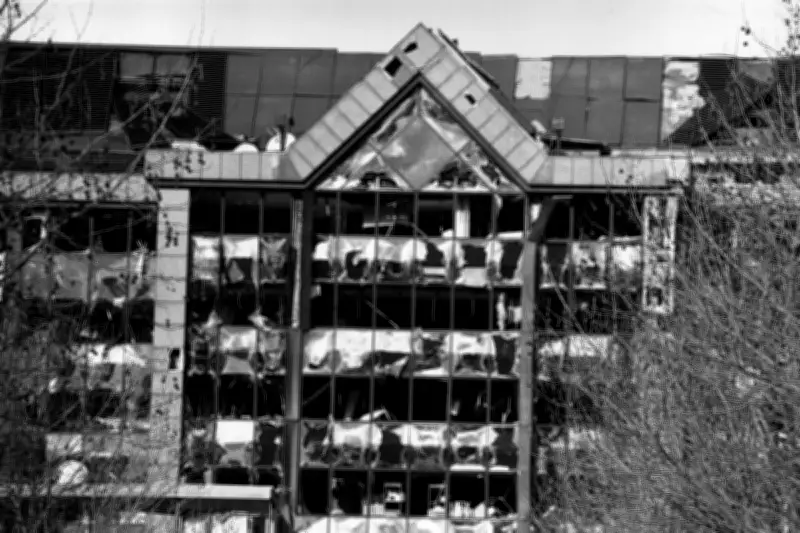
When the bomb exploded, its force proved both enormous and viciously destructive. The blast created a crater measuring 32 feet across and 10 feet deep, with shockwaves felt across London that rattled One Canada Square – then Britain's tallest building at 771 feet – from half a mile away. The explosion instantly killed two men, Iman Bashir and John Jeffries, who were standing outside Bashir's newsagency nearby. Their bodies were blown through two walls before being buried under rubble.
The Ceasefire That Couldn't Hold
The Provisional IRA's ceasefire, announced on 31st August 1994 and followed by Loyalist paramilitaries six weeks later, had lasted 17 months and nine days. This cessation of violence had been predicated on the understanding that Sinn Féin, the IRA's political wing, would be included in multi-party talks about Northern Ireland's future. However, by early 1996, negotiations had reached an impasse over the critical issue of decommissioning paramilitary weapons.
Sir Patrick Mayhew, who had replaced Peter Brooke as Northern Ireland Secretary, insisted that agreeing to begin disarming would be a precondition for Sinn Féin's participation in talks. Republicans viewed this demand as an unacceptable sign of defeat, while Unionists refused to negotiate with political representatives of armed groups without at least token gestures toward decommissioning. With Prime Minister John Major's parliamentary majority virtually gone and reliant on nine Ulster Unionist MPs to maintain control of the Commons, the political deadlock appeared unbreakable.
The Journey to Destruction
The bomb's journey to London began days earlier when Seamus McArdle of the South Armagh Brigade drove the Ford Iveco from Northern Ireland to Scotland via the Larne-Stranraer ferry. After another 300-mile journey to Barking, the vehicle made its final short trip to South Quay on 9th February. At 5:30 pm that evening, the PIRA released a statement to Irish broadcaster RTE announcing they would end their ceasefire at 6:00 pm "with great reluctance."
Despite at least six coded warnings being sent – including one to The Irish News stating "there's a massive bomb beside South Quay station, Marsh Wall, Isle of Dogs, London. Evacuate immediately" – confusion over the bomb's precise location and some police officers' belief that it might be a hoax meant the truck wasn't located until 6:48 pm. With only 13 minutes remaining before detonation, there was insufficient time for proper evacuation.
Aftermath and Political Consequences
The human cost of the bombing extended beyond the two fatalities. More than 100 people suffered injuries, mostly from flying glass shards, with 39 requiring hospital treatment. One woman was blinded in one eye and needed 300 stitches to her face and arms. The material damage proved equally staggering: three buildings – the Midland Bank and South Quay Plaza I and II – were completely destroyed, with total damage estimated at £150 million.
When the PIRA described the deaths and injuries as "regrettable" while blaming emergency services for slow evacuation, Metropolitan Police Commissioner Sir Paul Condon delivered a mordant response: "It would be unfair to describe this as a failure of security. It was a failure of humanity."
The Path to Negotiations
Despite this horrific return to violence, the Docklands bombing paradoxically accelerated political movement. An even larger IRA bomb would devastate Manchester city centre on 15th June 1996, though miraculously causing no fatalities. All-party talks without Sinn Féin had begun at Stormont five days before the Manchester attack. It would take until July 1997 for the ceasefire to be reinstated, with Sinn Féin admitted to all-party talks just two days later – though the DUP and UKUP left in protest.
Looking back in 2016, Irish-American former Congressman Bruce Morrison observed the bitter irony: "The great irony for me is that Canary Wharf got the Republicans to the table. The actions of the British said 'yes you can bomb your way to the conference table'." Decommissioning wouldn't begin until 2001, by which time Sinn Féin had secured positions in the devolved Northern Ireland Executive.
Thirty years on, the Docklands bombing stands as a grim milestone in Northern Ireland's troubled history – a violent punctuation mark between ceasefires that demonstrated how terrorism could force political movement while exacting a terrible human cost. The attack proved that even amidst peace processes, the shadow of violence could still darken London's streets and reshape political negotiations.