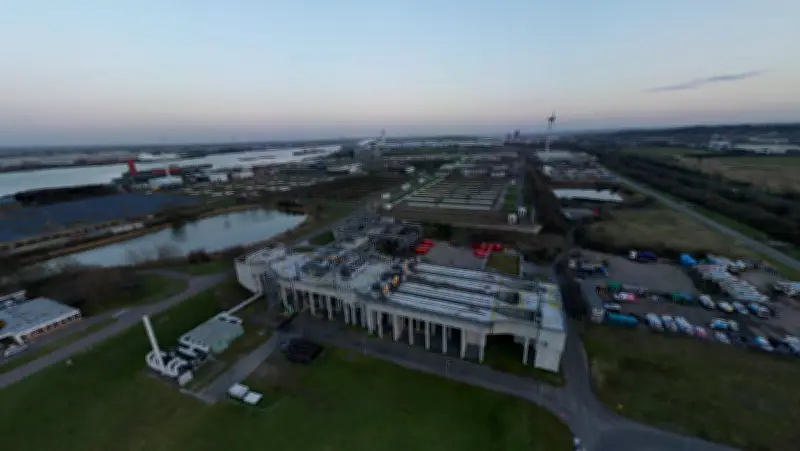
Crossness Pumping Station, a Grade I-listed building on the Thames in Bexley, conceals one of London's most spectacular Victorian interiors behind its industrial exterior, earning the nickname the "cathedral of sewage." Built more than 160 years ago to pump sewage, the station played a vital role in transforming London's sanitation system and shaping the modern capital.
From Industrial Facade to Ornate Interior
From the outside, the building appears as an imposing piece of Victorian industry. Inside, however, visitors find a space filled with elaborate, brightly decorated cast-iron columns, arches, and galleries, surrounding huge steam engines. This hidden landmark, first reported by sister title London Now, traces its origins to a time when London grappled with dire sanitation issues.
During the first half of the 19th century, London's rapidly growing population caused a massive sewage problem. Much of the city's waste found its way into the River Thames, leading to cholera outbreaks that claimed thousands of lives. An exceptionally hot summer in 1858 made the stench from the polluted river intolerable, a period now known as the "Great Stink."

Bazalgette's Engineering Masterpiece
This crisis compelled Parliament to act, and Joseph Bazalgette, chief engineer of the Metropolitan Board of Works, was tasked with developing a new sewer network for London. Crossness played a key role in Bazalgette's project. Built at the eastern end of the Southern Outfall Sewer, the pumping station was designed to raise sewage so it could be discharged further downstream, away from the densely populated centre of London.
Despite its utilitarian function, the Victorians did not build Crossness as a purely functional site. The Beam Engine House is filled with intricate ornamental cast-iron work, giving the interior the grand look of a Victorian palace rather than a part of London's sewer system. Historic England, which records the building as Grade I listed, has highlighted its significant cast-iron architectural treatment and its four enormous beam engines. Architectural historian Nikolaus Pevsner once described the ironwork as a "masterpiece of engineering" and a Victorian "Cathedral of ironwork." The spectacular Octagon, surrounded by decorative columns and galleries, sits at the heart of the building.
Four Enormous Engines and Royal Opening
Crossness originally housed four huge beam engines made by James Watt & Co., named Prince Consort, Victoria, Albert Edward, and Alexandra. All four were later upgraded to triple-expansion operation around the turn of the 20th century. The station was officially opened on April 4, 1865, when the Prince of Wales, the future King Edward VII, started the machinery. The opening event was attended by around 500 guests, with the royal party arriving by steamboat along the Thames, and others travelling on a specially arranged train from Charing Cross. At the time, the site comprised the Beam Engine House, boiler house, workshops, a 208ft chimney, and a covered reservoir with a capacity to hold 25 million gallons.
Abandonment, Restoration, and Visiting Today
As London's sewage infrastructure was modernised, Crossness eventually became outdated. By the 1950s, the old engines had been abandoned, and the remarkable building was left to deteriorate. A preservation group was founded in the 1980s, leading to the creation of the Crossness Engines Trust to protect and restore the site. The Prince Consort, one of the original engines, has been restored to working order and can be seen operating under steam on selected days. The other engines remain inside the building, with Victoria undergoing restoration, while Albert Edward and Alexandra are largely preserved in the condition in which they were left during the 20th century.

Now run as a museum by the Crossness Engines Trust, Crossness opens to visitors on selected dates. On "Steaming Days," visitors can see Prince Consort running under steam, explore the Beam Engine House and its cast-iron Octagon, and learn about the Great Stink and London's sewer system. The attraction also features exhibitions, talks, films, a café, and children's activities. For Steaming Days in 2026, tickets currently start from £20.37 for adults and £27.26 for families. Children under five and carers can enter for free. A free vintage bus operates from Abbey Wood station for ticket holders on Steaming Days. Crossness Pumping Station is located at The Old Works, Thames Water Sewage Treatment Works, Bazalgette Way, London, SE2 9AQ.
More than 160 years since it first began pumping London's sewage, the remarkable building stands as one of south-east London's unusual pieces of hidden history, serving as a reminder that one of the capital's most spectacular Victorian interiors was created for a sewer.