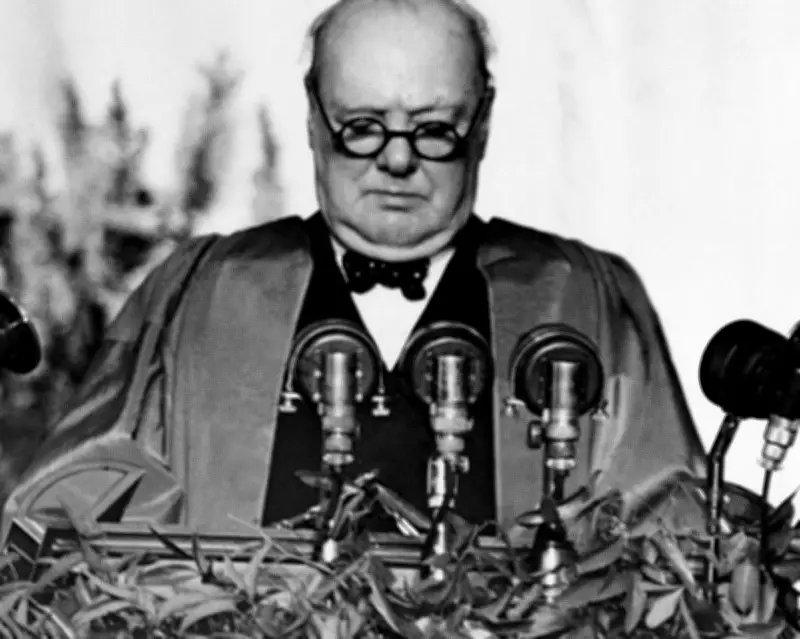
Churchill's Iron Curtain Speech: A Defining Moment in 1946
On March 5, 1946, former British Prime Minister Winston Churchill delivered a landmark address at Westminster College in Fulton, Missouri, that would profoundly influence global politics for decades. Speaking to an audience that included U.S. President Harry S. Truman, Churchill articulated a stark vision of a divided Europe, famously declaring, "From Stettin in the Baltic to Trieste in the Adriatic, an iron curtain has descended across the Continent." This phrase, "iron curtain," quickly entered the lexicon as a powerful metaphor for the ideological and physical separation between the Soviet-dominated East and the democratic West.
The Context and Content of the Speech
Churchill's speech, formally titled "The Sinews of Peace," was delivered in the aftermath of World War II, as tensions between the Western Allies and the Soviet Union were escalating. He warned of Soviet expansionism and the threat it posed to freedom and democracy, advocating for a strong Anglo-American alliance to counter this challenge. The speech outlined key themes, including the need for military preparedness, the promotion of democratic values, and the establishment of what he termed a "special relationship" between the United Kingdom and the United States.
Churchill emphasized that the Soviet Union sought not war but the "indefinite expansion of their power and doctrines." He called for unity among English-speaking peoples and a firm stance against communist aggression, which he argued was essential to prevent future conflicts. The address was met with mixed reactions; while it resonated with many in the West who shared his concerns, it was condemned by the Soviet Union and some critics who viewed it as unnecessarily provocative.
Impact and Legacy of the Iron Curtain Address
The Iron Curtain speech is widely regarded as a pivotal moment that helped crystallize the Cold War divide. It galvanized Western policy, influencing initiatives such as the Truman Doctrine and the Marshall Plan, which aimed to contain Soviet influence and rebuild war-torn Europe. Churchill's warnings about the spread of communism underscored the ideological battle that would define international relations for the next half-century.
Today, historians and analysts continue to debate the speech's significance. Some credit it with alerting the world to the realities of Soviet ambitions, while others argue it exacerbated tensions. Nonetheless, its enduring relevance is evident in contemporary discussions about geopolitical divisions, alliances, and the defense of democratic principles. The speech remains a touchstone for understanding the origins of the Cold War and the enduring importance of vigilance in global affairs.
In retrospect, Churchill's 1946 address not only shaped the trajectory of the 20th century but also offers lessons for modern diplomacy. As nations navigate new challenges, the call for solidarity and strategic foresight echoes through time, reminding us of the power of words to define eras and inspire action.