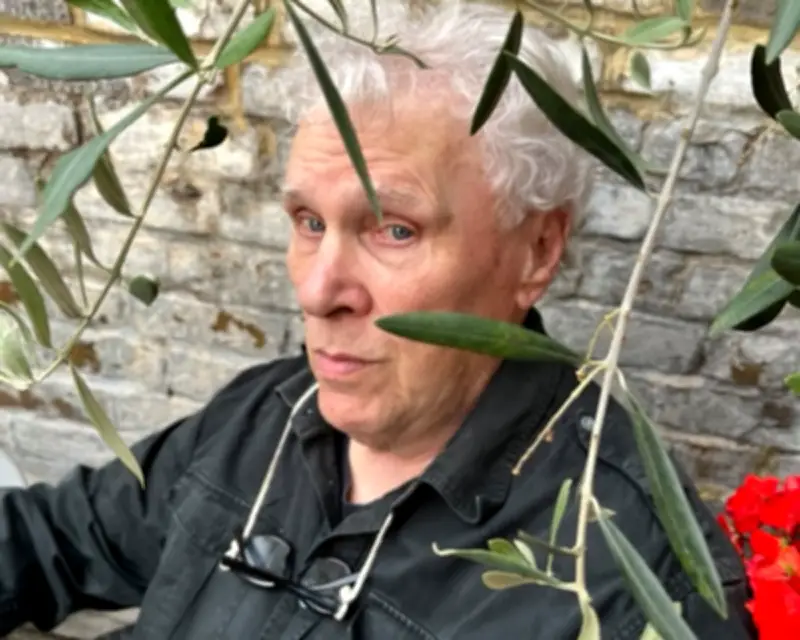
Brian Daubney, a BBC writer and director who helped save Wilton's Music Hall in east London from demolition, has died aged 81. His work included contributing to programmes such as Tomorrow's World and Bellamy's Britain before founding his own communications consultancy, Impart.
Early life and education
Born in Redcar, North Yorkshire, Brian lost his father, Raymond Ecclesfield, an engineer, when he was 18 months old. His mother, Nellie Cross, a potteries worker, later married Ron Daubney, an accountant, who formally adopted Brian. He attended Nottingham High School and read English at St Catherine's College, Oxford, where he directed the first performance of Tom Stoppard's Rosencrantz and Guildenstern Are Dead at the Edinburgh Fringe for the Oxford Theatre Group.
BBC career
After leaving Oxford in 1967, Brian joined the BBC's Midlands region current affairs department, working in Birmingham and later Norwich. In 1968, he moved to BBC1's general features group, writing and researching the documentary and current affairs series Cause for Concern. He switched to the science and features department in 1969, where he was responsible for more than 30 films for Tomorrow's World, as well as studio and film direction for the first series of Pets and Vets and Bellamy's Britain.
While working on Tomorrow's World, Brian experienced several unusual accidents, including falling 40 feet down a ladder on the Aust Pylons across the River Severn, collapsing after inhaling aero fuel fumes on a supertanker, and dropping from the tail of a Hercules aircraft onto the runway at the Boscombe Down military aircraft testing site in Wiltshire.
Impart and Wilton's Music Hall
In 1975, Brian left the BBC to set up Impart, a communications consultancy that wrote copy, edited, and produced film and audio visuals, as well as corporate histories. Clients included the BBC, Central Office of Information, British Overseas Trade Board, 3M, ICI, BP, various government departments, and Wilton's Music Hall. Through Impart, he became involved with Wilton's Music Hall, fighting to save the building from demolition, promoting it through talks and lectures, and managing lettings to film companies.
According to his wife, Brian was a brilliant communicator with a rare talent for quietly and unassumingly instilling confidence and self-belief in others.
Personal life and legacy
Brian met his wife in 1985 and they married in 1996. When she became director of a grant-making charity in the East End of London, Brian helped devise and deliver community projects for the organisation. In 2012, they moved from London to Ramsgate in Kent. Brian is survived by his wife and her two daughters from a previous relationship.