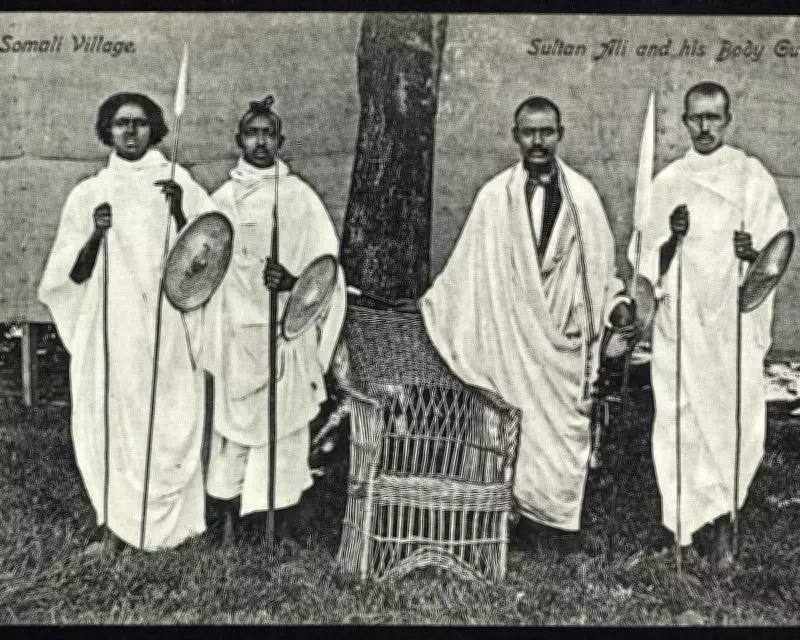
A new exhibition in Bradford is revisiting a controversial display from the city's Great Exhibition of 1904, where 57 Somali men, women, and children were put on live display for the entertainment of hundreds of thousands of Edwardian visitors. The original attraction, known as the Somali village, featured daily activities such as cooking, weaving, and dancing, and drew over 350,000 visitors, helping to fund Cartwright Hall's civic art collection for decades.
Revisiting a Complex History
The exhibition, which opens on Saturday, aims to put Britain's colonial legacy under the spotlight. Curators argue that the term 'human zoo' oversimplifies the village's complicated reality. Guest curator Abira Hussein explained that while the phrase captures the violence of colonial display, it can flatten the conditions of recruitment, labour, and negotiation that shaped the Somali village.
Negotiation and Resistance
Members of the Somali troupe, including leader Sultan Ali, negotiated contracts and wages, sold crafts to visitors, and even staged a protest after receiving inadequate compensation following a fire that destroyed four huts. Some individuals chose to return home, while others continued on tours in Germany, Europe, and North America.
Centering Somali Experiences
The project does not recreate the spectacle but instead centres the lives and experiences of the Somali people. It confronts how empire shaped Bradford's cultural institutions and wealth. Hussein emphasised that the exhibition is about thinking critically about why the display happened and the wider colonial systems that made it possible.
Colonialism in Yorkshire
Yahya Birt, another guest curator, noted that Yorkshire's involvement in colonialism is often overlooked. He pointed out that while cotton is frequently discussed, the story of wool as a colonial commodity and the wealth it generated in Yorkshire remains largely untold.
Artifacts and Artworks
The exhibition identifies specific artworks funded by profits from the Somali village, including a 1906 marble bust of Lister and a 1907 children's book. It also brings together season tickets, commemorative badges, postcards, and archaeological finds from Lister Park, alongside Somali textiles and crafts loaned by Culture House and Koor Archives, many displayed for the first time in a British institution.
The White Gaze
Part of the exhibition examines how postcards and photography shaped the 'white gaze' during the Edwardian era. Birt explained that people had to be acculturated into seeing others in a particular way.
First Muslim Community in Bradford
The exhibition also explores the stories of Halimo Abdi Badal and Khadija Yorkshire, believed to be the first recorded Muslim burial and birth in Bradford, highlighting one of the oldest Black and Muslim communities in the region. Researchers hope descendants of those who lived in the village may come forward with memories, photographs, or stories.