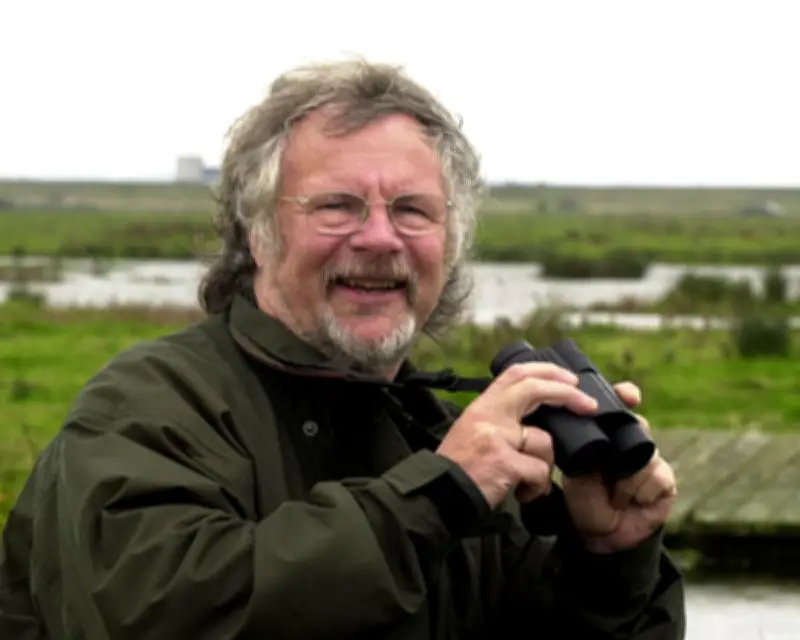
Bill Oddie, the multi-talented comedian and naturalist best known as a member of the 1970s comedy trio The Goodies, has died aged 85. Oddie's unique blend of anarchic humour and deep passion for birdwatching made him a beloved figure on British television for decades.
From Cambridge Footlights to Comedy Stardom
Oddie's path to fame began at Cambridge University, where he wrote musical numbers for the Footlights revue A Clump of Plinths. He appeared in it at the 1963 Edinburgh festival alongside fellow students Tim Brooke-Taylor, John Cleese, and Graham Chapman. The show transferred to the West End as Cambridge Circus and to Broadway the following year. A 1963 BBC radio version evolved into the sketch series I'm Sorry I'll Read That Again, which ran from 1964 for six years. Oddie was later a team member on its successor, I'm Sorry I Haven't a Clue, from 1972 for two years.
Oddie, Brooke-Taylor, and Graeme Garden created The Goodies, which aired from 1970 to 1980 on BBC, with a brief revival on ITV. The show featured surreal sketches, slapstick, and stop-motion film techniques, with the trio travelling on a 'trandem' (three-seater bicycle). Oddie was the hairy, untidy one; Brooke-Taylor pompous; Garden professorial. Oddie's self-taught musical skills produced hit songs like The Funky Gibbon and Nappy Love.
A Second Career in Wildlife Broadcasting
After The Goodies ended, Oddie turned his lifelong love of birds into a successful second career. He presented series such as Birding with Bill Oddie (1997-2000) and Bill Oddie Goes Wild (2001-03). He teamed up with Kate Humble and Simon King for Wild in Your Garden (2003) and Britain Goes Wild With Bill Oddie (2004), which evolved into the popular Springwatch and Autumnwatch series. Oddie was dropped from Springwatch in 2008 and replaced by Chris Packham, which he later said had a 'detrimental' effect on his mental wellbeing, leading to two suicide attempts.
Oddie was known for his grouchy reputation. In 2001, he famously refused to appear on This Is Your Life, telling Michael Aspel, 'It's not. I always said I wouldn't do it and I won't.' His family eventually persuaded him, and the show aired in 2002. 'I'm known as a bit of a bad-tempered bugger,' he admitted.
Personal Life and Struggles
Bill was born in Littleborough, Lancashire, to Lilian (née Clegg) and Harry Oddie. His mother was committed to a psychiatric institution when he was six, and he was raised by his father and paternal grandmother in Birmingham. He grew up believing his mother had schizophrenia and abandoned him, seeing her only a few times before her death in 1990. In 2014, on Who Do You Think You Are?, he learned his mother had suffered manic depression and that a sister died in infancy. Visibly moved, he expressed regret and said she was 'in no way negligent' but 'immensely unlucky'.
Oddie experienced bouts of clinical depression, which he attributed to his childhood. He said that being dropped from Springwatch worsened his mental health. In January 2020, he said he was managing depression and bipolar disorder with lithium, but eight months later suffered lithium toxicity.
Legacy and Tributes
Oddie was appointed OBE in 2003 for wildlife conservation work. He served on the RSPB council, was president of the League Against Cruel Sports, and vice-president of the British Trust for Conservation Volunteers. His books include Bill Oddie's Little Black Bird Book (1980) and the autobiography One Flew into the Cuckoo's Egg (2008).
Naturalist Stephen Moss said Oddie was 'the exact opposite of David Attenborough' – more excited by blue tits than blue whales, quirky and unpredictable. 'He was the jazz musician to Attenborough's concert pianist. His deep knowledge of birds came from a lifelong passion, and he was respected by his birding peers despite his fame, rather than because of it.'
Oddie is survived by his second wife Laura Beaumont, whom he married in 1983, their daughter Rosie; daughters Kate and Bonnie from his first marriage to Jeanne Hart (1967, divorced); and three grandchildren.