Berlin's Defiance: How Citizens Survived Nazi Rule in 'Stay Alive'
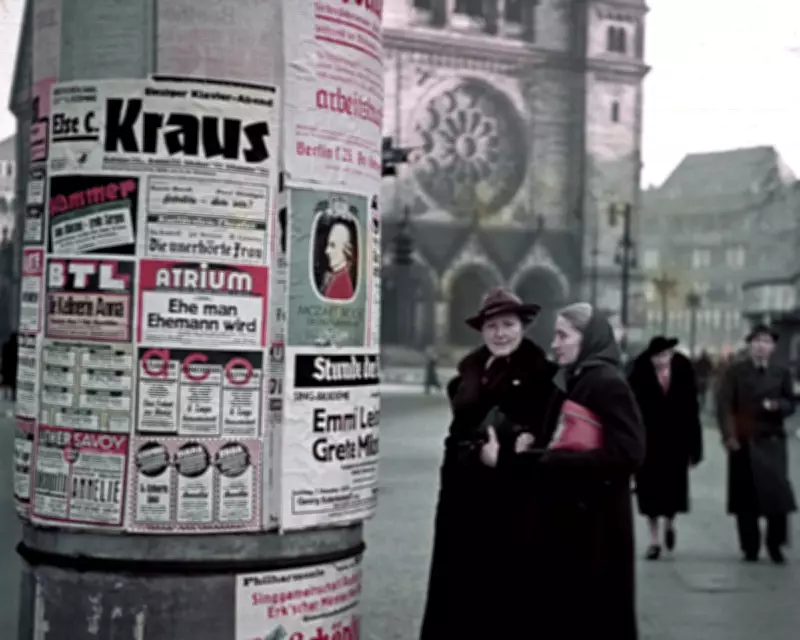
In December 1941, a German soldier on leave in Berlin wrote a scathing letter to Nazi authorities, expressing disgust at the city's apparent disregard for the war effort. He reported seeing young men avoiding military service by carousing in bars, while women used ration coupons from soldiers to indulge themselves. "If Berlin were Germany," he fumed, "we would have lost this war years ago." This anecdote highlights Berlin's unique status as a liberal city that stubbornly resisted Nazi conformity, a theme explored in Ian Buruma's immersive historical account, Stay Alive: Berlin 1939-45.
The Legacy of Weimar Berlin
Berlin had always stood apart from the rest of Germany. The legacy of the Weimar era—marked by artistic innovation, political radicalism, and a culture of louche living—persisted even under the Third Reich. Despite the efforts of Nazi high command, the city remained defiantly itself, resistant to authoritarian control. By 1941, this spirit of independence was still evident, but as the war progressed, Berliners faced increasing pressure to conform.
Survival in a City Under Siege
By 1943, when Buruma's father, Leo, a conscripted labourer from the Netherlands, arrived in Berlin, the situation had deteriorated. The war was turning against Germany, with Russian forces advancing from the east and Allied bombs raining from the skies. Food shortages were rampant, Jewish citizens were being systematically disappeared, and Hitler and Goebbels, frequently present in the city, grew more anxious and cruel. In this harsh environment, Berliners' most common greeting became Bleiben sie übrig—"Stay alive."
Pockets of Resistance
Buruma argues that despite the grim circumstances, pockets of resistance persisted throughout Berlin. He focuses not on organised underground networks, but on ordinary men and women who, while not necessarily brave, still found ways to do the right thing. For instance, when Jews were forced to wear identifying insignia, many Berliners deliberately shook their hands in public as a gesture of solidarity. Leo Buruma, working at a heavy engineering factory, defied Nazi racial policies by forming a relationship with a Ukrainian girlfriend, ignoring the regime's classification of her as an "inferior race." As Buruma notes, "not everyone is cut out to be a hero," but these small acts of grace mattered.
Uncovering Hidden Histories
Researching these subtle forms of defiance from 80 years ago is challenging. Buruma begins with his father's letters home, which he examined after Leo's death in 2020. The letters, written to avoid alarming his family or attracting the German censor, downplay the horrors of war—describing a heavy bombing as merely "quite a sight." Yet, reading between the lines, Buruma reconstructs a life of outward conformity, such as Leo serving as an air raid warden, and inner protest, like playing piano with the widow of a Jewish lawyer, a risky act that could have led to imprisonment or worse.
Witness Accounts and Moral Complexity
Other sources, such as journalists Ursula von Kardorff and Ruth Andreas-Friedrich, provide further insight. They kept only cryptic notes during the war, later expanding them into published narratives. Von Kardorff, for example, was not a resister but struggled to maintain decency in a criminal state. Her father lost his teaching job for opposing the regime, while her mother designed textiles for Nazi elites. Ursula herself delivered clothes to Jewish homes, questioning whether it was out of genuine compassion or guilt. Her true anguish was for her brother fighting on the eastern front, reflecting the moral ambiguities of survival.
Nuanced Reflections on Human Nature
Buruma's book, Stay Alive: Berlin 1939-45, offers a wonderfully nuanced perspective on this period. It suggests that in such extreme conditions, moral coherence was often impossible. For those who were neither heroes nor cowards, but somewhere in between, small acts of defiance and compromise were necessary to stay alive. Published by Atlantic (£22), this account sheds light on the resilience and complexity of human behaviour under oppression, reminding us that survival itself can be a form of resistance.