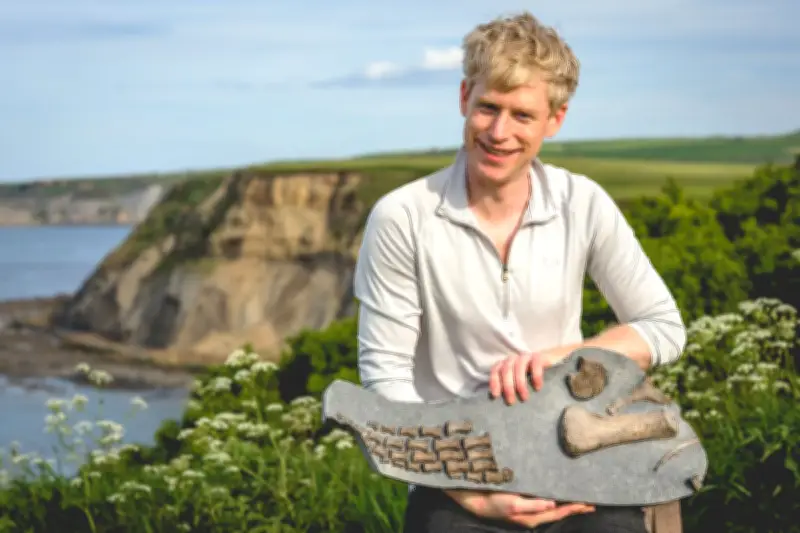
Matthew Myerscough, a 40-year-old civil engineer, has discovered thousands of fossils on British beaches, including the first Jurassic sea dragon found in Wales. His remarkable find—a 201-million-year-old rhomaleosaur jaw with a spoon-shaped end—was stumbled upon at Lavernock beach near Penarth, south Wales.
From avalanche to fossil hunter
Myerscough's journey into fossil hunting began after a near-death experience in February 2014. While hiking Yr Wyddfa (Snowdon) in north Wales, he was thrown off a small cliff during an avalanche. He fell 300 meters and was buried under more than a meter of snow, discovered unconscious 20 minutes later. Physically recovered within days, he struggled with recurring thoughts about the accident. Fossil hunting, which he had enjoyed as a boy in Whitby, became a meditative escape. "There's this mindful, almost meditative state that I get into because I'm forgetting about all the other stresses and worries in life," he said.
The discovery of the sea dragon
Encased in hard limestone bedrock, the rhomaleosaur jaw was the first of its kind found in Wales. Myerscough initially walked past it with two fellow fossil hunters, then returned for a closer look. "There were so many places we could have walked that day. And when I think about the research paper being done at the moment about that fossil, and everything that we will learn... none of that would have been possible if we'd been 3ft to the left," he explained. The find is now the subject of a research paper.
Other extraordinary finds
Since starting fossil hunting, Myerscough has chanced upon other rare specimens, including a plesiosaur flipper, a huge dinosaur footprint, and an ichthyosaur forefin and skull. He details these in his book, In Search of Sea Dragons: A Fossil Hunter's Odyssey, published by Seren Books. The book sheds light on the secretive world of fossil hunting, where collectors often hide locations. Myerscough, however, shares everything he has learned.
Tips for beginner fossil hunters
Myerscough advises beginners to go on guided tours. "They [experts] can show you [fossils] on the beach. Once you start seeing fossils, you start seeing them everywhere." He warns the pastime is physically demanding, often requiring carrying heavy rocks and tools. Dangers include unpredictable cliff falls and rising tides; he recommends going on a falling tide and avoiding fresh falls near cliffs. "The best finds are after the sea has cleaned the material," he said.
Fossils as gifts from nature
Many of his rare finds were in "well-worn" blocks of rock that may have rolled on the beach for decades. He sees fossils as "gifts from nature" and hopes his book inspires others. "The luck of finding these things is just extraordinary. When you think about the events that needed to happen, all those millions of years ago, for something to be fossilised, it seems remarkable. And then for this fossil to be exposed once again... the odds of all of those things happening seems remarkable, too."