Breakthrough in African 'King Arthur' Myth After Discovery in Centuries-Old Rubbish Pile
An Arabic text unearthed from a centuries-old rubbish heap has definitively confirmed the historical existence of an African king whose legendary status closely mirrors that of Britain's King Arthur. The document, issued in the name of the Nubian King Qashqash, transforms him from a semi-legendary figure referenced only in later literature into a verifiable monarch with tangible authority. This discovery represents the earliest contemporary archaeological evidence of his rule during a formative period in the pre-colonial history of Sudan.
Historical Context and Significance
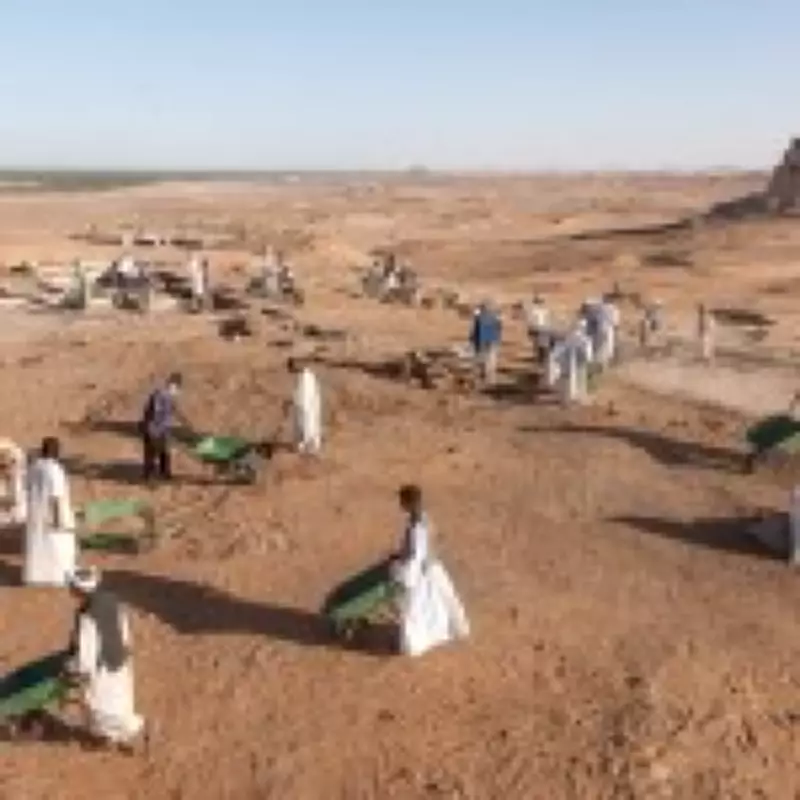
Old Dongola, located along the River Nile in Northern Sudan, once served as the capital of the Christian kingdom of Makuria. Following the 14th century, the region entered a poorly documented transitional era marked by fragmentation and gradual Islamisation, with Arabic increasingly supplanting earlier written traditions. The scarcity of surviving documents has long obscured the identities of rulers and the mechanisms of power in the city.
Similar to Britain's Arthur, prior evidence for Qashqash's existence relied solely on later accounts that portrayed him as an ancestor of subsequent rulers. However, this fragment of Arabic text, discovered among rubbish heaps, provides crucial insights into a figure previously known only through such indirect references.
Dating and Analysis of the Document
Archaeologists have dated the text to the 17th century by cross-referencing it with records from the Sudanese text Ṭabaqāt, which chronicles the lives of Sudanese holy men and scholars. The research team, led by Tomasz Branski of the University of Warsaw, noted that while the king's order lacks a specific date, external evidence allows for an approximate estimation of its writing time.
According to the Ṭabaqāt, King Ḥasan, son of Kashkash, married his daughter to the renowned religious leader Muḥammad b. ʿĪsa Suwār al-Dhahab, who was active in Old Dongola no later than the early to mid-seventeenth century. This connection helps situate Qashqash's rule within this timeframe.
Content and Linguistic Insights
The order reads: 'From King Qashqash to Khiḍr son of ŠHDT/ŠHB(T?). As soon as Muḥammad al-ʿArab comes to you, take from him three ʾRDWYĀT and give him a ewe and her offspring and collect, from ʿAbd al-Jābīr, the ewe and her offspring; and give them to their master without delay. Do not hesitate! This is my letter/reply to you. His scribe Ḥamad wrote it. Greetings. And you, Khiḍr, give to ʿAbd al-Jābīr three cotton cloths and a head (or three cotton headwear) and collect the ewe and her offspring for their master.'
Intriguingly, the text is not composed in perfect classical Arabic but rather in a colloquial version, likely reflecting the cultural changes occurring in the area during that period. This linguistic nuance offers additional clues about the societal shifts underway.
Timeline and Archaeological Context
Branski and his team propose that Qashqash's rule may have commenced as early as the late 16th century, potentially making him a contemporary of Britain's Queen Elizabeth I. They state: 'Thus, King Qashqash, the father of King Ḥasan, seems to have held power at the latest by the early to mid-seventeenth century. His rule may have begun as early as the second half of the 16th century, if it was prolonged. However, the deposition of the king's order among rubbish heaps in Room U128 occurred later, during the mid- to late 17th century or even as late as the 18th century.'
The document was found within a rubbish layer in a building inside Dongola's citadel, known locally as the House of the Mekk—a term denoting a minor king. Excavations conducted as part of the UMMA project revealed that this structure differed significantly from surrounding houses.
Additional Elite Artifacts
Among other notable discoveries at the site were:
- Silk and fine cotton textiles
- Leather footwear
- A dagger handle carved from ivory or rhino horn
- A gold ring
- Musket balls
Archaeologists assert that the concentration of such high-value objects strongly indicates elite occupation. Combined with the written order bearing Qashqash's name, these finds constitute a major breakthrough in understanding late medieval Nubia and one of its foundational kings.
Publication and Implications
The research has been published in the journal Azania: Archaeological Research in Africa. This discovery not only validates the historical reality of King Qashqash but also enriches our comprehension of Nubian political and cultural dynamics during a transformative era, bridging gaps in the historical record left by centuries of obscurity.