For decades, acclaimed writer Robert Dessaix felt profoundly disconnected from the Australian landscape. Raised on a literary diet of Enid Blyton and Shakespeare, with later infusions of Sartre and Tolstoy, he viewed the local gum trees and dry paddocks as alien as a lunar surface. His heart yearned for the "ordered woods and gardens" of England, for villages with ancient roots, glades, and castles—a world far removed from Australia's sprawling bush.
A Spontaneous Decision That Changed Everything
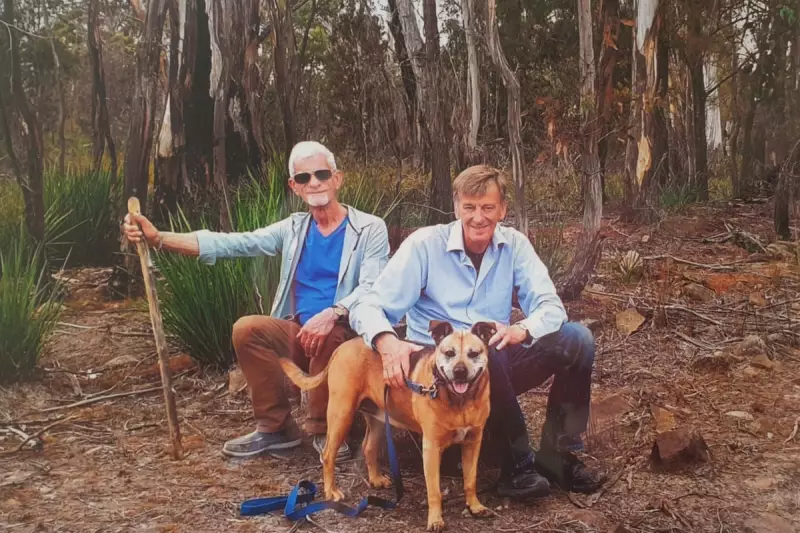
This deep-seated alienation persisted until a single, spontaneous afternoon fifteen years ago on Tasmania's east coast. After a picnic on the beach at Orford with his partner, Peter, and their dog, the pair took a drive into the hills behind the town. There, they stumbled upon a bushy block of land for sale at what Dessaix describes as a "ludicrously low price."
Without hesitation, they bought it on the spot. "We make all important decisions on the spot," Dessaix notes wryly. The property was substantial—larger than Vatican City and a quarter the size of Monaco. On that summery day at 2.15pm, amidst blue gums, blue-tongue lizards, and dianellas, the author's perception shifted irrevocably. "In the blink of an eye," he writes, "I became somebody else."
Finding Home in an Untamed World
From the ridge where they later built a shack, the view stretched south across untouched hills, mountains, and forests. There was not a single house, road, or sign of human life to mar the panorama. Instead, Dessaix was met with an infinitude of life: countless trees of every hue, the calls of ravens, eagles plummeting, parrots flashing, and the sociable squawk of black cockatoos. Nights revealed an indigo dome ablaze with stars, punctuated by the hoot of a single owl.
This was not the ordered, storied landscape of Europe he had once craved. Yet, he found it vibrantly alive in a way he felt Europe could never be again. For the first time, he felt oddly at home, a wary but accepted part of the profusion of life, from the leeches in the creek to the occasional tiger snake. He developed a respectful, unsentimental acceptance of the natural world, predators and all.
A New Relationship with Time and Place
The experience altered his very sense of time. In the bush, he felt freed from the "railway-station time" of cities and European villages. Walking tracks he built through the trees, he perceived history as a mere echo. "The Australian bush is beyond time, I think," he reflects, "although it dances joyfully to the seasons in reds and yellow and whites."
In that moment of connection on his Orford block, Robert Dessaix, in what he calls his "advanced old age," was reborn. He finally ceased to be a detached observer longing for elsewhere and began to belong to the ancient, pulsing life of the Australian continent itself.