Archaeologists Unearth 22 Perfectly Preserved Painted Coffins of Singing Priestesses in Egypt
In a remarkable archaeological breakthrough, a joint mission has discovered a tightly packed rock-cut chamber containing 22 beautifully painted wooden coffins, all perfectly intact, in Egypt's Asasif Necropolis on the west bank of Luxor. The extraordinary find, which also includes a cache of rare papyri sealed inside ceramic vessels, dates back to Egypt's Third Intermediate Period, approximately 1070 to 664 BC.
Discovery of a Secondary Storage Chamber
The cache was located in a section of the courtyard of the tomb of Sennep in the Qurna area, part of the vast Theban Necropolis that stretches across the desert west of Luxor. Archaeologists uncovered a rectangular chamber carved directly into the bedrock, which appears not to be an original burial site but rather a secondary storage chamber used for coffins moved from earlier tombs.
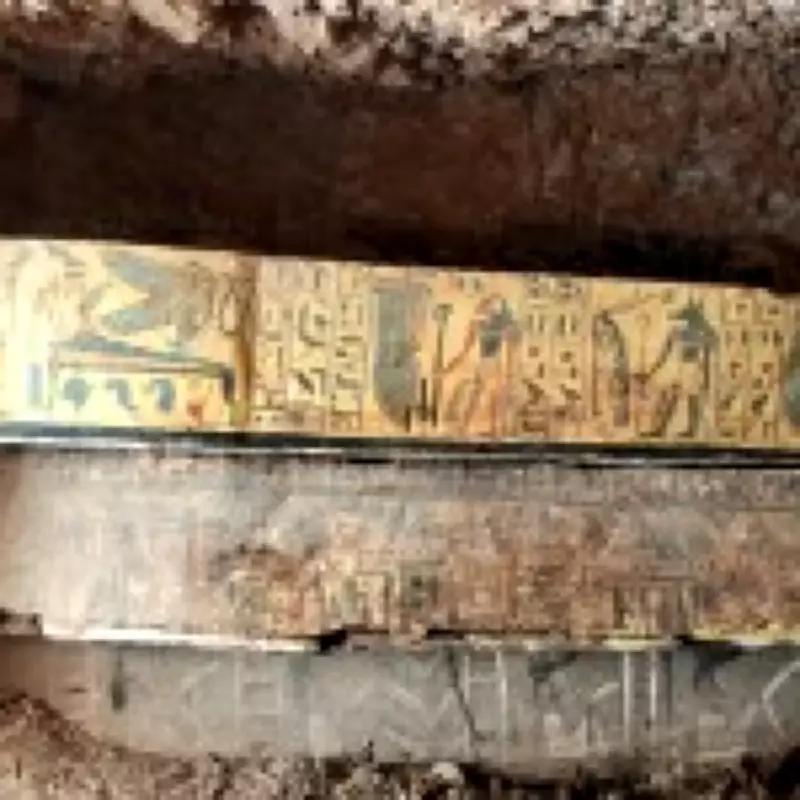
Inside, the 22 coffins were arranged in a highly organised manner, stacked in several layers across ten horizontal rows. To maximise space, the lids were separated from the coffin boxes. Researchers note that this careful arrangement suggests the burials were not carried out hastily but indicate deliberate planning and controlled placement, possibly under the supervision of temple authorities.
Coffins of the Singers of Amun
The coffins, painted in a vibrant array of colours, still contain mummified remains—a notable detail as many reburials from the Third Intermediate Period were emptied or disturbed in antiquity. Although most coffins do not bear personal names, several prominently display professional titles, providing crucial clues about the individuals buried there.
Many of the coffins appear to belong to women who held the title 'Singer of Amun', a role connected to rituals honouring the god Amun. This discovery sheds new light on the religious and social structures of ancient Egyptian temple life.
Official Announcement and Restoration Efforts
The discovery was announced by the Egyptian Ministry of Tourism and Antiquities following excavations by a joint archaeological mission from the Supreme Council of Antiquities and the Zahi Hawass Foundation for Archaeology and Heritage. Sharif Fathi, Minister of Tourism and Archaeology, described the find as 'a new addition to the record of outstanding archaeological discoveries that Egypt is witnessing.'
Dr Zahi Hawass emphasised that painstaking restoration work will now be carried out to preserve the coffins. 'Because of the poor condition of the timber, the mission’s restoration team intervened for urgent maintenance procedures,' he stated. 'This includes treatment of the wood fibres and weakened coloured plaster layers, thorough mechanical cleaning to remove stains without affecting bright colours.'
Papyri and Future Research
The pottery and papyri found within the chamber still have their original clay seals intact. These artifacts will undergo restoration and translation, promising to reveal further secrets about this period of Egyptian history to the world. The discovery not only enriches our understanding of ancient burial practices but also highlights the ongoing significance of archaeological exploration in Egypt.