Sudanese Cuisine During Ramadan: A Cultural Anchor Amid Conflict
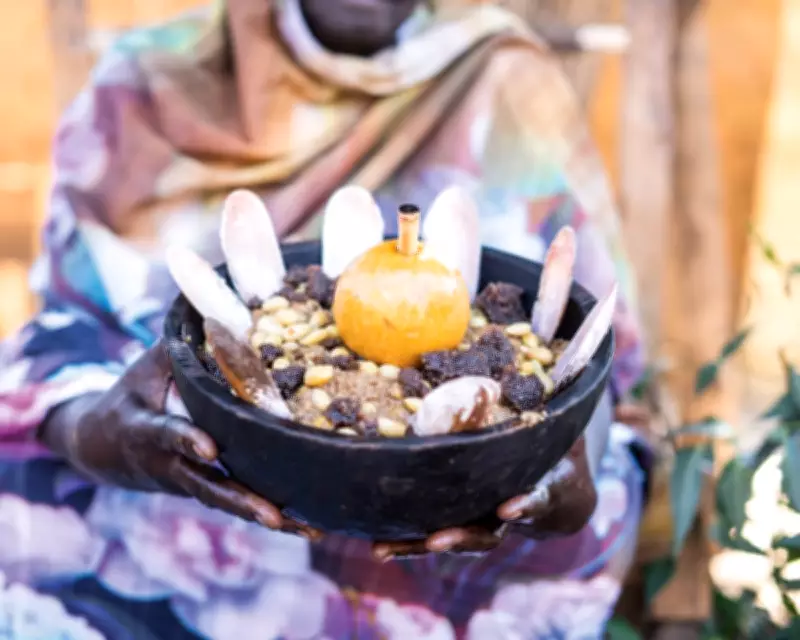
Heightened tastes emerge during Ramadan: sorghum and sweetcorn blended with mixed nut pastes, adorned with raisins, crushed nuts, honey, and hibiscus sugar chunks. This culinary artistry, captured in photographs by Ala Kheir, symbolizes more than just food—it represents a cultural mission during a time of war.
'A Mission of Mine': Food as Resistance in Wartime
As the first week of Ramadan commences, Omer Al Tijani's groundbreaking cookbook, 'The Sudanese Kitchen,' takes on profound significance. The ongoing conflict in Sudan, now approaching its third year, has transformed Ramadan into a period of heightened emotions for those fasting amidst displacement and violence. This first-of-its-kind collection of Sudanese recipes serves dual purposes: celebrating Sudan's rich culinary heritage while starkly reminding readers of what's at stake in the current crisis.
Food culture remains deeply intertwined with Sudan's political narrative. Photographs by Mazin Al Rasheed Zein, Manuel Krug, and Antonie Robertson reveal how gastronomy reflects the nation's story on the ground.

The Journey to Document Sudanese Cuisine
Al Tijani's culinary journey began unexpectedly while studying at the University of Manchester in the early 2010s. When care packages from his mother proved insufficient and student food grew tiresome, he discovered a scarcity of Sudanese recipes available. This realization sparked a 15-year passion project that would take him across Sudan, documenting recipes even during the revolution that overthrew dictator Omar al-Bashir.
"As I embarked on the project," Al Tijani explained, "we were embroiled in the revolution, driving across Sudan during fuel cuts, protests, and sit-ins. Khartoum itself teemed with revolutionary spirit."
A Diverse Country and Its Multifaceted Cuisine
Contrary to popular perception, Sudanese cuisine is anything but uniform. Photographs show women preparing dried okra in traditional courtyards, illustrating the mix of African and Arab influences that characterize this vast nation's food culture. Al Tijani discovered that Sudan's culinary diversity remained largely unknown even to its own people, as political and economic power concentrated in Khartoum obscured regional specialties.
The Sudanese Kitchen has proven revelatory for both Sudanese and international audiences. Al Tijani expressed surprise at discovering mushroom cultivation in certain regions, used in dishes like "chicken stew without bones." Similarly, many were astonished to learn that "gurasa," a thick salty pancake staple in some households, wasn't universally consumed—akin to discovering others don't eat toast.
Food in the Long Shadow of War
Perusing the cookbook becomes an immersive journey through Sudan's regions and topographies, yet an inescapable sense of loss permeates the experience. Imagery of homes, yards, and generations cooking together gains painful poignancy given the current reality: Sudan now faces the world's largest displacement and hunger crisis.
Photographs of a man preparing "agashe," a grilled meat dish in El Obeid, central Sudan, serve as relics of joy from a different time. Had the cookbook emerged before the war, responses would have differed dramatically. Today, it evokes trauma and complex emotions.
"It hit a nerve with many people," Al Tijani noted. "Many were emotional at the launch—it was the first time the country came back to them, alive and full of joy again. It inspired a visceral reaction."
Ramadan's Heightened Significance
During Ramadan, Sudanese food transforms from mere sustenance to artifact, relic, and symbol. Al Tijani described encountering a cocktail named after "kandakas," iconic Sudanese female warriors, in Nairobi—a city now home to many Sudanese refugees. "Once your culture becomes a cocktail," a friend observed, "you know your country is in trouble."
Food now represents something experienced in new, challenging ways outside home and context. This feeling intensifies during Ramadan, traditionally a hyper-domestic, intensely social period in Sudan. Streets fill with caramelized and dried ingredients for juices and stews days before Ramadan begins.

"The few days at the start of Ramadan are a culinary climax," Al Tijani explained. "People become more open—houses open up, invitations extend everywhere. Preparation takes weeks, transforming homes and bringing communities together as women move between households."
Keeping Sudan Alive Through Culinary Heritage
Photographs of Al Tijani making "kunafa malfufa" pastry on a hotplate demonstrate the love infused into these culinary traditions. Despite the devastation, food offers a means of preservation.
"Ever since the war, I have felt even more of a calling to make it a mission of mine," Al Tijani emphasized regarding sharing Sudan's story. "This book is my form of resistance—a way to put Sudan on the map, counter destructive narratives, and tell our story. It represents the opposite of erasure: these are fixed things. We lived in these houses, cooked these ingredients, used these utensils—this is how we constructed our lives."
As Ramadan continues, Sudanese cuisine serves not just as nourishment but as cultural anchor, historical record, and act of resistance against the backdrop of conflict and displacement.