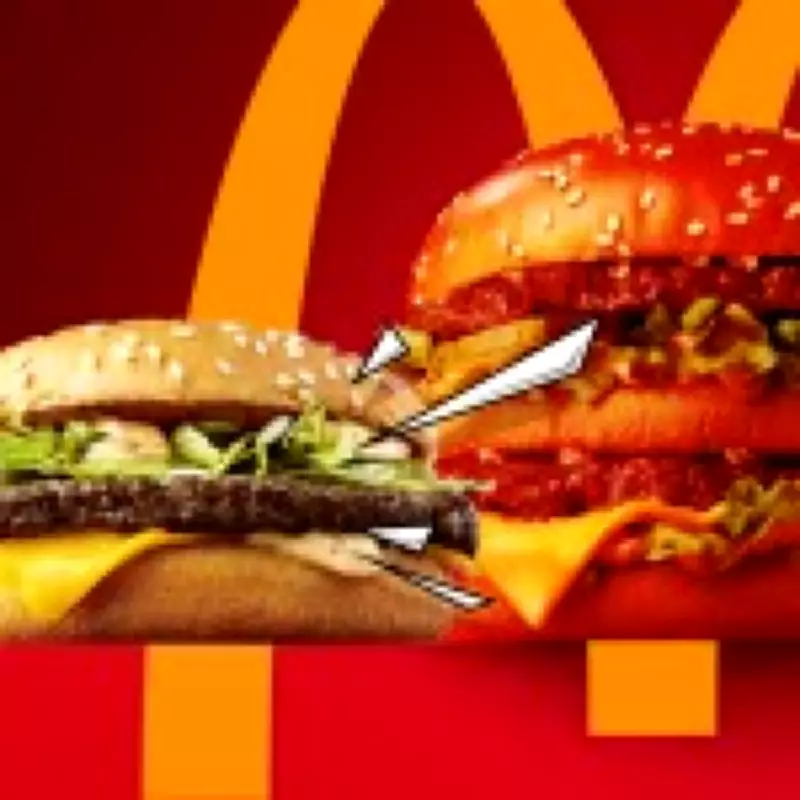
The Little Mac Era: How Ozempic is Reshaping Fast Food and Snack Industries
It's becoming increasingly clear that the weight loss drug revolution is transforming our eating habits, regardless of whether individuals are personally using medications like Ozempic. Across the UK, restaurants are pivoting towards small plate sharing menus, while supermarkets are reformulating ready meals to offer reduced portions and nutrient-dense options. In a striking example, Ocado recently introduced a miniature 100g steak specifically targeting the Ozempic market, though this move has drawn criticism from some shoppers who labelled it as 'mad'.
Fast Food's Impending Transformation
According to food futurologist Dr Morgaine Gaye, these changes represent just the beginning of a much broader shift. Fast food enthusiasts should prepare for significant menu alterations at beloved chains like McDonald's and Greggs in the near future. Dr Gaye asserts that smaller portions are destined to become standard across the entire food industry.
'It absolutely will happen in fast food, I just can't see how it won't,' she states emphatically. 'The increase in people using GLP-1 medications is insane, and it's not a fad - it's here to stay.'

Dr Gaye reveals she recently completed work 'connected with McDonald's' that focused precisely on this conversation. She believes it would be foolish for fast food giants not to adapt, as weight loss drugs become normalised across British society. These medications are evolving from dramatic weight loss solutions to ongoing weight management tools, comparable to how microwaves became household staples without constant discussion.
The Language of Discretion
The expert identifies marketing language as a critical challenge for brands navigating this new landscape. Direct references to specific drugs like Ozempic could alienate customers using alternatives like Wegovy, while many consumers prefer discretion about their medication use.
'I'm not sure everybody will want people to know they're on medication,' Dr Gaye explains. 'They might be embarrassed to ask for an Ozempic Mac, so it's going to be all about the language and how we talk about it.'
She draws parallels with how Western attitudes toward insects as food have been shaped by language, suggesting terminology could make or break these new menu items. The solution might resemble a reverse 'Super Size Me' scenario, with customers requesting 'Little Macs' instead of larger options.
Beyond Fast Food: Wider Industry Impacts
The transformation extends well beyond burger chains. Dr Gaye anticipates similar changes at establishments like Starbucks, where customers might increasingly opt for miniature versions of drinks like caramel frappuccinos, perhaps even requesting 'pupuccino'-sized beverages.
More fundamentally, GLP-1 medications don't merely reduce appetite - research from the Mayo Clinic indicates they can 'modulate' taste preferences. This means users might not simply want smaller portions of their favourite foods, but may lose interest in them entirely.
'It's not that someone used to eat McDonald's and now just wants half of one,' Dr Gaye clarifies. 'It's that they no longer want one at all, so it's going to create an uptick in some of the food that's not been as popular.'
Confectionery's Existential Challenge
This shift presents particular challenges for confectionery brands like Cadbury. Since chocolate and sweets represent 'likes' rather than 'needs,' they're especially vulnerable when consumers lose impulsive eating behaviours.
'Some of the biggest confectionery brands are scrambling because confectionery is often an impulse buy,' Dr Gaye observes. 'When you're on a GLP-1, you no longer have that impulse, meaning you're less likely to pick up, say, a bar of Dairy Milk.'
This isn't simply about creating smaller chocolate bars for reduced appetites. Brands must develop entirely new products that appeal to changing preferences. Walkers' recent logo redesign - shifting from a crisp-focused design to a sun-inspired emblem - suggests the brand might be preparing to diversify beyond traditional snacks, according to marketing professor Zachary Estes.

The Wellness Pivot
Beyond product adaptation, Dr Gaye predicts a broader industry shift toward wellness positioning. Ozempic represents part of a larger cultural movement emphasising moderation, quality, and conscious consumption.
'Going into the future, every single brand has to be a wellness brand,' she proclaims. 'It would not surprise me if one suddenly steps up and says they are going to pivot and also provide some kind of lifestyle wellness experience.'
This could manifest as Walkers establishing sports academies for children or Starbucks creating beauty lounges using coffee grounds as facial scrubs. As Dr Gaye notes: 'It won't be enough to just make food. If everyone is eating less, how are brands going to make revenue? They have to be offering another service - that's the future.'
The food industry stands at a crossroads, with weight loss medications driving changes that will reshape everything from portion sizes to brand identities. While McDonald's remains tight-lipped about specific plans, the direction seems clear: smaller portions, discreet marketing, and wellness-focused diversification represent the path forward in Britain's evolving food landscape.