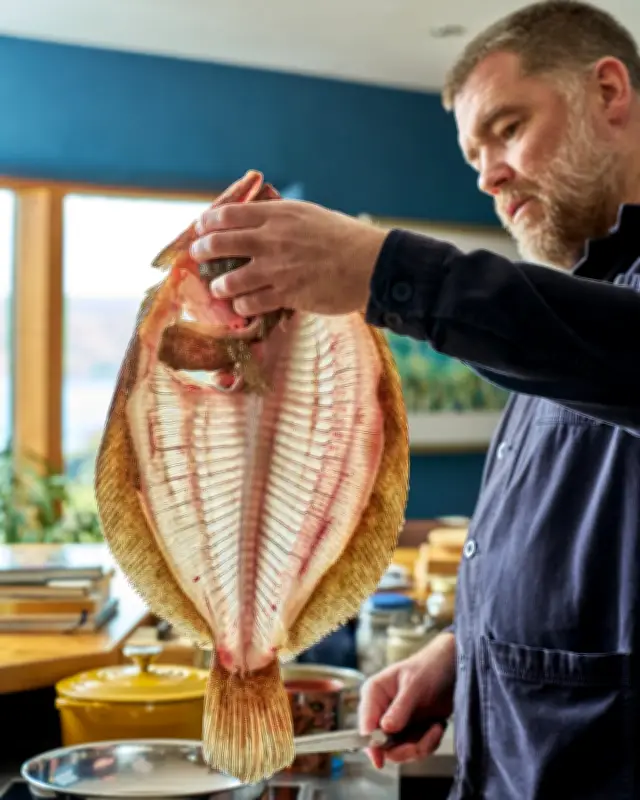
Chef Nathan Outlaw, who earned his first Michelin star over two decades ago, is returning to his roots with a focus on simple, unfussy seafood cooking. In a recent interview, the Cornwall-based chef explained why he prefers straightforward preparations and shared his recipe for steamed brill with pea, shallot and cider stew.
From bistro cooking to Michelin stars and back
Outlaw opened the Black Pig in Rock, Cornwall, at age 25, despite advice to stay at his prestigious job at the Vineyard in Stockcross, Berkshire. His wife was eight-and-a-half months pregnant, and he had won young chef awards, but he wanted a simple bistro menu. "That's why I became a chef," he said. "I loved the physical aspect, standing up doing something. I loved the way there's a lot of team work. I didn't know anything about Michelin stars or being famous." Yet he earned his first star the following year.
After that, fine dining and TV specials followed, including two eponymous restaurants at the St Enodoc hotel in Rock, appearances on Great British Menu and Saturday Kitchen, and Outlaw's at the Capital in Mayfair. His calm temperament suited the precise techniques he pioneered, such as curing fish with exacting control over brine and timing.

Choosing and preparing fish
Outlaw advises never deciding what to cook before visiting the fishmonger. "Adapt your plans to what looks good, and always ask where it came from," he said. He distinguishes fresh fish by smell: "An ozoney smell is like an oyster, or a really nice harbour, or the smell of the sea on a hot stone. Bad fish are a different kind of fishy."
For brill, a flatfish similar to turbot, Outlaw notes it is more delicate. "With brill you can do raw and cured dishes, turbot you can't – it's very tough. Brill is a much more delicate fish." Filleting requires a sharp, flexible knife to follow the curved bones. He recommends roasting the bones first for stock, like chicken, to caramelize and add flavour without burning.
Simple cooking techniques
Outlaw prefers small shallots braised whole: "nicely and slowly, give them a bit of time, they're actually really sweet as they soften." He avoids heavy butter and cream unless necessary, using clotted cream in this recipe. "The lemon and butter thing, it is tasty, but it's also a way of covering up fish that isn't fresh."
He uses a triple-layered stainless steel pan, noting it must be hot before adding bacon to prevent sticking. The dish comes together quickly: shallots collapse in cider and stock, then peas and cream are added, and the fish steams in minutes.
Making seafood accessible
Outlaw aims to make seafood less daunting. "If I was presented with a huge fruits de mer with loads of stuff on it … well, I'd eat it – but I'd find it quite daunting. And if you're starting from zero with fish and shellfish, you've got to accept there's going to be a little bit of trial and error. That's why you should start simple and work your way up. Once you get to the fancy stuff, you'll realise the simple stuff is better."
Tips from the sea
Outlaw offers several tips: freeze super-fresh white fish like brill and monkfish, but not oily fish. He notes an octopus invasion off Cornwall, where non-native octopus from West Africa have filled lobster pots and eaten the lobsters. However, octopus, cuttlefish, and squid have a two-year life cycle, and their sticky eggs may cling to pots, potentially making bluefin tuna and octopus dominant. He describes octopus as "pork belly made of fish."
Gurnard is a versatile all-rounder for barbecuing, frying, or curing. Dover sole can be a bargain when bought large, as restaurants prefer smaller sizes for one-piece servings; a big one roasted whole is excellent.
Favourite utensil: bamboo steamer
Outlaw praises the bamboo steamer as a bargain, noting his first was from the brand Grandma Shark. They last forever unless the pan boils dry, and even then only get battle scars. He makes his own greaseproof paper cartouche, but a simple snowflake cut works too.
Recipe: Steamed brill with pea, shallot and cider stew
Prep 20 min, cook 50 min, serves 4.

Ingredients: 2 tsp fennel seeds, 2 tsp sea salt, 8 slices smoked streaky bacon or pancetta, 2kg brill filleted into 4 x 120g portions, 2 tbsp olive oil, drizzle of extra-virgin rapeseed oil. For stew: 50g unsalted butter, 2 tbsp rapeseed oil, 12 peeled whole shallots, 200ml dry cider, 1 sprig finely chopped rosemary, 300ml fish stock, 200g fresh podded peas, 100g clotted cream (ideally Cornish), 1 tbsp chopped mint, 1 tbsp chopped flat-leaf parsley, salt and pepper.
Method: For stew, heat butter and oil, add shallots and colour gently for 15-20 minutes. Add cider and rosemary, reduce by three-quarters, then add stock and reduce by half. Add peas and simmer 20 minutes. Meanwhile, crush fennel seeds and salt. Grill bacon until crisp. Season brill with 2 tsp fennel salt, drizzle olive oil, place on baking parchment, steam 4-5 minutes. Add cream to stew, whisk, add herbs, season. Ladle stew into bowls, peel skin from brill, sprinkle with 1 tsp fennel salt, place on stew, add bacon, drizzle rapeseed oil. Serve with new or mashed potatoes.
Recipe from Nathan Outlaw On Fish: A Seafood Handbook, published by Kyle Books at £30.