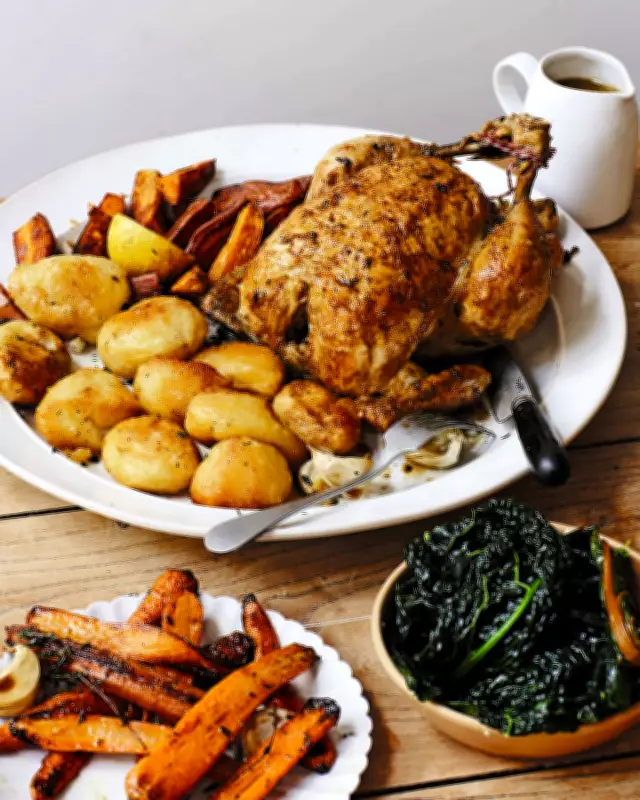
The Ultimate Guide to Perfect Roast Chicken: Expert Tips Revealed
Simplicity is often the key to culinary success, and when it comes to roast chicken, starting with a high-quality bird is absolutely crucial. According to food experts, a good roast chicken always begins with selecting the right chicken, emphasizing that free-range, slow-reared options under 2kg tend to yield the best results. This foundational step sets the stage for a delicious and satisfying meal that can be enjoyed in various ways.
Essential Rules for Roasting Success
Ed Smith, author of the book Peckish, highlights that many people overcomplicate the process of roasting chicken. He asserts that if you begin with a good chicken and roast it properly, you will inevitably end up with a fantastic dish. Smith outlines three fundamental rules to follow for optimal results. First, always choose a high-quality chicken, preferably free-range and under 2kg, as smaller birds roast more evenly and effectively.
Second, avoid overcooking by reducing the oven time. Smith recommends roasting the chicken for approximately 50 minutes in an oven set to 210C (190C fan), noting that packaging instructions often suggest longer durations than necessary. Third, allow the chicken to rest for 15 to 20 minutes after cooking. This resting period ensures the meat remains juicy and steaming hot when served, enhancing the overall dining experience.

Advanced Techniques and Chef Insights
To build on these basic rules, Smith advises salting the bird thoroughly both inside and out. If possible, refrigerate the salted chicken for an hour to a day in advance to improve flavor and texture. Mike Davies, chef director of The Camberwell Arms in south London, takes this a step further by advocating for an overnight brine. He suggests submerging the chicken in a solution of water, salt, sugar, and aromatics such as lemon, bay, and peppercorns. Davies explains that brining, while it may seem advanced, is actually straightforward and only requires a sufficiently large container.
When it comes to fats and cooking methods, Anna Tobias of Cafe Deco in London prefers using neutral vegetable oil like rapeseed or sunflower oil. She seasons the chicken, places half a lemon and a sprig of rosemary in the cavity, and roasts it upside down initially. This technique, learned from Margot Henderson, helps crisp the underside of the thighs. Tobias roasts a 1.75-2kg chicken upside down for 30 minutes at 200C (180C fan), then flips it right side up for another 30 minutes. Unlike Smith, she avoids resting the chicken to prevent the skin from becoming flabby.
Davies, on the other hand, was taught by his mother to place butter under the skin, which bastes the chicken during cooking and moistens the skin. He emphasizes that achieving crisp skin primarily depends on starting with dry skin. Additionally, Smith recommends spatchcocking the chicken as a slight tweak to the traditional method. This involves cutting down both sides of the backbone with scissors, making the process easier and resulting in faster cooking times, reduced risk of overcooking the breast, and crispier skin with succulent legs.
Creative Variations and Serving Suggestions
For those looking to experiment, Smith encourages mixing up marinades or rubs. He notes that any flavors typically used on chicken thighs or legs, whether inspired by the deep south, India, or Thailand, can be delicious on a roast chicken. Smith also highlights the versatility of roast chicken, suggesting it can be enjoyed in multiple ways throughout the week. For example, serve it with salad on Monday, then use leftovers in pasta dishes or with potato wedges on subsequent days.
Tobias adds that while roast chicken pairs well with a variety of sides, roast potatoes are non-negotiable for her, emphasizing their importance in completing the meal. Ultimately, the experts agree that with the right techniques and a focus on quality ingredients, roast chicken can be a simple yet spectacular centerpiece for any dining occasion.