The Tony Blair Story Documentary Review: A Psychological Portrait Lacking Depth
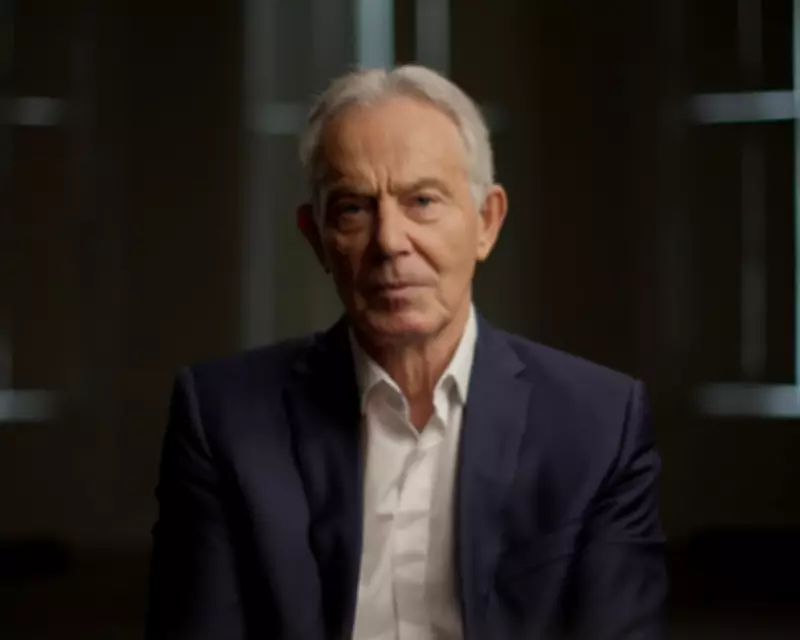
Michael Waldman's new three-part documentary, The Tony Blair Story, premiering on Channel 4, attempts to unravel the enigma of one of Britain's most influential prime ministers. The first episode, subtitled "Who Are You?", delves into Blair's personal history, featuring exclusive interviews with Tony Blair himself, his wife Cherie, and several of their children. This approach aims to capture the character behind the politician who led the Labour Party to two re-elections, but it often falls short of providing the granular detail needed for a comprehensive political assessment.
A Focus on Personal Drama Over Political Analysis
The documentary adopts a psychological narrative, exploring Blair's childhood at Fettes College in Edinburgh, where a contemporary notes that the school "teaches you to survive – it knocks a lot of the emotion out of you." It traces key personal events, such as his father's stroke, which dashed political ambitions, and the suicide of a close friend during his time at Oxford, which reportedly transformed Blair from a cheerful counter-culture figure into a driven achiever. Waldman sketches Blair's rise in politics during the early 1980s, highlighting how he overtook more experienced figures like his wife Cherie and ally Gordon Brown to become Labour leader.
However, this emphasis on individual psychology comes at the expense of broader political context. The film touches on Blair's premonition of John Smith's death in 1994 and the emotional weight of moving into 10 Downing Street after the 1997 election win, but it largely ignores the power structures and interests that shaped his tenure. Aside from a brief mention by Peter Mandelson about Blair being chosen by Labour "modernisers" and a critical look at his 1995 meeting with Rupert Murdoch, the documentary portrays Blair as a self-made figure, with little discussion of the social and economic policies he implemented.

Missed Opportunities for Rigorous Scrutiny
The documentary builds towards a feature-length second episode critiquing the 2003 invasion of Iraq, where Waldman suggests Blair developed a messiah complex under the pressure of the post-9/11 "war on terror." Yet, in its psychoanalytic focus, it blurs crucial distinctions, such as between Blair's moral stance against Saddam Hussein and the factual justifications for war. This approach inadvertently bolsters Blair's claim that he acted on sincere belief, despite the Chilcot inquiry raising doubts about the honesty of his war prospectus. The lack of granular analysis here is a significant shortcoming, as it avoids a rigorous examination of Blair's actions and their consequences.
While the film acknowledges Blair's conviction and ability to reshape political landscapes, making him a uniquely prime-ministerial figure compared to his successors, it ultimately finds the cult of personality too alluring. By prioritizing relatable drama over detailed factual arguments, The Tony Blair Story offers an engaging but superficial portrait that misses the opportunity for deeper political insight.