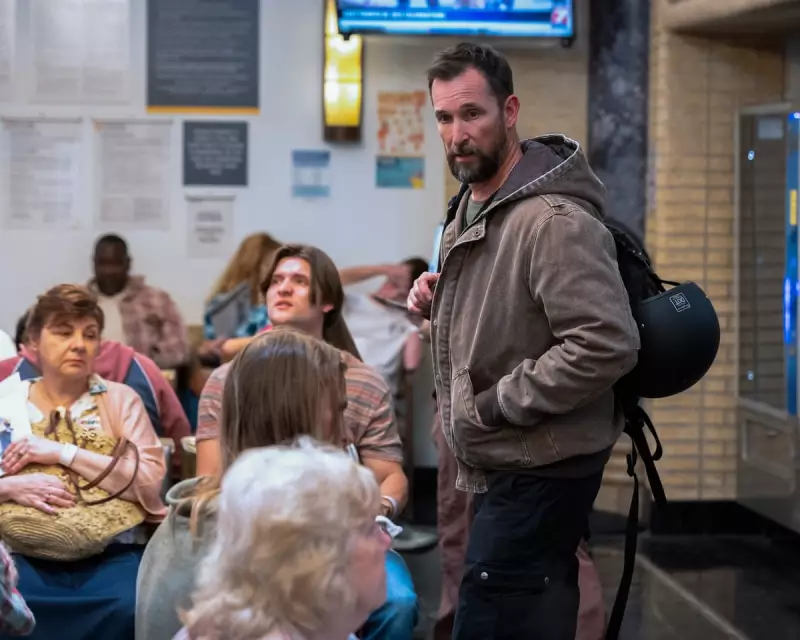
The award-winning medical drama The Pitt has returned to HBO Max for its second season, continuing its role as a stark and unsettling mirror to the realities of the American healthcare system. The show, which premiered its new run earlier this month, uses the fictional Pittsburgh Trauma Medical Center (PTMC) as a pressure cooker to explore the systemic strains, financial perversities, and human costs that define medicine in the United States.
A Passport to a Broken System
This season introduces a new conceptual tool within the drama: 'patient passports'. These leaflets, the brainchild of tech-savvy new attending physician Dr Baran Al-Hashimi (played by Sepideh Moafi), are designed to guide patients through ER procedures and wait times. They serve as a potent metaphor for the series itself, acting as a viewer's guide into the confounding, often cruel world of US healthcare.
The passports are met with skepticism from the show's emotional core, Dr Michael 'Robby' Robinavitch, portrayed by recent Golden Globe winner Noah Wyle. His resistance sets up a central thematic conflict for the season, pitting tradition against innovation and human intuition against data-driven efficiency. This tension unfolds against a backdrop that remains terrifyingly authentic, having been hailed as the most medically accurate drama on US television.

Graphic Realism Meets Systemic Critique
Created by R Scott Gemmill and executive produced by ER veteran John Wells, The Pitt successfully adapts the network medical procedural for the streaming era. It retains the real-time pacing and life-or-death stakes but layers on HBO's signature graphic detail, from gruesome medical procedures to the relentless bureaucratic grind. However, its true power lies not in the convincing fake blood but in its expansive view of the healthcare ecosystem.
The show dedicates significant screen time not just to doctors, but to nurses, administrators, social workers, and EMS crews. It painstakingly portrays the mundane yet critical challenges usually edited out of prime-time dramas, offering a holistic and damning portrait of a system on the brink. The drama's inherent anxiety—the constant threat of catastrophe—is framed not as mere entertainment contrivance but as a reflection of a genuinely precarious real-world environment.
An Unflinching Look at the American Condition
While the psychological burdens of care are universal, The Pitt is fundamentally a show about the United States. It holds up a lens to the world's most medicalised, expensive, and inequitable major healthcare system. The series subtly contextualises its emergency room chaos within a nation where life expectancy is falling, rural hospitals are closing, and 20 million people just faced soaring insurance premiums after federal subsidies were cut.
Season two sharpens its focus on two looming existential threats: the labyrinthine insurance system and the rapid incursion of generative AI into medicine. The former is embodied by case manager Nurse Noelle Hastings (Meta Golding), who battles to find care that patients can actually afford. The latter is championed by Dr Al-Hashimi, who sees AI as a tool to combat physician burnout, though others fear it will merely be used to demand even higher patient throughput.
For viewers, particularly the millions who interact with this system, watching The Pitt provides a form of catharsis. It names and dramatises the daily frustrations, fears, and financial absurdities they know all too well. The show serves as a vital, if dramatised, passport to understanding the compounded crises—from gun violence and medical racism to corporate profiteering—that make American healthcare a source of national trauma. Its simulated emergencies may be glossy and heightened, but the profound, hyper-real anxiety coursing through its corridors is unmistakably authentic.