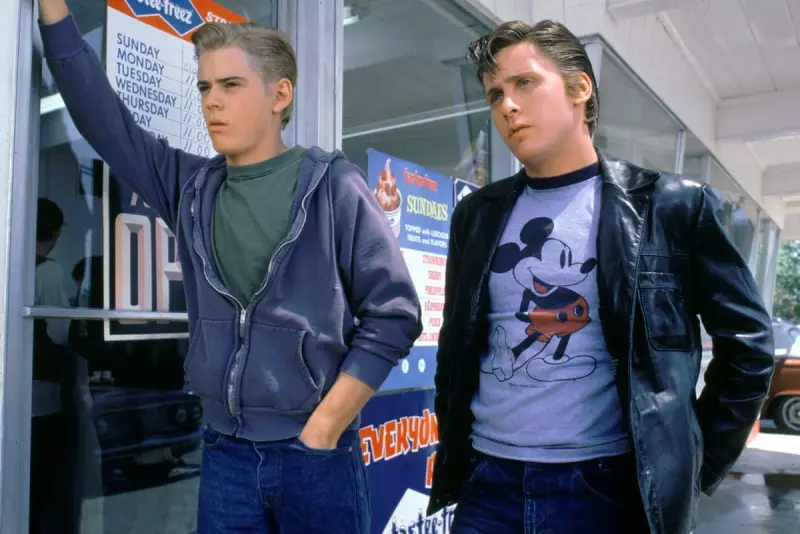
Francis Ford Coppola's 1983 adaptation of S.E. Hinton's novel, The Outsiders, is widely known as a seminal coming-of-age drama about rival teenage gangs in 1960s Oklahoma. However, a compelling argument posits it as a secretly, profoundly gay film—despite the complete absence of any openly homosexual characters.
A Surface of Greasers and Socs, A Subtext of Male Beauty
On the surface, the film charts the conflict between the working-class 'Greasers' and the affluent 'Socs' (Socials) in Tulsa. Yet, for many viewers, particularly those from the LGBTQ+ community who saw it in the 1980s, the narrative is almost secondary to the film's visual obsession with its young male cast.
The frame is saturated with an abundance of male beauty, featuring then-rising stars like Tom Cruise, Rob Lowe, Matt Dillon, Patrick Swayze, and C. Thomas Howell. The cinematography by Stephen H. Burum lingers on expressive eyes, defined cheekbones, and the gentle ripple of muscles, creating an aesthetic that borders on the fetishistic. This visual language, centring the male form in a rugged yet poetic light, evokes a homoerotic sensibility reminiscent of artists like Jean Genet or Walt Whitman.

Sexless Plot, Homoerotic Undertones
Rewatching the film reveals a curious lack of heterosexual sexuality. Female characters are scarce, with only Diane Lane's Cherry having a significant speaking role, and her function is primarily as a mediator, not a love interest. The Greaser boys, including the outwardly confident Two-Bit and the dreamy Sodapop, are notably without girlfriends.
This absence shifts the film's emotional and symbolic weight entirely onto the homosocial bonds between the male characters. The story becomes one of banishment and return, focusing on the sensitive protagonist Ponyboy (Howell) being thrust from his surrogate family and later reintegrated, strengthening the all-male community. The film's central Eden metaphor and its climactic rumble in the rain seem to suggest a world where the deepest connections and purest forms of expression exist solely between men.
A Personal Gateway for a Gay Audience
For a gay adolescent in the mid-80s, terrified of discovery, The Outsiders provided a crucial, if coded, refuge. The film offered a vision of a tight-knit community rallying around a sensitive, introverted, and literate outsider like Ponyboy—a character onto whom a young queer viewer could project their own hidden identity.
The feeling of being a 'Greaser on the inside' while living on the 'right side of the tracks' resonated deeply with the experience of closeted life. The film's operatic emotions, heightened angst, and theme of fighting against a predetermined fate spoke directly to the queer experience of the era, making it a foundational, if unspoken, gay text for a generation.
While Coppola may not have set out to make a gay film, the combination of its all-male focus, aestheticised portrayal of young men, and sexless narrative has cemented its status as a cult classic within queer cinema. It stands as a powerful example of how audiences can find their own narratives and identities reflected in art, beyond the explicit intentions of its creators.