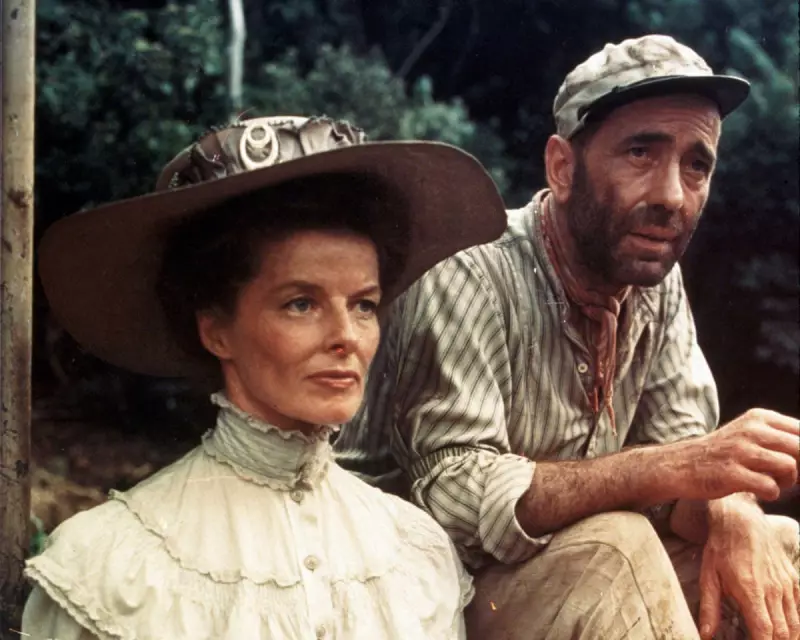
A remarkable piece of cinematic history met an ignominious end, according to revelations in a new biography of Hollywood legend Katharine Hepburn. The original boat used in the filming of the beloved 1951 adventure The African Queen was not preserved for posterity but was instead cut up for scrap metal in the 1960s.
The Fate of a Film Icon
The biography, titled Katharine Hepburn: A Life in Pictures and authored by film historian Dr. Eleanor Bryant, uncovers this surprising fate. The vessel, central to the film's story of a missionary and a boat captain in German East Africa during World War I, was reportedly broken apart at a scrapyard in Cairo during the mid-1960s.
This discovery contradicts long-held assumptions from fans and historians that the boat might have been lovingly restored or was languishing in a forgotten corner of a film studio backlot. Instead, it appears the physical heart of the classic movie, which starred Hepburn and Humphrey Bogart, was simply discarded.

Separating Fact from Replica
The revelation clarifies a point of confusion for many film enthusiasts. Several boats have claimed the title of 'The African Queen' over the decades, with one notably offering tourist rides in Key Largo, Florida. Dr. Bryant's research, however, confirms these are replicas or later boats used for promotional purposes.
The original vessel used during the arduous on-location shoot in the Belgian Congo and Uganda was left in Africa after production wrapped. Its eventual destruction means a tangible link to one of Hollywood's greatest on-screen pairings has been permanently lost.
A Legacy Beyond the Hull
Despite the loss of the physical artefact, the film's legacy remains untarnished. The African Queen, directed by John Huston, was a critical and commercial success. It earned Humphrey Bogart his only Academy Award for Best Actor and solidified Hepburn's status as a formidable talent capable of thriving in tough conditions.
Dr. Bryant's biography suggests that for Hepburn, the value of the experience lay not in the boat itself, but in the challenging and transformative shoot. The book details how she embraced the spartan conditions, which stood in stark contrast to typical Hollywood luxury.
The story of the boat's scrapping serves as a sobering reminder of how iconic props and pieces of film history were often not valued as future heritage in the mid-20th century. Today, such items would almost certainly be curated and displayed in museums or dedicated archives.
While fans can no longer hope to see the genuine article, the film itself continues to captivate audiences. The loss of the boat underscores the importance of preserving cinematic history, even as The African Queen sails on eternally through the magic of the silver screen.