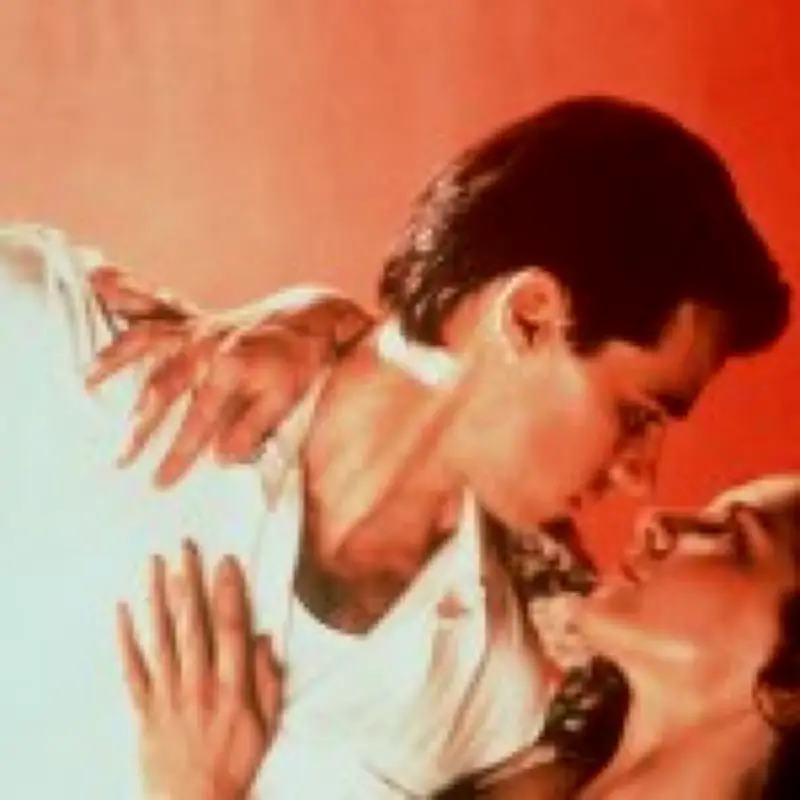
Paul Mercurio Reflects on Strictly Ballroom's Legacy and Rules Out Sequel
There are few moments in cinema as euphoric as the finale of Strictly Ballroom. Baz Luhrmann's 1992 directorial debut was a critical success and an enduring cult hit, set in the deeply unserious yet repressive world of Australian ballroom dancing, where nothing is as important as dancing the right steps. Lurid, charmingly camp, and unmistakably Australian, the film tells the tale of frustrated rule-breaking ballroom star Scott Hastings and hapless beginner Fran as they partner up and shake up the status quo, much to the alarm of everyone around them.
That final scene still has audiences cheering, crying, and whooping every time: the moment defiant Scott slides across the dance floor on his knees before launching into the film's climactic paso doble with Fran. What follows—a rebellion against ballroom convention, a roaring crowd, and that famous slow clap climax against the backdrop of ludicrous officials trying to take them down—remains one of the most beloved endings in film history.
For Scott Hastings star Paul Mercurio, however, the scene that helped turn Strictly Ballroom into a 1990s classic wasn't as carefully choreographed as it looks. 'That's always a lovely moment,' he tells Metro, smiling as he recalls the now-iconic knee slide. Mercurio explains the move wasn't originally part of the film at all, but that he would regularly throw himself across the floor during rehearsals simply because he enjoyed it. 'I used to do knee slides everywhere, just because I loved it, just for fun,' he says. 'And then somehow Baz was like, “Why don’t you do a knee slider?” That scene came out of just me mucking around.'

A Career Launched by Strictly Ballroom
By the time Luhrmann cast him as Scott Hastings, Mercurio, who was 29 when the film came out, had already spent a decade as a principal dancer with the Sydney Dance Company. Strictly Ballroom would become both Luhrmann and Mercurio's feature film debuts and launch them both into an entirely different league. Also starring Tara Morice as Fran, Bill Hunter as the Donald Trump-esque head of the Australian Dance Federation, and Pat Thomson as Scott's overbearing mother, the movie would go on to become the first instalment in Luhrmann's celebrated Red Curtain Trilogy, later joined by Romeo + Juliet and Moulin Rouge!.
Premiering at Cannes before winning three Baftas among many other accolades, it transformed a low-budget Australian comedy into an international phenomenon. In a very Baz Luhrmann style, it was soundtracked by a string of unforgettable tracks, from Love Is In The Air to Time After Time, helping cement its status as a joyous crowd-pleaser. And here in the UK, it also helped inspire one of the biggest television hits of the past two decades: Strictly Come Dancing. He was even asked to be a judge on Strictly when it launched over 20 years ago, but he wasn't able to due to work commitments in Australia.
Why Strictly Ballroom Still Resonates
Part of the film's lasting appeal, Mercurio believes, is that its central conflict still feels familiar. While Strictly Ballroom is ostensibly about dance, beneath the sequins and garish make-up lies a clash between image and authenticity, represented by the glitzy, status-obsessed ballroom world and the earthy warmth of Fran's Spanish family. 'I think the world's still like that,' he reflects. 'There's this element of wannabe famous people and people who think they're high fashion and high-end, and yet they're not. There's always an alternate sort of universe. The ballroom world thought they were fantastic and well-groomed and smart and sexy and all those things, but it was very surface.'
More than 30 years on, Mercurio still believes Strictly's finale deserves greater recognition. 'Isn't there something on YouTube saying the best all-time movie dance scenes, and Strictly Ballroom is only in there at number five or something? That should be number one,' Mercurio notes. When we discover Dirty Dancing occupies the top spot after a quick search, he slips briefly back into defiant Scott Hastings mode. 'Well, I reckon we did better moves!' he insists with a smile. 'But Dirty Dancing is all about that lift – I get it, I don't mind really. I think being in the top 10 is brilliant.'

Why a Sequel Is Off the Table
In a world where it seems like half of Hollywood is based on remakes, reboots, and sequels popping up decades after the original, it begs the question: would he return for a sequel if Luhrmann picked up the phone and offered it? 'I'd say, “Hey thanks Baz, but it's a bit late!”' he laughs, noting that he is now a 63-year-old man well past his dancing days. 'I can't dance anymore. You know, my body's done and dusted in terms of injury and I haven't danced professionally since 2004. I've gone on and been doing other things to make a living and as a dancer, like any professional athlete, there's a timeline on being at your peak.'
He adds with a chuckle: 'I've often thought what would they do as a sequel? And I thought, well, maybe Scott and Fran get married and open a fish and chip shop and then someone across the road opens a fish and chip shop and there's this whole thing about a chip-off, I don't know.'
Life After Dancing
Since retiring from professional dance, Mercurio has enjoyed a varied career spanning acting, television, and politics. He starred in films including Exit to Eden and Hunting For Shadows, took the lead in the Emmy-winning series The Bible: Joseph, and currently represents the electorate of Hastings in Victoria as a member of the Australian Labor Party. But it's Strictly Ballroom that brings him the most constant adoration, and he's still struck by the affection audiences still have for the film. 'How lucky am I?' he says.
You only have to spend a few minutes online to find fans dissecting scenes, sharing memories, and attending celebratory dress-up events inspired by the movie to see how loved it is to this day. 'To get that positivity coming back to me still, it's really, really lovely.'
Fame and Its Meaning
Although Strictly Ballroom turned him into a household name almost overnight, thanks in no small part to his dancing talent and heartthrob status as Scott Hastings, Mercurio admits fame itself never held much appeal. 'Look, fame is a funny thing. I was mildly famous in Australia for being a dancer here and around the world, and then of course Strictly Ballroom took that up a massive notch.' Fame, he adds, is 'flaccid. There's nothing in it. If you're famous because you invented something that saved the world or a rocket that took you to Mars, that kind of seems worthwhile. But I guess I was famous because I made people want to dance and I made them laugh, so that makes me feel pretty good,' he concedes. Still, he remains 'humbled and grateful to have had that opportunity, and that can never be taken away.'
Strictly Ballroom Returns to Cinemas
Mercurio may soon find himself back in the spotlight and with a new batch of devoted fans, with Strictly Ballroom returning to cinemas and arriving in a new 4K restoration for a fresh generation of viewers. 'I'll give them 20 bucks each,' he jokes when asked how to encourage a new generation to go and see it. 'It's funny, people sort of resist it, and sometimes they resist things because sometimes they don't want to admit they might enjoy something. And dancing and theatre, arts and musicals and things like that, people are like, oh, I don't think I'm gonna like it, so I'm not going to give it a go. But it's important to be open-minded, embrace diversity in all its forms. If you think you might not like something, all the more reason to sit down and watch it, because you never know, you might just walk away. Or you might actually stand up at the end of it and clap and cheer.'
Strictly Ballroom in 4K is in cinemas and on Apple TV, Amazon Prime Video, and YouTube Movies from June 12.