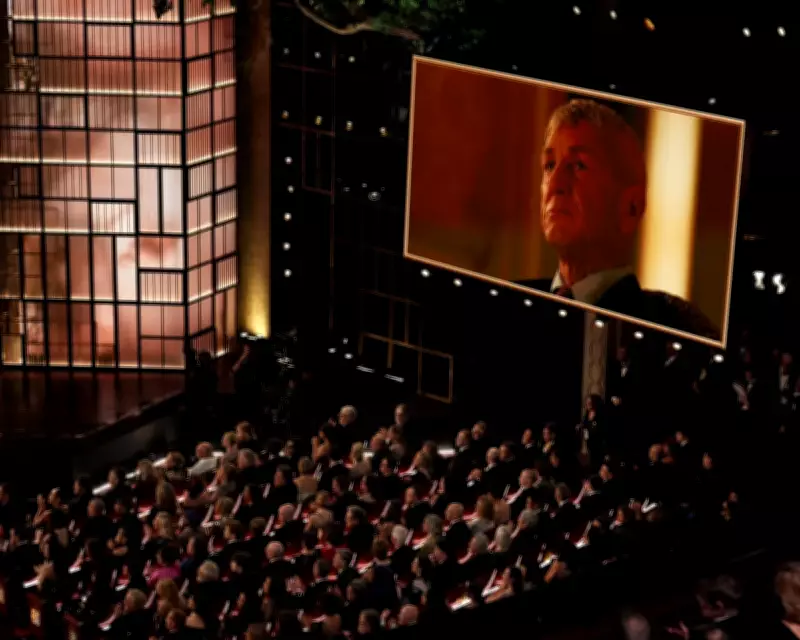
In a move that defied Hollywood convention, Sean Penn was notably absent from the 2026 Oscars ceremony despite winning the Academy Award for Best Supporting Actor for his role in "One Battle After Another." The actor's decision to skip the prestigious event, reportedly due to a prior commitment in Ukraine, has positioned him within an exclusive lineage of Oscar-winning refuseniks who have chosen not to collect their awards in person.
A Tradition of Absence
While the Oscars are often viewed as the pinnacle of professional achievement in the film industry, Penn's no-show is not without precedent. The last instance occurred in 2024 when Hayao Miyazaki, citing age-related concerns, did not attend to accept his award for "The Boy and the Heron." Before that, notable absences include Roman Polanski, who could not collect his Best Director Oscar for "The Pianist" due to being a fugitive, and Woody Allen, who habitually misses the ceremony for prior engagements with his jazz band.
Historical Context of Oscar No-Shows
The phenomenon of winners skipping the Oscars dates back to the 20th century, where it was sometimes seen as a chic or principled stance. In 1936, writer Dudley Nichols declined his award in protest of the Academy's dispute with the Screen Writers' Guild. Other examples include Alice Brady, Joan Crawford, and Henry Fonda, who missed ceremonies due to illness or injury in 1938, 1945, and 1982, respectively.

More dramatic excuses have also emerged over the decades. George C. Scott refused his Oscar in 1971, labeling the ceremony a "meat parade," while Paul Newman opted out in 1987 due to the exhaustion of awards season. Marlon Brando famously boycotted the 1973 Oscars in protest of Hollywood's portrayal of Native Americans, sending Sacheen Littlefeather to reject the award on his behalf. Katharine Hepburn, who won four Oscars between 1934 and 1982, never attended any ceremony, attributing her absence to personal preference.
Penn's Ukrainian Commitment
Penn's absence was highlighted when presenter Kieran Culkin had to carry the award offstage after announcing his win. Reports indicate that Penn was in Ukraine, where he was photographed in central Kyiv wearing sunglasses and carrying a box of cigarettes. Ukrainian President Volodymyr Zelenskyy later posted a picture of them meeting in his office, underscoring Penn's involvement in significant global events rather than Hollywood festivities.
This move has only served to burnish Penn's reputation as an actor engaged with world affairs, contrasting with the glitz and glamour of the Oscars. His absence echoes the sentiment of earlier refuseniks who prioritized personal or political commitments over industry recognition.
Notable No-Shows and Their Stories
Among the more intriguing no-shows is Elizabeth Taylor's absence in 1967 when she won for "Who's Afraid of Virginia Woolf?" Rumors suggest she stayed home in solidarity with her husband, Richard Burton, who was also nominated but expected to lose, highlighting the personal dynamics that can influence attendance.
Penn's decision to join this elite group of nonconformists raises questions about the future of award ceremonies. Could this spark a new movement where other stars follow suit, opting out of events to focus on broader issues or personal principles? While it may shorten ceremonies, it also challenges the traditional allure of Hollywood's biggest night.
As the Oscars evolve with modern touches like K-pop performances and diverse winners, Penn's no-show serves as a reminder of the enduring appeal of individuality and commitment beyond the silver screen. His placement among historical refuseniks adds a layer of cool defiance to an event often criticized for its predictability.