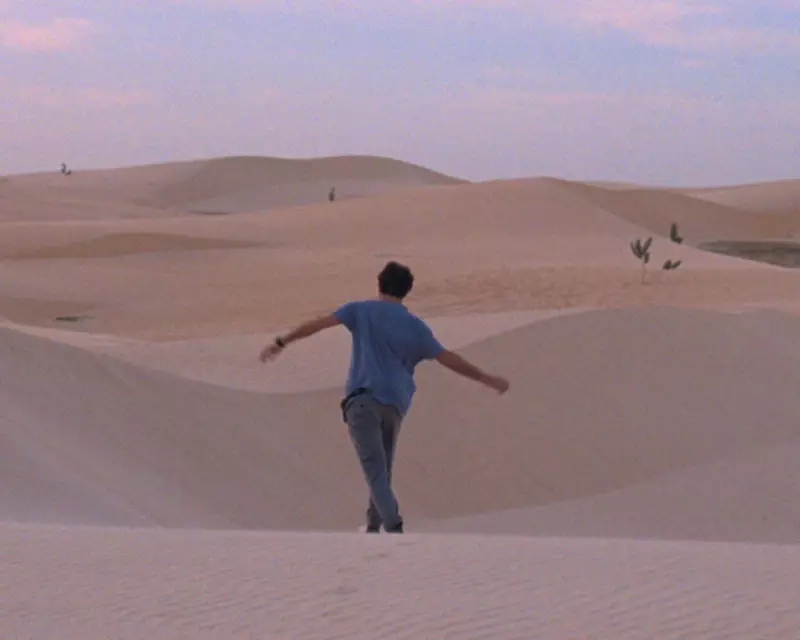
A new film from Portuguese director Pedro Pinho offers a sprawling, intelligent, and deeply human look at the complexities of postcolonial Africa. 'I Only Rest in the Storm' follows a disaffected NGO worker grappling with his own privilege and purpose in Guinea-Bissau.
A White Man's Burden in a Cacophonous Paradise
The film centres on Sérgio, played by Sérgio Coragem, a Portuguese environmental engineer working on a road construction project. He is immediately established as an outsider, first seen driving through a sandstorm like a figure from an Antonioni film. His internal struggle is palpable; he is a 'good man' whose very presence is laced with the paternalism and hypocrisy of Western intervention.
His attempt to live purely 'in the moment' is challenged by everyone around him. A local sex worker pointedly tells him that what disgusts her most are 'good men'. This sentiment echoes through Pinho's narrative, which is acutely aware that even hand-wringing self-critique over three hours can be another form of white privilege.

Finding Refuge in a Gender-Fluid Utopia
Sérgio seeks escape and connection with Gui, a lofty Brazilian drag queen portrayed by Jonathan Guilherme. Gui and their gender-fluid friends, who congregate at a bar run by market hustler Diara (Cleo Diára), represent a racial and sexual utopia. This space offers a fleeting sense of belonging for the rootless expat.
However, the film suggests that Sérgio's bisexuality mirrors a deeper, more problematic non-commitment. He floats between the insulated expat enclave and the vibrant local streets, belonging to neither. This unaligned status, however, makes him a perfect conduit for the audience to witness the multifaceted postcolonial relations in the country.
Shades of Grey in a Nation's Development
The central road project becomes a metaphor for these tensions. Opinions are fiercely divided on whether it will bring economic progress or environmental ruin. These debates are underscored by pervasive poverty, corruption, and violence, highlighted by the mysterious disappearance of Sérgio's predecessor.
Smooth-talking local businessman Horatio champions progress but refuses to discuss the disappearance. When he offers Sérgio a €150,000 bribe, Diara bluntly reminds the engineer that scruples are a luxury he can ill afford. Pinho's film meticulously paints these numerous shades of moral grey, never letting the audience or its protagonist off the hook for Western complicity.
A Fumbling, Human Negotiation of Position
Stylistically, Pinho favours long, meandering conversational scenes over the visual concision of filmmakers like Claire Denis. Yet this approach generates a warm, ruminative quality. The extended dialogues allow every character, and by extension the director's own perspective as a white observer, to fully articulate their position.
The film is described as continually 'fumbling after, and negotiating for' its stance on economic and racial questions. This negotiation reaches a raw climax in a bracing final sex scene where Sérgio once again finds himself caught in the middle. Pedro Pinho powerfully asserts that the personal is irrevocably political.
'I Only Rest in the Storm' will be showing at the Institute of Contemporary Arts (ICA) in London from 5 December.