Project Hail Mary Film Adaptation Delivers Unexpected Cinematic Triumph
When news broke that Andy Weir's acclaimed science fiction novel Project Hail Mary would be adapted for the big screen, many fans approached the announcement with cautious skepticism. The track record of literary adaptations, particularly in the sci-fi genre, has been notoriously uneven. However, the finished film directed by Phil Lord and Christopher Miller has managed to not only meet expectations but significantly surpass them, creating a cinematic experience that honors its source material while standing firmly on its own merits.
A Legacy of Successful Sci-Fi Adaptations
This marks the second time Andy Weir's work has been translated to film, following the remarkable success of The Martian in 2015. That Ridley Scott-directed adaptation starring Matt Damon became the iconic filmmaker's highest-grossing movie, outperforming even classics like Alien and Gladiator. Weir has established himself as a master of exploring human resilience under extreme circumstances, examining what constitutes our essential humanity when stripped of all comforts and familiar surroundings.
His narratives consistently parallel the vastness of the human psyche with the infinite expanse of the cosmos, joining the ranks of thoughtful space epics like Ad Astra, Arrival, and Interstellar. These stories possess a unique ability to provoke both intellectual engagement and visceral emotional responses, often leaving audiences with goosebumps and profound questions about existence.

Ryan Gosling's Captivating Performance as Ryland Grace
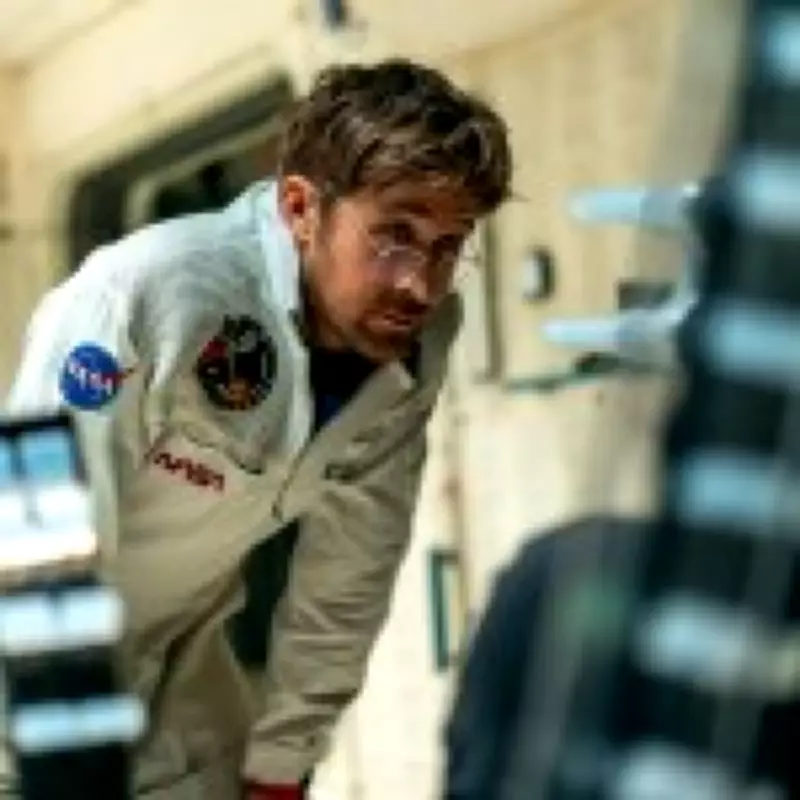
In Project Hail Mary, Ryan Gosling portrays Ryland Grace, a man who awakens from a coma to find himself completely alone aboard a spaceship with no memory of how he arrived there or what mission he's undertaking. As the narrative unfolds, viewers learn that the Sun is dying, and Grace represents humanity's last hope—the sole survivor of a desperate rescue mission across the solar system to save Earth from an alien amoeba threat.
The novel alternates between Grace's present predicament on the spaceship and flashbacks that gradually reveal how he came to be there. Throughout the book, readers remain firmly embedded in the protagonist's consciousness, experiencing his dry sarcastic humor, world-weary perspective, and self-perception as an ordinary, even cowardly individual.
From his first moments on screen, Gosling embodies this complex character with remarkable authenticity. He brings impeccable comedic timing, effortless charm, and a nuanced ability to balance light and dark emotional tones that may actually endear viewers to the character more effectively than the literary version managed. Gosling transitions seamlessly from moments that might bring tears to scenes that provoke genuine laughter, demonstrating impressive range throughout the film's two-hour-and-twenty-six-minute runtime.
The Chemistry Between Unlikely Allies
Perhaps the most ambitious aspect of this adaptation involves bringing Rocky, Grace's alien counterpart, to life. Portrayed by James Ortiz, Rocky is best described as a stony spider-like creature possessing formidable intelligence alongside a surprisingly naive worldview. As Grace attempts to save humanity, he forms an unlikely partnership with this extraterrestrial being who shares the same urgent goal.
The entire emotional core of the narrative depends on the chemistry between these two characters and the audience's ability to connect with their burgeoning friendship. Despite Rocky having no discernible facial features and communicating through a generic, robotic voice, the character shines on screen with surprising emotional resonance. The relationship development between Grace and Rocky proves unexpectedly moving, exceeding even what dedicated readers of the novel might have anticipated.
Supporting Cast and Narrative Adaptation
In flashback sequences, viewers witness Grace's dynamic with Stratt, portrayed by Sandra Hüller, the brilliant mastermind behind the Hail Mary project who approaches the mission with uncompromising pragmatism. Their professional relationship provides compelling counterpoint to the primary narrative, with the two actors playing off each other with delightful precision.

Adapting a novel as scientifically dense and narratively complex as Project Hail Mary presented significant challenges. The source material contains extensive technical explanations and meandering passages that could potentially overwhelm cinematic pacing. However, the film manages this transition with remarkable skill, streamlining the narrative while preserving its essential spirit. The dialogue flows naturally, the pacing maintains consistent engagement, and judicious edits to the source material actually enhance the viewing experience.
A Faithful Yet Elevated Adaptation
For devoted fans of the novel, the book remains available as supplemental material, but the film version effectively distills the story into its most compelling elements. At a brisk two and a half hours, the movie presents the narrative's highlights without becoming bogged down in excessive exposition. This represents a faithful adaptation that genuinely elevates the source material through cinematic language.
Project Hail Mary successfully combines multiple genres into a cohesive whole: it functions as a thrilling space adventure spanning the solar system, a heartfelt meditation on friendship across unimaginable divides, and an ultimately hopeful portrait of human resilience. Ryan Gosling delivers what deserves to be recognized as an award-worthy performance, demonstrating chameleon-like versatility that anchors the entire production.
Minor Criticisms and Overall Impact
Despite its numerous strengths, the adaptation does include a few elements that might give pause to certain viewers. Two scenes from the novel that many readers cherished failed to make the transition to film, potentially disappointing dedicated book enthusiasts. Additionally, the narrative occasionally leans into American exceptionalism tropes common to the science fiction genre, a characteristic that some international viewers might find limiting in what otherwise aspires to be a universal story.
Certain moments might strike some as slightly cheesy, and the plot requires occasional suspension of disbelief. However, these minor considerations hardly diminish the overall achievement. Project Hail Mary delivers precisely what it promises: an energetic, emotionally resonant space epic that will leave audiences feeling genuinely moved.
For viewers approaching the story without prior knowledge of the novel, the film offers sufficient twists and narrative surprises to maintain consistent engagement. The unexpected alien partnership alone provides enough novelty to captivate even seasoned sci-fi enthusiasts. This represents the ultimate crowd-pleaser, combining thrilling adventure with surprising emotional depth.
True to Andy Weir's signature style, the narrative maintains a persistent thread of hope that proves irresistibly compelling. The emotional resonance catches viewers off guard, creating a cinematic experience that lingers long after leaving the theater. Project Hail Mary arrives in UK cinemas beginning March 19, 2026, offering audiences an opportunity to experience this remarkable adaptation on the big screen where it truly belongs.