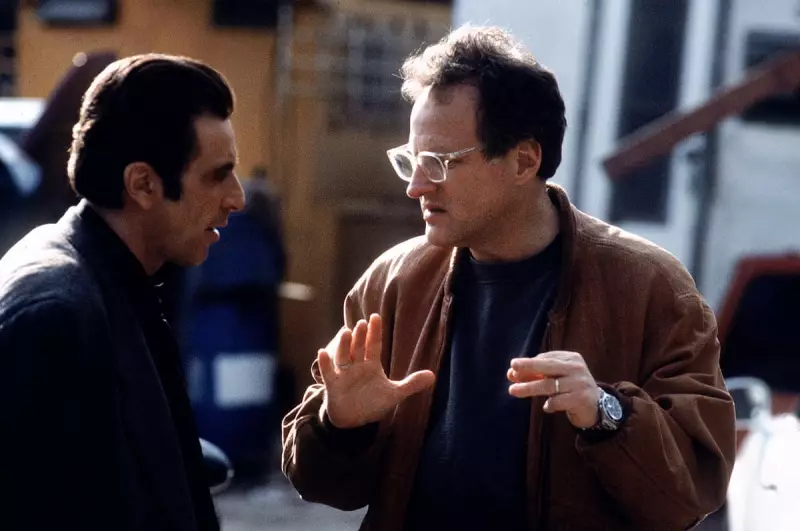
As his landmark crime epic Heat celebrates its 30th anniversary this month, legendary director Michael Mann has opened up about the film's enduring legacy, the challenges of adapting his novel for a sequel, and his staunch defence of traditional filmmaking in the age of artificial intelligence.
The Agonising Path to Heat 2
While he adapted Thomas Harris's Red Dragon for 1986's Manhunter in a brisk five weeks, Mann found the process of turning his own novel, Heat 2, into a screenplay far more gruelling. Co-authored with Meg Gardiner, the book serves as both a prequel and sequel to the 1995 film. Mann initially anticipated a 10-12 week writing period but confessed the self-editing process took nearly ten months. "That selection became agonising to say the least," he revealed during a Zoom interview from Los Angeles, explaining the difficulty of condensing the novel's events into a feature-length script.
Despite widespread reports that the project has moved from Warner Bros to United Artists with a rumoured $150 million budget and a cast potentially including Christian Bale and Leonardo DiCaprio, Mann remains cautiously optimistic. "No picture happens until it’s happening," he stated, while indicating a prospective start date of August 3 for filming.

A Traditionalist's View on AI and the Cinema Experience
The landscape of film has transformed dramatically since Heat's release in December 1995, an era dominated by Blockbuster Video and before the rise of streaming giants like Netflix. Today, the industry grapples with the rapid advance of AI. A recent report on Heat 2 notably highlighted its intention to hire over a thousand background actors, pointedly adding "not a lot of AI there." Mann, a graduate of the London Film School in 1967, stands as a traditional artisan in this new world.
"Everybody’s very concerned," Mann commented on AI's rise, acknowledging the caution from guilds representing actors, writers, and directors. He argues that regardless of the technology used, performance must originate with human creators. "That performance has to be acted by an actor, written by a writer, and directed by a director," he asserted.
This philosophy extends to his view on theatrical exhibition amidst major studio mergers and acquisitions, such as Netflix's proposed $83 billion purchase of Warner Bros. Mann, who cites Dr. Strangelove as a key influence, is unequivocal: "I make films for a large presentation." He views it as a "diminution" for his work to be seen on a small phone screen, championing the immersive power of cinema.
The Enduring Magic of Heat's Iconic Cast
A cornerstone of Heat's lasting appeal is the historic pairing of Robert De Niro and Al Pacino as master thief Neil McCauley and LAPD detective Vincent Hanna. Mann recalled the casting idea emerging effortlessly over breakfast with a producer. "The two greatest actors of their generation!" he said, praising De Niro's "internal power" and Pacino's "exuberance."
The film's authenticity stems from its roots in real life, based on the experiences of Chicago detective Chuck Adamson and his pursuit of career criminal Neil McCauley. The famous diner scene where the two protagonists meet was directly inspired by a real 1963 encounter between Adamson and McCauley. For that pivotal moment—the first time De Niro and Pacino shared the screen—Mann agreed to De Niro's suggestion not to rehearse, preserving a raw, spontaneous tension.
Similarly, the film's blistering downtown Los Angeles shootout was achieved through meticulous preparation. Mann hired former SAS operatives to train the cast for months. The actors used full-load blanks, and the terrifying, reverberating sound captured on the day was used in the final film, discarding most traditionally designed sound effects.
Reflecting on the tragic, airport-adjacent finale, Mann described wanting the audience in a "fugue state," empathising wholly with both hunter and hunted. The scene's power, culminating in Hanna holding McCauley's hand, lies in the "grace note" of understanding between these two formidable opposites.

Three decades on, Heat remains a benchmark for the crime genre, a testament to Mann's unwavering commitment to kinetic authenticity and profound character drama—a commitment he now carries forward into the long-awaited next chapter.