Ian McKellen Breathes Life into LS Lowry's Lost Interviews in Groundbreaking BBC Documentary
In a remarkable television event, the BBC presents LS Lowry: The Unheard Tapes, featuring Sir Ian McKellen delivering a masterful lip-syncing performance of the notoriously private painter's previously lost interviews. This documentary unveils intimate conversations recorded between 1972 and 1976, just before Lowry's death, offering unprecedented insight into the artist's solitary life and creative process.
The Unlikely Friendship That Preserved History
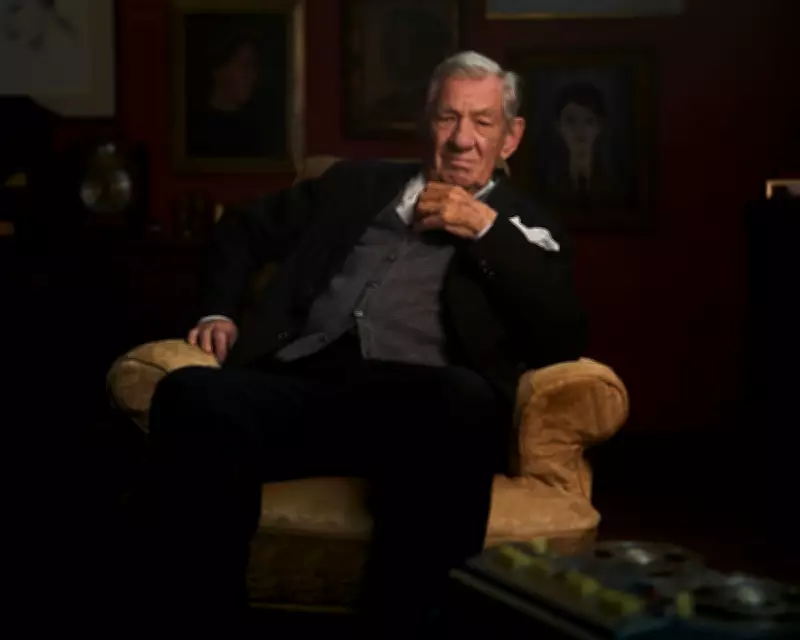
In 1972, 27-year-old Angela Barratt arrived at the home of 84-year-old LS Lowry with no journalistic experience but abundant admiration for the Manchester painter. Despite their generational and experiential differences, the pair developed an unexpected bond, meeting at least fifteen times in Lowry's home over four years. Surrounded by family portraits and paintings propped against furniture, with a reel-to-reel recorder capturing every word, Lowry gradually revealed his soul to this young admirer.
Barratt never transcribed these interviews before her death, and the tapes remained undiscovered until her son found them in 2022. Now broadcast for the first time, they form the foundation of this landmark BBC film that combines dramatized reconstructions with archival material and commentary from notable figures including Jeanette Winterson, Stuart Maconie, art critics, curators, biographers, and even a psychotherapist.

McKellen's Masterful Interpretation
Sir Ian McKellen, the acclaimed Lancashire-born actor, lends his considerable talents to voicing Lowry's words with astonishing precision. Initially, hearing Lowry's characteristically northern, deadpan delivery emerge from McKellen's expressive mouth requires adjustment, but viewers quickly marvel at the synchronization between artist and interpreter.
McKellen captures Lowry's essence through meticulously timed pauses, yawns, sniffs, and nose wipes, creating a portrait of bleak northern beauty. When Barratt asks, "Were you often by yourself?" McKellen-as-Lowry responds with heartbreaking simplicity: "I like it like that, yeah ... I like it like that now." The performance reveals the artist's self-effacing tenderness and profound loneliness.
Lowry's Hidden Life and Artistic Evolution
The documentary explores Lowry's complicated relationship with his environment and background. In 1909, his family moved from Manchester's affluent Victoria Park to industrial Pendlebury, dominated by mills and factories. Initially hating the landscape, Lowry eventually found his artistic purpose there, declaring, "So I said I'll do it as best as I can." He began sketching on envelope backs and notebooks, developing his distinctive "matchstick men" paintings at night.
One significant revelation concerns Lowry's secret employment: for forty-two years, while establishing himself as an artist, he worked full-time as a rent collector. This middle-class occupation created tension with his working-class subjects, yet perhaps provided the observational distance that made his paintings so distinctive. "People thought I was a great joke," he confesses regarding his family's embarrassment about his artistic pursuits.
Profound Personal Revelations
The interviews uncover deeply moving aspects of Lowry's personal history. A lifelong bachelor, he hints at a lost love who "died in an epidemic," then immediately retreats with, "I've never been in love." His relationship with his critical mother proves particularly poignant; she refused to teach him piano because "she thought I'd be awkward," to which Lowry adds, "Guess I would have been, too."
When asked about his happiest period, Lowry identifies the years before 1932, after which "the deaths began." His father's death that year marked the start of profound loss, culminating in his mother's death seven years later, which devastated him. "Kept me out of the madhouse," he tells Barratt about continuing to paint through his grief. "I'm serious, you know."

A Documentary of Multiple Layers
While Annabel Smith delivers a powerful performance as Angela Barratt, capturing her gentle yet astute questioning style, some viewers might wonder if The Unheard Tapes would have benefited from a more focused approach. The documentary's collage format, incorporating numerous talking heads alongside the dramatized interviews, occasionally dilutes the intimacy of the original conversations.
Nevertheless, the film stands as a significant contribution to art history, preserving and presenting a unique record of one of Britain's most distinctive painters. McKellen's performance alone makes the documentary essential viewing, offering a window into Lowry's world that might otherwise have been lost forever. The combination of historical discovery and artistic interpretation creates a moving tribute to both the painter and the young woman who recognized the importance of documenting his story.