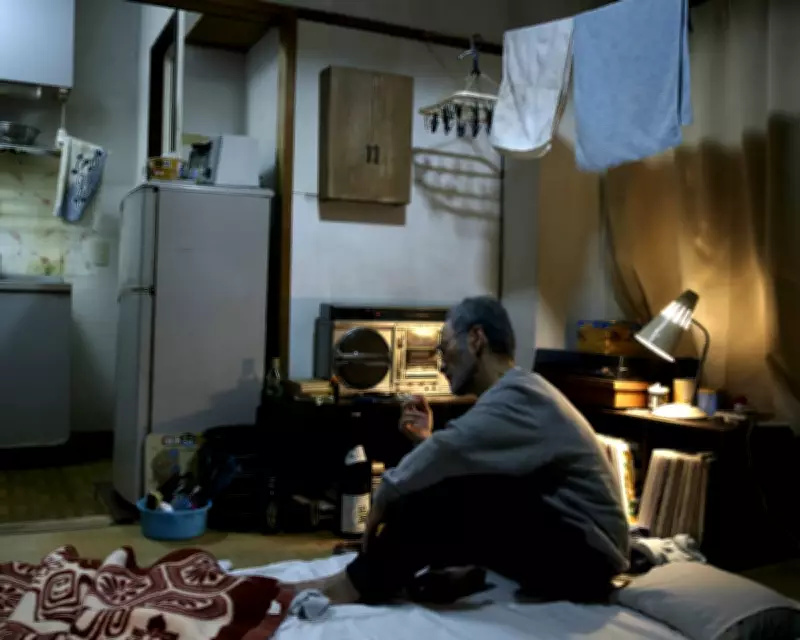
Masao Adachi's Revolutionary Cinema: A Legacy of Political Art in Japan
Masao Adachi, a pioneering Japanese film director, has left an indelible mark on the world of political cinema through his revolutionary works that challenge societal norms and advocate for radical change. Born in 1938, Adachi emerged as a key figure in the Japanese New Wave movement, using his films as powerful tools for political expression and social critique. His career, spanning decades, reflects a deep commitment to blending artistic innovation with unwavering activism, making him a seminal influence in both Japanese and global cinematic landscapes.
The Early Years and Political Awakening
Adachi's journey into filmmaking began in the 1960s, a period of intense political upheaval in Japan, marked by student protests and anti-establishment movements. He initially gained recognition for his collaborations with other avant-garde filmmakers, such as Koji Wakamatsu, producing works that delved into themes of rebellion, sexuality, and state oppression. Films like "The Embryo Hunts in Secret" (1966) showcased his early experimentation with narrative form, using surreal imagery to critique authoritarian structures and explore the human condition under political duress.
His political awakening was further solidified through his involvement with the Japanese Red Army, a radical leftist group, which influenced his later works to adopt a more militant and direct approach to cinema. This period saw Adachi producing documentaries and feature films that explicitly addressed issues of imperialism, class struggle, and revolution, positioning him as a vocal advocate for marginalized voices and systemic change.

Key Works and Cinematic Techniques
Adachi's filmography is characterized by its bold use of cinematic techniques to convey political messages. In "A.K.A. Serial Killer" (1969), he employed a documentary-style approach to examine the life of a convicted murderer, linking individual actions to broader social and economic conditions. This film exemplified his "landscape theory," where he focused on environmental and spatial elements to reveal underlying power dynamics and societal injustices.
Another notable work, "Prisoner/Terrorist" (2007), reflects his later career resurgence, exploring themes of incarceration, resistance, and the legacy of political activism. Through non-linear storytelling and stark visual compositions, Adachi continued to push boundaries, encouraging audiences to question established narratives and engage with complex political realities. His films often feature minimal dialogue, relying instead on visual symbolism and atmospheric tension to evoke emotional and intellectual responses.
Influence on Contemporary Japanese Cinema
Today, Masao Adachi's legacy resonates strongly within Japan's film industry, inspiring a new generation of directors who seek to integrate political themes into their art. Filmmakers like Sion Sono and Hirokazu Kore-eda have cited Adachi's work as an influence, particularly in their explorations of social issues and human rights. His emphasis on using cinema as a medium for activism has encouraged contemporary artists to address topics such as government surveillance, economic inequality, and environmental crises in their projects.
Moreover, Adachi's contributions extend beyond filmmaking; he has been involved in academic discussions and public debates, advocating for the role of art in fostering social change. His writings and lectures continue to shape discourse on political cinema, emphasizing the importance of artistic integrity and ethical engagement in an era of global political challenges.
Challenges and Controversies
Throughout his career, Adachi faced significant challenges, including censorship, legal battles, and criticism from both political opponents and artistic peers. His association with radical groups led to periods of exile and imprisonment, yet he remained steadfast in his beliefs, using these experiences to inform his creative output. Controversies surrounding his work often stem from its uncompromising stance on issues like state violence and corporate exploitation, sparking debates about the boundaries of art and politics.

Despite these obstacles, Adachi's resilience has cemented his status as a cultural icon, with retrospectives and film festivals worldwide celebrating his contributions. His ability to navigate personal and professional adversities while maintaining a prolific output underscores his dedication to revolutionary ideals and artistic innovation.
Conclusion: A Lasting Impact
Masao Adachi's revolutionary cinema stands as a testament to the power of film as a catalyst for political awareness and transformation. By merging avant-garde aesthetics with radical politics, he has created a body of work that not only documents historical struggles but also inspires ongoing dialogues about justice and freedom. As Japan and the global community grapple with contemporary issues, Adachi's legacy reminds us of the enduring relevance of art in challenging the status quo and envisioning a more equitable world. His influence continues to ripple through cinematic circles, ensuring that his voice remains a vital part of political and cultural conversations for years to come.