When Disney acquired Lucasfilm for approximately $4 billion in 2012, it seemed like a straightforward business decision: who wouldn't invest in a saga that contained an entire galaxy in a box? For a time, the gamble paid off handsomely. The Force Awakens grossed over $2 billion worldwide, Rogue One surpassed $1 billion, and The Last Jedi earned more than $1.3 billion despite igniting a cultural firestorm. Even the widely criticized The Rise of Skywalker brought in over $1 billion for Disney.
The Disney+ Era and Its Discontents
Then came Disney+, which provided a perfect delivery system for Star Wars content. Fans no longer had to wait years between films; new series appeared every few months: Andor, The Book of Boba Fett, Obi-Wan Kenobi, Ahsoka, and The Mandalorian. Plot holes were filled, animated characters received their due, and audiences learned more about the middle management of galactic fascism than ever imagined possible. Yet, nearly 14 years after Disney's acquisition, critical notices increasingly declare the saga exhausted.
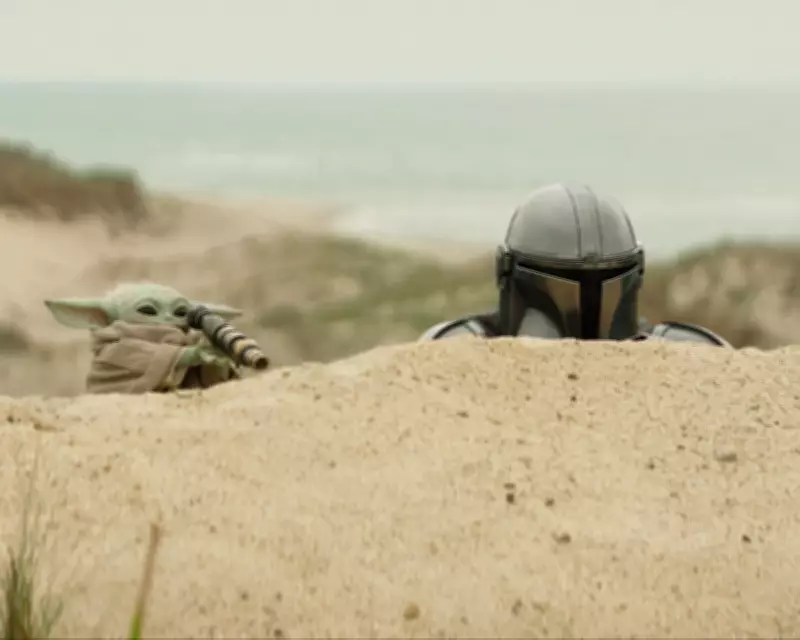
The Mandalorian and Grogu currently holds a 61% rating on Rotten Tomatoes, barely qualifying as “fresh.” Critics praise its charm, brisk pacing, visual polish, and the adorable Baby Yoda. However, they also note the film feels thin, formulaic, and televisual—more like three episodes of the Disney+ series than a grand cinematic restoration.

Is Star Wars an Impossible Franchise?
Jon Favreau’s film is perfectly fine as a standalone adventure. It features callbacks to villains from the TV series, Mando efficiently dispatching stormtroopers, and Grogu exploring new levels of cuteness. So what is the problem? Disney has tried almost everything: soft-rebooting the original trilogy with The Force Awakens, which worked commercially but set a trap by giving fans the old magic in new wrapping. Then The Last Jedi challenged the mythology and complicated the heroes, revealing the horror of modern blockbuster cinema in the social media era: audiences want incompatible things and are quick to accuse others of ruining their childhoods. The Rise of Skywalker attempted to reverse the previous film, pleasing almost no one.
Now, The Mandalorian and Grogu returns to characters fans actually like, with no major revelations about the Force or lineage. Mando has no genetic connection to Boba Fett, and Grogu is not the son of Yoda and Yaddle. It is an entertaining, old-fashioned matinee adventure set between the fall of the Galactic Empire and the rise of the First Order. For TV show fans, this may suffice. But if it does not meet expectations for a big-screen Star Wars film, one must ask: did George Lucas know what he was doing when he sold the franchise?
The Curse of Continuation
Star Wars has always been hard to get right. The prequels were divisive, the Ewoks were not universally beloved, and the 1978 Star Wars Holiday Special remains infamous. Perhaps the original trilogy had an unfair advantage: it actually ended. Lucas’s triptych told a simple, mythic story: farm boy discovers destiny, princess leads rebellion, scoundrel finds a cause, father is redeemed, Empire falls. It worked because it felt complete. Every attempt to continue it has reopened the wound. The Empire did not really fall, the Jedi did not truly return, Luke did not rebuild the order, Palpatine did not stay dead. The victory at Endor was not the end of tyranny but a temporary administrative reshuffle. Once that is accepted, the myth becomes less moving each time. Star Wars begins to feel like a galaxy where no one is allowed to retire, heal, or complete an emotional arc.
Even The Mandalorian, which began brilliantly as a lean western about a bounty hunter and his tiny frog-gobbling ward, ends up dragged into the franchise tractor beam of helmets, bloodlines, clones, councils, darksabers, and legacy cameos. It resembles the inevitable endpoint of the Disney bargain: a galaxy in a box, a myth on a conveyor belt, selling back exactly what we bought last time in slightly shinier packaging.

The Future of Star Wars on the Big Screen
Star Wars must deliver a proper movie with The Mandalorian and Grogu—otherwise, the franchise may be dead, at least on the big screen. The galaxy is now so congested that we seem doomed to shiny retreads of the same old story. While the film is perfectly fine matinee fodder, it highlights the curse of a franchise that cannot let go of its past.