Documentary Explores Chinese Artist Li Yuan-chia's Cumbrian Legacy
The inventive documentary All and Nothing provides a fitting, if sparse, tribute to the legacy of Chinese artist Li Yuan-chia, who established the LYC Museum and Art Gallery in Brampton, Cumbria in 1972. This pensive film relays his biography through abstract art, mirroring his own creative approach.
Abstract Biography Through Art
At one point, a friend of Li's leafs through a book of embossed designs on white card. As dots and lines appear and rearrange themselves on the pages like giant braille, they represent the stages of his life. "Here the two families are united in his parents' marriage. And there's another dot. Who's that? It's Li," the friend explains.
Perhaps such abstractions are what all lives ultimately boil down to. However, viewers might wish for more background on this extraordinary man than what this hazy film supplies.
Scant Facts and Solitary Quest
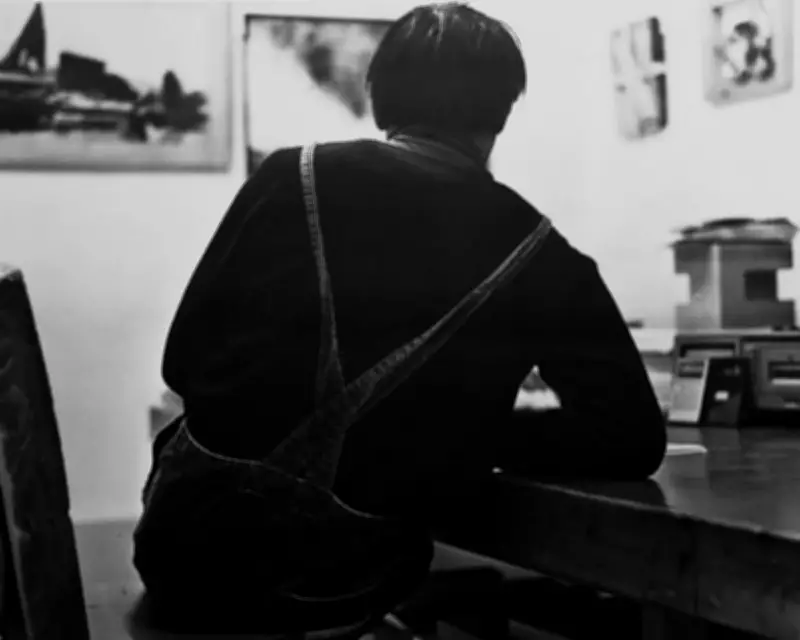
The documentary offers limited biographical details: born in Guangxi, China in 1929; part of Taiwan's Ton Fan art collective, which irritated the island's nationalist governors; a period squatting in a Bologna furniture factory; then a gradual entry into swinging London's avant-garde scene. Li described his solitary art quest as "pushing, pushing, pushing, on the road, on the street, on the path, in the city."
Community-Transforming Impact
What remains indelible is the community-transforming impact of the LYC Museum, which occupied a dilapidated farmhouse. Apparently largely renouncing his own practice to manage it, Li—known locally as "the Chinaman"—welcomed all visitors and nurtured emancipating creativity in this little corner of England.
Staging an average of five exhibitions monthly, he prioritized regional artists over the metropolitan elite. Rather than the money-corrupted art market, it was grassroots art that sustained him.
Sensitive Collage of Materials
Directors Liao I-ling and Chu Po-ying sensitively collage their film from Li's art, photography, paraphernalia, readings, and interviews with favored Cumbrians, capturing his essence. The dot stood at the conceptual heart of his work: all and nothing, as per the film's title.
In later installations, this motif expanded to planet-sized suspended circles covered in magnetic shapes that people could move around. The LYC gallery, where Li corralled others' expression, embodied this participatory ideal on a large scale.
Essential Irreducibility and Privacy
Yet the dot's essential irreducibility speaks to something else about the man—a privacy that Liao and Chu struggle to penetrate. There are fleeting hints of his inner world, such as his seemingly umbilical link with his mother. But like Li's artwork, this film leaves viewers pondering over many blanks.
All and Nothing opens in UK cinemas from 27 March, offering a contemplative look at an artist who cultivated a vibrant grassroots scene in rural Cumbria while maintaining an enigmatic personal presence.