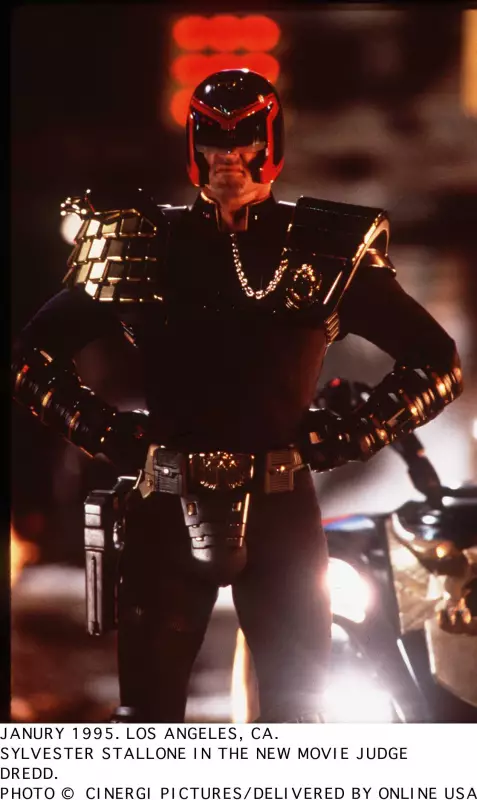
In a curious intersection of American politics and British pop culture, Elon Musk recently likened controversial politician Matt Gaetz to "Judge Dredd", the iconic lawman from the UK comic 2000 AD. This comparison, made in December 2025, sparked immediate backlash from progressives who pointed out the character's origins as a fascist enforcer from a dystopian future. The incident shone a light on the peculiarly British tradition of the sci-fi Christmas special, where seasonal cheer perpetually meets societal decay.
The Dystopian Festive Season: From Mega-City One to Albert Square
As Musk commented, the team behind 2000 AD was preparing their own supersized holiday special, unaware their creation would become a political reference point. The story, "Christmas Comes to Mega-City One" by Ken Niemand and David Roach, features a weather control malfunction bringing snow and a plot that consciously echoes Charles Dickens's A Christmas Carol, with Dredd encountering his younger self. It blends violent fantasy with scenes of poverty and vice straight from a Dickensian London. Another tale in the special even pits heroes against a mechanised Queen Victoria defended by chanting toy soldiers.
This fusion of festive themes with bleakness is a staple of British Christmas entertainment. While America often opts for safe romantic comedies, UK schedules are filled with shows contrasting celebration with despair or danger—a juxtaposition famously perfected by the soap opera EastEnders. This tradition is deeply rooted in the Victorian era, which defined the modern British Christmas. As author Will Cooling notes, the Victorian period represented a peak from which decline was inevitable, a sentiment that continues to colour the national psyche and its storytelling.

Time-Travel and Turmoil: The Doctor Who Blueprint
The contrast is drawn even more sharply in genre programming. One of the most acclaimed pieces of recent Christmas television was Doctor Who's 2010 adaptation of A Christmas Carol, written by Steven Moffat. In it, The Doctor uses time-travel to reshape a miser's life. Moffat later explored similar themes in a special concluding on the frozen fields of the 1914 Christmas Truce. For the 2025 festive season, Moffat returns to write his ninth Doctor Who Christmas Special, promising to explore the meaning of Christmas across different eras through a plot involving futuristic hotels selling their "past inventory".
Whether in the time-worn corridors of Gallifrey, the brutalist blocks of Mega-City One, or the familiar pub of Albert Square, the British Christmas narrative is consistent. It is a time for celebration, but also for acknowledging winter's dangers, considering the less fortunate, and reflecting on one's own impact on the world.
Funding the Future of British Stories
Cooling argues that exploring these complex themes requires a robust, domestically-led creative industry. While targeted tax cuts have spurred growth in British film, many projects are collaborations with Americans that say little about Britain itself. The next stage of investment must build capacity for the UK industry to lead on projects where the American market is a secondary concern.
This is equally critical for television, where the shift to streaming has undermined the funding models of the BBC, ITV, and smaller companies. Cooling warns that ensuring television can continue to tell distinctively British stories, rather than "dance to the American’s tune", will require greater investment from both government and civil society. The failure of Sylvester Stallone's 1995 Judge Dredd film and the reported struggles of Doctor Who on Disney+ serve as cautionary tales that relying on American patronage is a risky strategy at any time of year.
The Judge Dredd Christmas special, therefore, is more than just a comic book story. It is a window into a national tradition where tinsel and tidings of joy are forever intertwined with reflections on decline, despair, and the enduring legacy of a Victorian past.