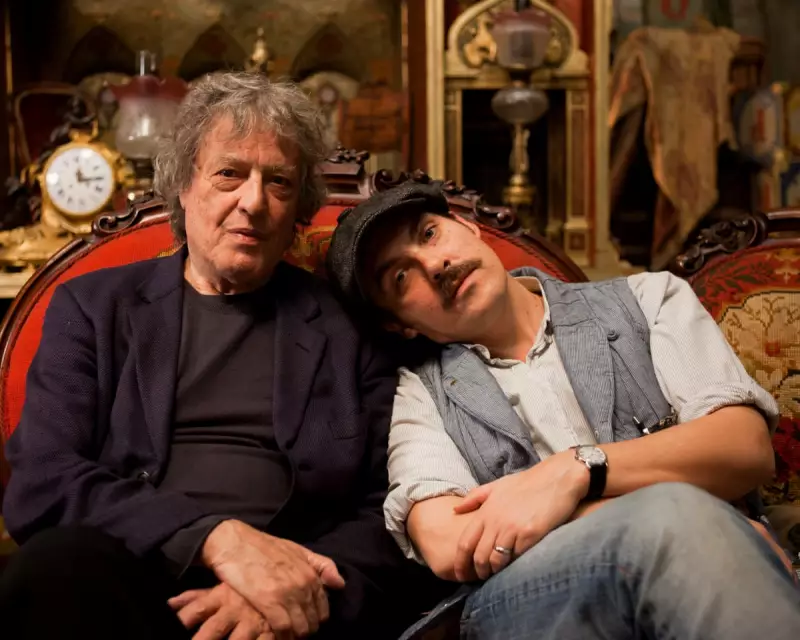
In a candid reflection, acclaimed film director Joe Wright has shared a series of personal and professional memories from his collaboration with the legendary playwright Sir Tom Stoppard on the 2012 adaptation of Leo Tolstoy's 'Anna Karenina'. Wright's recollections paint a vivid portrait of Stoppard's unique character, his meticulous writing habits, and the genesis of their critically acclaimed film.
Garage Script Sessions and a Shared Love of Sweets
The partnership began in 2010 when Wright, preparing to direct the epic novel, suggested Stoppard as the ideal adapter. To his surprise, the revered writer agreed to meet. Their first meeting established common ground in a shared fondness for smoking, with Wright noting Stoppard's accompanying love for wine gums, used as a 'palette cleanser' between cigarettes. He summarised Stoppard's passions succinctly: "He loved sweets, smoking, words and women – probably in the reverse order."
To work on the script, Stoppard travelled to Encinitas, north of San Diego, where Wright was staying with his in-laws. He turned down a plush hotel because it lacked a smoking balcony, opting for a 'grotty' alternative instead. The pair then worked daily in Wright's in-laws' garage, a humble setting far from the glamour of Hollywood. Wright marveled at Stoppard's focus and method, revealing the entire screenplay was written by hand in blue ink on a foolscap pad with minimal corrections, before being typed up by his assistant.

A Surrogate Father and a 'Sexy' Accent
Wright, who lost his own father at 18, admitted he subtly tried to cast Stoppard in a paternal role during a messy period in his life. Stoppard gently resisted giving direct personal advice, often deflecting with "I don't know anything about that," but would later offer illuminating anecdotes from his own life that indirectly addressed Wright's concerns.
Their relationship was marked by easy humour and a lack of deference. Wright fondly recalls teasing Stoppard, questioning why he retained a "sexy eastern European voice" despite leaving Czechoslovakia at the age of two, joking he must be 'putting it on'. Stoppard would simply chuckle at the jibe. Wright also noted the playwright's quiet acceptance of his porter calling him 'Sir Tom'.
From Naturalism to Theatre: A Collaborative Pivot
The initial adaptation was a straight, naturalistic drama. However, budget pressures forced a radical creative shift, leading to the film's famous conceit of being set largely within a decaying theatre. Wright states Stoppard was 'incredibly supportive' of this bold reinterpretation, appreciating that his text was being articulated in a new form. Although he visited the set, Stoppard was uncomfortable there, finding it too noisy and lacking a defined role.
Wright credits Stoppard with an intellect that empowered rather than intimidated. "He was one of those very clever people who make you feel much, much bigger than you are," Wright said, highlighting the writer's gentle, attentive listening that made people, especially women, adore him. The director's memories conclude with warmth, recalling a magical autumn walk in Manhattan with Stoppard and his then-partner Sabrina Guinness, and simply stating: "Tom was just a really beautiful human being who liked being loved. And I loved him."