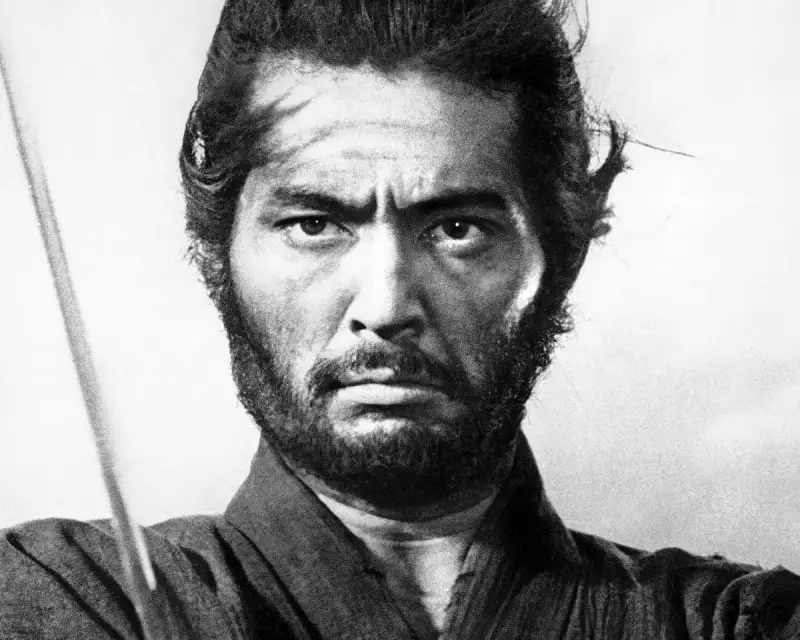
The world of cinema has lost one of its most distinguished figures with the passing of Tatsuya Nakadai, the celebrated Japanese actor whose career defined a golden age of film. He was 92 years old.
A Seven-Decade Cinematic Legacy
Nakadai's remarkable career spanned over seven decades, earning him more than 100 screen credits that established him as a titan of Japanese cinema. According to the Kyodo news agency, the actor died from pneumonia in a Tokyo hospital on Saturday. The news was confirmed on Tuesday through sources close to the actor.
While he achieved international recognition through his collaborations with legendary director Akira Kurosawa, Nakadai maintained that his true passion lay in stage acting. This preference led him to avoid exclusive contracts with film studios, allowing him the creative freedom to work with diverse directors throughout his long career.

Iconic Roles and Legendary Collaborations
Nakadai's international fame was cemented by his powerful performance as the warlord Hidetora Ichimonji in Kurosawa's 1985 epic Ran, which drew inspiration from Shakespeare's King Lear. The film earned Kurosawa his only Oscar nomination for best director, highlighting the significance of their collaboration.
His association with chanbara (sword-fighting) roles made him a familiar face in films with strong samurai themes. He delivered a memorable performance in Masaki Kobayashi's 1962 jidaigeki period drama Harakiri, part of a prolific artistic partnership that also included prominent roles in Samurai Rebellion and Kwaidan.
Nakadai's collaboration with Kurosawa extended to the 1980 film Kagemusha, which won the Palme d'Or at the Cannes Film Festival. The film told the story of a thief hired to impersonate a dying samurai warlord, showcasing Nakadai's versatility as a performer.
The Foundation of a Remarkable Career
Much of Nakadai's early success can be attributed to director Masaki Kobayashi, who cast him in the lead role of The Human Condition trilogy (1959-1961). In this ambitious project, Nakadai portrayed a pacifist-socialist grappling with Japan's militarist rule during the Second World War, establishing his reputation as a serious dramatic actor.
Some of his most compelling performances emerged alongside fellow acting great Toshiro Mifune. Their on-screen chemistry was particularly evident in Kurosawa's acclaimed 1963 police procedural High and Low, where Nakadai played Inspector Tokura investigating the kidnapping of the son of Mifune's wealthy businessman.
The actor also appeared as Hanbei opposite Mifune's Sanjuro in Kurosawa's 1961 samurai classic Yojimbo, widely considered one of the director's finest works. Their collaboration continued in the 1962 sequel Sanjuro, which featured a famously graphic sword fight ending that shocked contemporary audiences and influenced generations of action filmmakers.
From Humble Beginnings to Cultural Ambassador
Born into a working-class family in Chiba, east of Tokyo, in 1932, Nakadai turned to acting as an alternative to pursuing an expensive university education. He enrolled in acting school in the early 1950s, setting the stage for his future career.
His first significant film role came through a fortuitous encounter with director Masaki Kobayashi while Nakadai was working as a shop assistant in Tokyo. This led to an uncredited part as a prisoner in Kobayashi's 1953 war drama The Thick-Walled Room, marking the beginning of a partnership that would endure for thirty years.
Beyond his screen work, Nakadai maintained an active stage career with credits including Death of a Salesman, Don Quixote, Hamlet, and Macbeth. Together with his wife, fellow actor Yasuko Miyazaki, he opened the Mumeijuku school in Tokyo in 1975, dedicating himself to nurturing the next generation of acting talent.

In recognition of his immense contributions to Japanese culture, Nakadai was awarded the Order of Culture in 2015, the nation's highest honour for achievements in arts and science, presented by the emperor. According to The Yomiuri Shimbun newspaper, he continued to perform on stage as recently as this year, demonstrating his unwavering commitment to his craft until the very end.