Maggie Gyllenhaal's new short film 'Flesh Impact' premiered at the Venice Film Festival on Monday, September 7, presenting a fictionalized Marilyn Monroe at age 100, with Ellen Burstyn delivering a luminous performance that critics say overshadows Dakota Johnson's less-convincing portrayal of the star in her younger years. The 22-minute film, commissioned by car brand Genesis to celebrate Monroe's centenary, abandons an initial AI experiment that mapped Monroe's face onto Johnson's, with Gyllenhaal revealing she 'threw it away' because the human performance was 'so much more moving, human, alive.'
An unconventional centenary tribute
Written and directed by Gyllenhaal, 'Flesh Impact' opens with Burstyn's Monroe in 2026 driving a sleek new electric SUV from Genesis, trailing her hand out the rolled-down window before pulling up alongside the pavement and, with a little electrical sleight of hand, plugging it into a streetlight to charge. While the product placement is less-than-elegant, the film offers an undeniable fascination in seeing a star who died in 1962 alongside technology from over 60 years later.
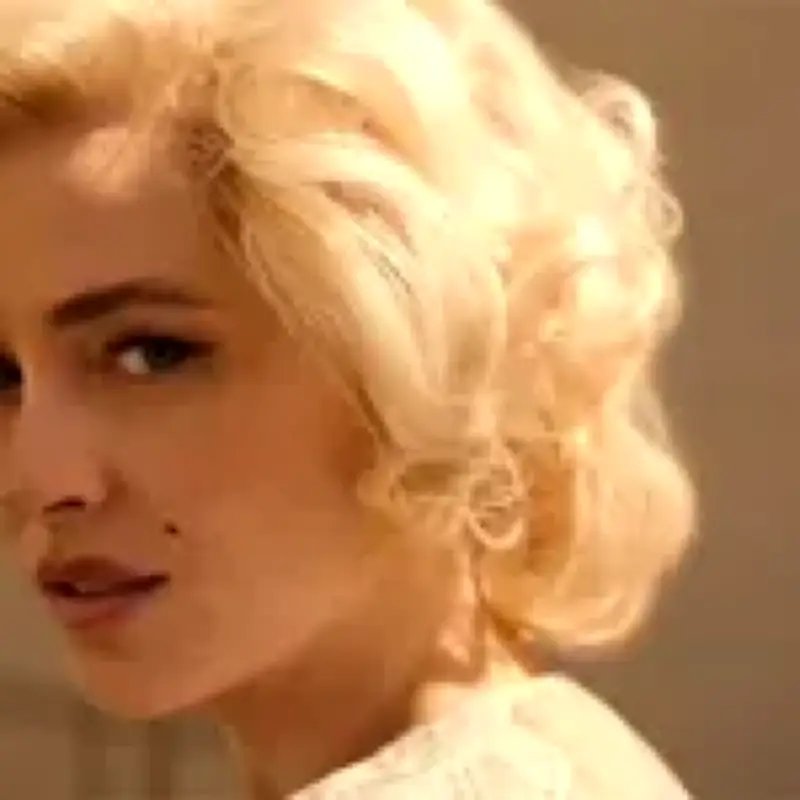
The film stars Burstyn, 93, as the centenarian Monroe, alongside Johnson, Gyllenhaal's husband and frequent collaborator Peter Sarsgaard, and The Pitt's Sepideh Moafi. 'Flesh Impact' already made headlines with its first-look image released in July of Johnson, whom many didn't recognise while others claimed her transformation into the 'Some Like it Hot' star was less than convincing.
Burstyn commands the screen as Monroe at 100
Burstyn's Monroe bustles into a theatre to audition, unrecognised with her cane and the cloak of old age, going by the name 'Jane Doe' after introducing herself by her birthname 'Norma' and mentioning a few previous surnames like 'DiMaggio' and 'Miller'. Despite being 'a bit mature' for the role, the director (Sarsgaard) and his associate (Moafi) relent and allow her to perform, although cruelly because 'it might be funny.'
Burstyn begins a meandering monologue covering her lonely childhood in and out of orphanages, being blamed for the death of co-star Clark Gable, and the Billy Wilder quote that gives the film its name: he said it felt like people could reach out and touch her. The actress looks completely luminous as Monroe, with now-white hair still carefully coiffed, a beauty spot on her cheek, and an immaculate outfit of pencil skirt, monogrammed blouse, and white heels (which she takes off to act).
Now 100, Monroe must command with her acting talent to be noticed, skills she felt were never truly appreciated in her youth, having claimed renowned acting coach Lee Strasberg said she was 'as good as Brando.' The message is not subtle, that age has eclipsed beauty, which is all Monroe was ever made to feel she could offer, but Burstyn nails it.
Johnson captures essence despite physical differences
Throughout Burstyn's speech, the film throws back to earlier points in Monroe's life, where Johnson appears, either striding through the 20th Century Fox backlot in a negligee as part of Monroe's rebellion against studio head Darryl F. Zanuck or offering her Blanche DuBois from 'A Streetcar Named Desire' in the bathtub. Johnson doesn't really look or sound like Monroe, but it doesn't really matter because, like Burstyn, there's a fitting quality to her performance that captures some of that famous essence and the well-documented vulnerability.
At the Venice Film Festival on Monday, ahead of the film's public screening, Burstyn recalled her real-life encounter with Monroe in a nightclub. 'She was sitting across from me. And of course I was enchanted by just looking at her. She was such a magical creature,' the Oscar winner told Metro and other press, ahead of receiving her Golden Lion for Lifetime Achievement. 'Then she looked at me and nodded at me. I was very early in my career and I thought, was I just recognised by Marilyn Monroe? And I was; I carried that in my heart forever.'
Burstyn, who trained under Lee Strasberg at The Actors Studio in New York like Monroe, said that this meeting, and also sharing the same masseur, Ralph Richards, helped with her performance. 'He had been Marilyn's masseur and, not only that, but her confidant. So I used to get my massages on the massage table and hear Marilyn stories.' Her favourite, Burstyn shared, was that Monroe's 'whole persona was a construction, that that wasn't the way she was at all.'
'I said to Ralph, "Well, what was she like in person?" and he said, "She was like you." He said she could get on an aeroplane with a scarf over her head and no makeup and nobody would pay any attention to her.' He also told Burstyn of watching Monroe engage the famous façade after they were walking down a street in Beverly Hills, causing no fuss. 'All of a sudden all the cars started honking their horns and calling "Marilyn!" and [they] had to duck around a corner. And [he] said to her, "Did you do that on purpose?" And she said, "Yeah. I just felt like being Marilyn Monroe for a minute."'
AI experiment abandoned for human performance
Filmmaker Gyllenhaal explained how the commissioners of the short had asked her to use AI, having used 'licensable AI, training it off of Marilyn Monroe films that we had licensed.' 'I went for it. I was like, all right, I'm curious, I don't know, let's see,' she explained during Venice Film Festival. 'The idea was that we trained it on her, we then put her face on Dakota's face. We worked hard at it, and in the end, I threw it away because what was coming through Dakota playing Marilyn Monroe was so much more moving, human, alive,' she revealed, per Variety.
Gyllenhaal decided that it 'fundamentally did not work,' adding, 'All the reasons we decided to make this project to begin with were killed off in the AI version.' A release date for 'Flesh Impact' is yet to be confirmed, but the film's premiere at Venice has already sparked conversation about the role of AI in filmmaking and the enduring legacy of Marilyn Monroe.