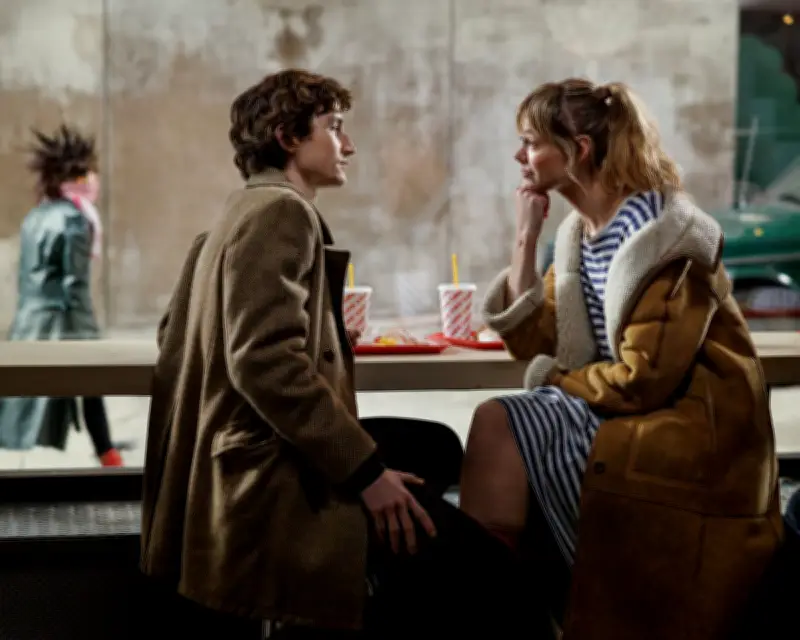
The new television adaptation of Faithless, a six-episode series based on Ingmar Bergman's screenplay and directed by Tomas Alfredson, premiered on Sky Atlantic. The show revisits the 2000 film directed by Liv Ullmann, updating the adultery fable for a 2026 audience. While the series offers a deeper exploration of its characters and themes, it is marred by baffling directorial choices and a poorly developed female protagonist.
Plot and Setting
Set primarily in 1977 Stockholm, the story follows Marianne (Frida Gustavsson), an actress married to pianist Markus (August Wittgenstein). Their lives are disrupted by the arrival of David (Gustav Lindh), Markus's oldest friend and a fledgling film director reeling from a divorce. A second timeline set in the present shows an older David (Jesper Christensen) and Marianne (Lena Endre, who played the younger Marianne in the 2000 film) reflecting on the devastating affair they had decades earlier.
The six-episode format allows for a more thorough examination of the relationship's origins, and the series discards the film's framing device—where the elder David was an unreliable narrator—to present Marianne as a more fully realized character with agency. However, early episodes struggle to achieve this, instead indulging in bohemian wish-fulfillment.

Directorial Choices and Camera Work
Director Tomas Alfredson employs numerous shots of characters in reflections, apparently as a homage to Bergman. Yet these often fail to capture the introspective depth of Bergman's work, instead serving merely to frame two characters together who are not physically adjacent. One particularly confusing shot pans from David to Marianne, lingering on her reflection in a mirror at an angle visible only to the audience. The intent behind such choices remains unclear.
The chemistry between Gustavsson and Lindh is tepid, undermining the narrative's central premise that their attraction is an irresistible force with tragic consequences. David's charm is described as angular and boyish, reminiscent of an aloof Britpop bassist, which may not resonate with all viewers. Marianne's character is inconsistently written: she critiques David's script for its naive view of female desire yet behaves complacently, asking "What will Markus think?" as if fearing parental disapproval rather than acknowledging her emotional infidelity.
Impact and Reception
The series aims to show that the affair has severe repercussions for everyone involved, especially their children, and for the lovers themselves. However, because the protagonists come across as awful people rather than ordinary individuals driven by uncontrollable urges, the tragedy fails to land as intended. Despite being penned by a woman, Sara Johnsen, Marianne often reads as a male fantasy of another man's wife, inexplicably drawn to bad writing and blunt wooing.
Nevertheless, Faithless remains engaging due to its stylish depiction of late 20th-century urban chic, where everyone is an artist, intense conversations flow with cheap red wine, and sex is a universal preoccupation. Its retro pretensions are bewitching enough to keep viewers watching, even if the core relationship fails to convince.