One Flew Over the Cuckoo's Nest: A Cinematic Masterpiece of Rebellion
Milo Forman's 1975 film One Flew Over the Cuckoo's Nest, starring Jack Nicholson as the rebellious inmate McMurphy, stands as a landmark achievement in cinema that continues to resonate five decades after its release. Adapted from Ken Kesey's widely read novel, the film transformed what might have been confined to the art circuit into a commercial and critical triumph, earning numerous Oscar nominations and securing its place in film history.
From Page to Screen: A Strategic Adaptation
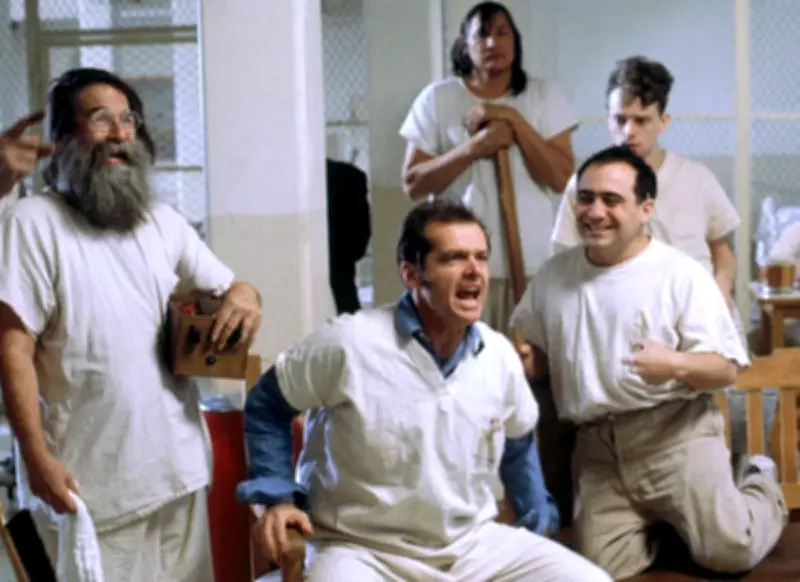
The film centers on McMurphy's attempted coup within an insane asylum, where he morally confronts Nurse Ratched, the hatchet-faced authority figure who values order over freedom. While Kesey's novel became a counter-culture classic through its uncompromising approach, Forman's adaptation made strategic compromises to reach a broader audience. By casting Nicholson—a star with undeniable box office appeal—and employing a naturalistic style, the film maintained commercial viability while preserving the story's core message.
These concessions proved largely successful. Forman's focus on character rather than abstract ideas, combined with Nicholson's extraordinary performance, created a riveting narrative that avoids the typical star-centric pitfalls. Nicholson uniquely molds himself to the role of McMurphy, delivering a portrayal that is both captivating and devoid of ego, allowing the ensemble cast to shine alongside him.

Thematic Depth and Enduring Relevance
Although the film differs from the book in its handling of allegory—being less tough-minded and abstract—it ultimately conveys the same powerful critique of institutional authority. One Flew Over the Cuckoo's Nest transcends its setting in a mental institution to explore what happens when any institution adopts an insufferable attitude toward those under its control. This theme connects Forman's work to his earlier films, such as Taking Off and Firemen's Ball, highlighting his consistent examination of authority and morality.
The film delves into the nature of heroism, posing profound questions about resistance against overwhelming odds. McMurphy's futile yet inspiring battle against the asylum's system serves as a metaphor for individual defiance in the face of oppressive structures. His example offers a life-sustaining hope, reminding audiences of the necessity for courage and rebellion.
Exceptional Performances and Execution
Filmed at the Oregon State Institution with a mix of actors and patients, One Flew Over the Cuckoo's Nest is beautifully executed. Louise Fletcher's portrayal of Nurse Ratched is a superbly icy depiction of a right-thinking fanatic, capturing the character's rigid authority despite omitting some of Kesey's sexual connotations. The ensemble playing, a hallmark of Forman's direction, ensures that each minor character maintains individuality while seamlessly integrating into the whole.
While the film occasionally leans into easy laughs or glib lessons, its final section delivers a cold wrath that underscores its strength. It challenges viewers' perceptions of madness and sanity, suggesting that societal judgments can be faulty or disastrous. The narrative warns against the dangers of institutional power, echoing McMurphy's insight that the desire to help can easily morph into a desire to defeat.
A Lasting Legacy
Fifty years after its release, One Flew Over the Cuckoo's Nest remains a vital exploration of rebellion, authority, and the human spirit. Its blend of commercial appeal and thematic depth ensures its place as a timeless classic, continuing to inspire and provoke audiences with its unflinching look at the costs of conformity and the power of individual defiance.