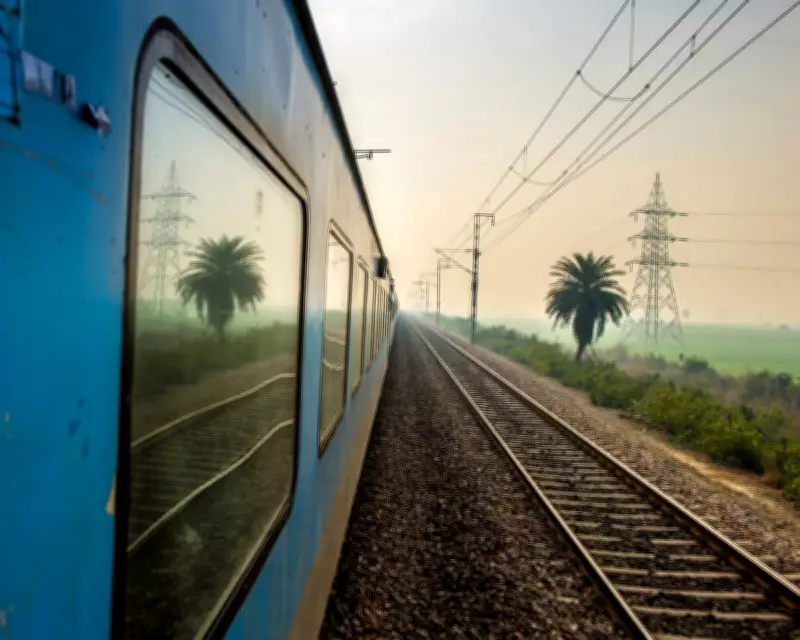
Railsong by Rahul Bhattacharya: A Deeply Compassionate Novel of Life on Indian Railways
Rahul Bhattacharya's long-awaited novel Railsong marks his return to fiction after fifteen years, offering a heartfelt exploration of India's railway system as both a national institution and a catalyst for female empowerment. The story follows the compelling journey of Charu Chitol, a motherless woman whose life becomes intertwined with the sprawling network of Indian Railways from the 1960s through the early 1990s.
The Railway as Character and Catalyst
Since its founding in 1951, Indian Railways has embodied patriotic pride while simultaneously generating controversy, bureaucratic labyrinths, and industrial-scale tragedies. Bhattacharya's novel shifts focus to examine its profound social impact as one of India's largest employers of women, particularly in rural areas where opportunities for female independence remain scarce.
We meet Charu as a child in 1960s Bihar, raised by her rail employee father—a frustrated writer and socialist—amid famines, strikes, and growing political activism. The family's flight to sanctuary with the marginalized Asur tribal community establishes early themes of displacement and resilience that will define Charu's life.

Charu's Journey Through Changing India
As Charu matures, she represents the epochal changes sweeping modern India: a single woman pursuing a working life alone in rapidly modernizing Bombay. Her career progression within the railways—from office-bound positions to roving welfare officer investigating pensions, fraud, and abuses—mirrors both personal growth and national transformation.
Bhattacharya masterfully portrays Charu's coming-of-age experiences, including the "tumultuous calls of her body" and her realization that she and her brothers, "subject to the same misfortune, might undergo radically different fates." Particularly powerful scenes depict her first period—where she feels each month brings "her dying to resume"—and her transition from receiving food to becoming the family cook who must "wait for the served to finish before themselves eating."
Tensions Between Individual and Institution
The novel consistently explores the tension between private lives and public systems, family hopes and societal devastations. As one character observes, the railways "does not see religion, caste, language, state boundaries, summer, winter, rain"—nor does it acknowledge individual flesh and blood. Charu's personal setbacks, alienation, abuse, and tragedies become subsumed within thousands of miles of track, rigid timetables, troop movements, and bureaucratic procedures.
Bhattacharya contrasts Charu's growing awareness of her societal position with her father's resurgent socialism, which never crosses their home's threshold. This dichotomy reflects broader national conflicts between tradition and progress, individual dreams and institutional realities.
Literary Style and Structural Considerations
The author demonstrates remarkable command of modern Indian English's playful, punning diction—where adverbs, nouns, and adjectives masquerade as each other in what he describes as "communal secondish language." Characters "pride off" haughtily or "untruth" their way through situations; maternal obscenities become pious "mother-swear"; Bombay features "soundclouds" and "peopleswarms."
While the novel occasionally feels episodic in its procession through political changes, wars, elections, and massacres, its true magic emerges in quieter moments: Charu daydreaming alone, mourning her mother, or gaining unexpected insights into semi-shunned communities. A magnificently rendered death scene midway through the book showcases Bhattacharya's narrative power at its peak.
A World of Paperwork and Personal Liberation
The railway universe—where personal liberation coexists with Victorian legalese, quotas, and quadruplicate forms—provides rich material for political and personal commentary. Socialist strike leaders transform into BJP defense ministers; paperwork piles up while wages rise by central diktat; promotions, examinations, and heartbreaks accumulate across decades.

Bhattacharya renders these experiences with artful sympathy, bristling with outrage at life's difficulties while marveling at solidarity's quicksilver joys. Charu, with her "periodic relocations" and "crises of direction," proves immensely amiable company throughout her journey.
A Deeply Felt Literary Achievement
Railsong brims with heart and compassion, clearly born of deep personal engagement with its themes. As decades pass, people die, and institutions evolve, Bhattacharya maintains focus on the human stories within historical currents. The novel ultimately celebrates resilience while critiquing systems that both enable and constrain individual dreams.
Readers will hope Bhattacharya's next work arrives sooner than fifteen years from now. Railsong stands as a significant contribution to contemporary Indian literature, offering profound insights into gender, labor, and national identity through the intimate story of one woman's railway journey.