Barbican launches film season celebrating pan-Africanism
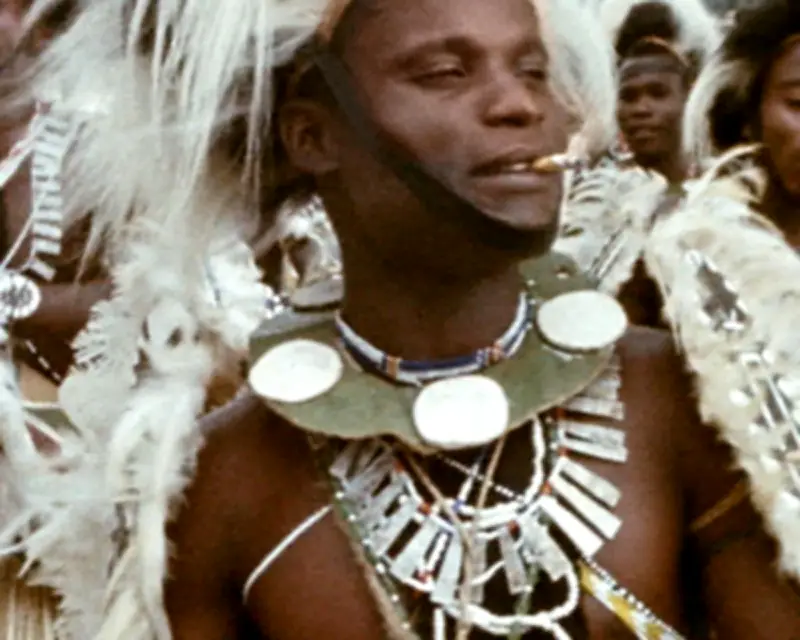
A new film season at the Barbican Centre in London, titled Project a Black Planet: Film, opened on 8 July and runs until 6 September, presenting a diverse array of works that explore the rich and complex history of pan-Africanism. The season kicked off with William Klein's 1969 documentary The Pan-African Festival of Algiers, capturing the first Pan-African Cultural Festival (Panaf) in Algiers, Algeria, which transformed the city into a cosmopolitan hub for 12 days in July 1969.
The festival featured delegations from across Africa, with streets filled with performers and placards announcing countries such as Ethiopia, Liberia, and Mali. Klein's film dissolves barriers between spectacle and spectator, bringing to life a quote from Guinea's first president Sékou Touré: 'We must make this revolution with the people … and the songs will come.'
Film programme highlights pan-African struggles and creativity
Curated by Matthew Barrington, the season includes works that address colonial legacies, postcolonial conditions, and diasporic experiences. Roy Guerra's 1979 feature Mueda, Memória e Massacre from Mozambique examines the 1960 Mueda massacre by Portuguese forces and the role of memory in liberation struggles. Timité Bassori's The Woman with the Knife (1969) and Djibril Diop Mambéty's Hyenas (1992) reflect on postcolonial identity through psychoanalysis and satire.

Barrington emphasized that film is an 'inherently populist' medium to show how pan-Africanism 'manifests in the way of people and how they interact,' with selections designed to be 'all in a dialogue' with each other. The programme also features recitals from poets Linton Kwesi Johnson and Sarah Lasoye, as well as a DJ set from Coby Sey.
Spotlight on Sarah Maldoror and neglected voices
The season includes works by Sarah Maldoror, a pioneering Black female filmmaker whose contributions have often been marginalized. Her film Fogo, l’île de feu (1979) meditates on land and labour in Cape Verde after independence. Her daughter, Annouchka de Andrade, noted that Maldoror's most famous work, Sambizanga, was withheld by a producer for 40 years, leaving her without a copy. Maldoror faced racism and sexism in the film industry, and over 50 of her planned projects were never realized.
De Andrade highlighted that Maldoror's early films were dedicated to struggles in Angola and Guinea-Bissau, but she was excluded from male-dominated narratives. Despite being present at the first Congress of Black Artists and Writers, she was often overlooked, alongside other women like Suzanne Césaire.
Exploring contradictions and global connections
The season's Ambiguous Encounters strand, curated by Abiba Coulibaly, marks 60 years since the first World Festival of Black Arts (Fesman) in Dakar and the Tricontinental conference in Cuba. It focuses on African cities Dakar, Algiers, and Lagos, which hosted the second Fesman in 1977, without deconstructing pan-Africanism but rather 'to sit with all of the discomfort and contradictions within it.'
The programme also includes diasporic cinema such as Ola Balogun's Black Goddess, a Nigerian-Brazilian collaboration, and works by the Otolith group, whose films In the Year of the Quiet Sun and Nucleus of the Great Union question the meaning of pan-Africanism. Co-founder Kodwo Eshun argued that 'pan-Africanism is the transformation of the continent, which implies the transformation of the planet,' adding that 'if pan-Africanism was a dream, why did Belgium, USA and Britain go to the lengths they did to assassinate Lumumba? It wasn’t a dream, it was a threat.'
The season runs alongside the Barbican's ongoing Project a Black Planet exhibition, offering audiences new entry points through music, panel discussions, and performance lectures.