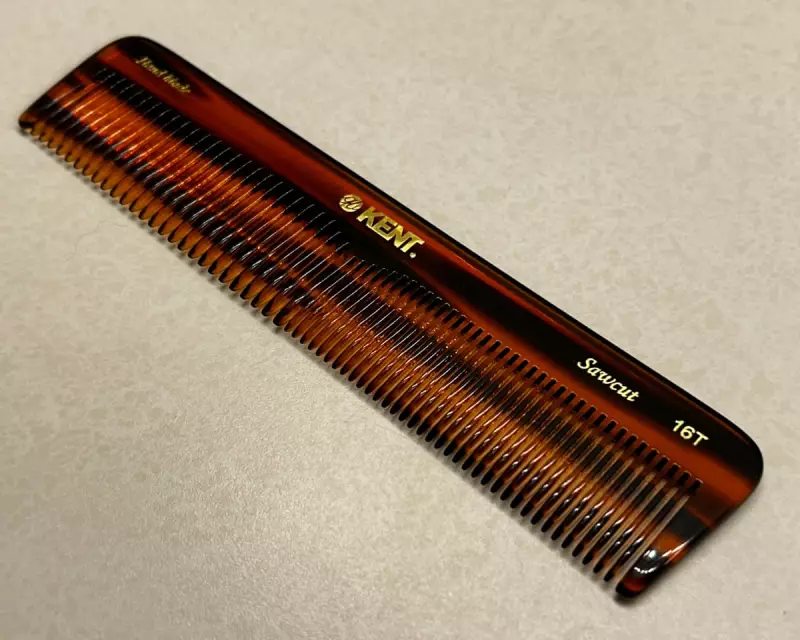
For a man in his forties, the battle to maintain healthy hair becomes a conscious daily effort. One writer's journey began with a simple frustration: his cheap, injection-moulded plastic comb tugged painfully at his strands, especially when tackling damp hair after a shower. This minor annoyance sparked a deep dive into hair hygiene, leading to a discovery that challenges our throwaway culture: the enduring, sustainable quality of a British-made Kent comb.
The Problem with Plastic: A Design for Disposal
Most men's combs occupy the same mental space as a toothbrush – a cheap, functional item not built to last. They are typically mass-produced from petroleum-based plastics, prioritising speed and low cost over longevity or hair health. The writer's research, including scouring forums like Reddit's 'Buy It For Life' community, consistently pointed towards an alternative: the heritage craftsmanship of Kent brushes and combs.
Heritage Craft Meets Sustainable Material
Founded in 1777, Kent proudly holds the title of the world's oldest brush manufacturer. This family-run British firm eschews modern moulded plastics for a more considered approach. Each comb is meticulously hand-cut from a solid sheet of cellulose acetate. This is a plant-derived bioplastic, renowned for its use in high-quality, lightweight eyewear frames, offering a unique combination of durability and flexibility.
Why Cellulose Acetate Wins for Hair and Home
The benefits of this material are twofold. Firstly, for your hair: its natural flexibility allows the comb teeth to glide through tangles without excessive pulling or stress. This is crucial because each hair strand has a textured, shingle-like cuticle. Rough, poorly finished plastic teeth – a common result of injection moulding – can scrape and lift this protective layer, leading to frizz, breakage, and dullness over time.
In contrast, Kent's hand-polished acetate teeth are smooth and rounded, minimising friction and cumulative damage, particularly on vulnerable damp hair. Secondly, for your bathroom and the planet: cellulose acetate doesn't turn brittle or warp in humid conditions, and it's a more sustainable material choice than conventional plastic, aligning with a 'buy fewer, better things' philosophy.
Is the Investment in a Kent Comb Worth It?
Kent offers a wide range, but the writer found the 16T Tortoise Fine and Wide Tooth Comb ideal for daily use. Its dual-ended design provides versatility – wide teeth for detangling or applying conditioner, and fine teeth for styling – effectively replacing several flimsy combs. Priced from around $9.99 online, it represents an affordable upgrade.
After several weeks, the results were clear: less pulling and a smoother feel. Compared to wooden combs also trialled, maintenance was effortless – a simple rinse removed product buildup. It withstood the steamy bathroom environment without warping or peeling, becoming a reliable, durable staple in the daily routine.
More than just a tool, it's a small, well-made object that makes for a thoughtful gift. And as the writer wryly notes, if a receding hairline does become a future concern, he can at least be confident his comb wasn't a contributing factor.