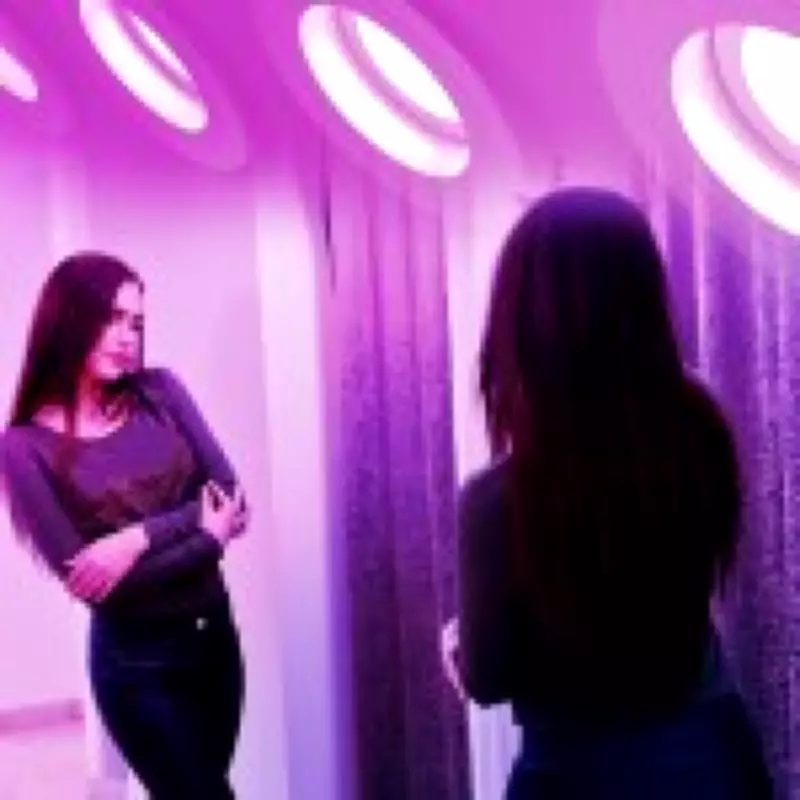
The Fitting Room Dilemma: When Lighting Sabotages Your Shopping Experience
Clothes shopping should be an enjoyable, even luxurious experience, but for many consumers, the fitting room has become a source of anxiety and disappointment. The moment you step into that changing cubicle, you're often confronted with aggressive overhead lighting that transforms what should be a fun activity into something approaching trauma.
The Psychological Impact of Harsh Retail Lighting
Phoebe Williams, a 26-year-old shopper, has developed a specific strategy to avoid the distress caused by poor fitting room conditions. "When I'm not in the mood during a shopping trip, I'll assess the fitting room setup as soon as I enter the store," she explains. "If I spot any nasty-looking lighting, I can abandon the whole shop altogether and save myself the distress."
Williams isn't alone in her aversion to harsh changing room environments. "Of course you can rationalize with yourself and know to accept the horrendous lighting, stifling heat, abundance of dust and general overstimulation are just part and parcel of being in a changing room," she says, "but it's almost impossible not to have your mood dampened. Shopping is meant to be a fun, luxurious little day out! Nobody wants to try on clothes when what they're seeing in the mirror is ruining their day."
This phenomenon has been documented across social media platforms, with dozens of Reddit posts asking questions like "does anyone else feel that changing room mirrors are just the worst?" and "why do fitting rooms have such harsh lighting?" Academic research supports these consumer complaints, with a 2020 study revealing that lighting in certain high street changing cubicles made customers feel "uncomfortable."
The Science Behind Proper Retail Lighting
Lighting designer Luke Locke-Wheaton, co-founder of the Lighting Design Studio, emphasizes that shop windows and dressing rooms represent the most important areas in commercial retail spaces. According to Locke-Wheaton, three key aspects determine quality fitting room lighting:
- Color Temperature: Measured using the Kelvin scale, this determines whether lighting appears warm or cool. Lower numbers (around 3000K) create warm light, while higher numbers (6000K) produce cold, harsh illumination. "If you look at a supermarket like Aldi or Lidl, they have quite cold uniform light throughout," Locke-Wheaton explains, "whereas if you go slightly upmarket, somewhere like Waitrose, it's very subtle but there's a slightly warmer color temperature."
- Color Rendering: This refers to how accurately artificial light sources display colors compared to natural sunlight. In retail environments, proper color rendering is essential for showing products accurately, as certain types of light can dull or distort shades.
- Light Placement: "If you've got a downlight over your head, you end up with an unflattering shadow under your eyes and nose," says Locke-Wheaton. "And if you've got light coming up from below, you also end up with big shadows on your face. What you want is light to come straight at you – a diffused light source that's eye level."
The Business Case for Better Lighting
Williams theorizes that "bad fitting rooms are just a reflection of fast-fashion high street stores and their entire business model" where cost-cutting dominates. "The more high-end you go, the better the overall in-store experience is in general," she observes.
However, Locke-Wheaton argues that budget retailers could dramatically improve customer experience with minimal additional investment. "It's about being clever with the design," he explains. "A consultant would be able to show a client that instead of paying £200 for a downlight, spend £40 on a wall light and another £40 on a high-quality lightbulb, and for half the price you've got much better placement and the right color temperature."
The lighting designer notes that "with retailers, changing rooms tend to be an afterthought. They'll just whack a couple of downlights in or they'll leave it for an electrician or contractor to do and so not much thought is gone into the actual lighting layout."
Beyond Lighting: The Complete Fitting Room Experience
Williams emphasizes that lighting represents just one aspect of the fitting room experience. Temperature control proves equally vital, with many clothing stores criticized online for being excessively stuffy. This issue stems from UK building designs that prioritize heat retention, creating uncomfortable environments year-round.
Additional elements that contribute to positive fitting room experiences include:
- Chairs or designated spaces for personal belongings
- Quality hangers that don't damage clothing
- True-to-life mirrors that don't distort proportions
- Proper doors instead of inadequate curtains
Retailers Leading the Way
Some forward-thinking retailers have recognized the importance of fitting room design. Lingerie retailer Boux Avenue has implemented three bespoke lighting options in its changing rooms – Day, Dusk, and Night – earning praise from TikTok users who called the design "perfection."
Abercrombie & Fitch has similarly impressed shoppers with innovative fitting room technology. In 2025, TikTok creator @sydnie documented her experience in one of their stores, showing how built-in touchscreen panels allowed customers to choose from four different light settings.
With research indicating that up to 60% of purchasing decisions are made in fitting rooms, these intentional design choices may represent more than just customer satisfaction enhancements. They could prove decisive for business profitability, transforming what has traditionally been an afterthought into a crucial component of retail success.