The US Open is hosting a competition this week that has nothing to do with rackets and balls. Instead, leading men not entered into this year's draw are serving looks rather than aces, showcasing the two style clans that dominate current menswear: the dads and the dudes.
Tennis legend Roger Federer took to court on Tuesday in a navy blue polo shirt and shorts, navy blue sweatbands, and navy blue socks. The cuts were trim, and the top was tucked in. In contrast, young Spanish player Carlos Alcaraz wore a Nike vest, untucked and the colour of Ribena, maroon shorts, and trainers that looked like a sweetshop counter.
Defining the dad and dude aesthetics
The 'dad' look, which has nothing to do with paternal status, is summed up by straight, tight lines, on the whole more muted colours, and embellishment for practicality's sake—a carefully placed sweatband for a tennis player, a pair of neat little cufflinks on a suit. What it is not, says men's fashion editor Hikmat Mohammed, 'is just your dad who wears normcore. It's an elevated dad … they wear Ralph Lauren, they wear Brunello Cucinelli, they wear Loro Piana.' Or, if thousand-pound price tags aren't in reach, they wear Cos and Arket.
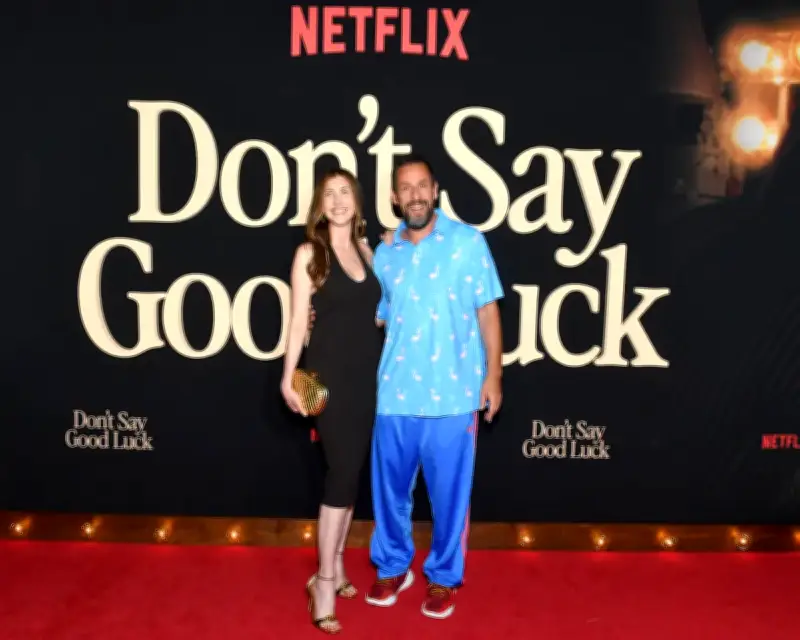
Dudes, meanwhile, wear things baggier and have adornments for adornment's sake—a backwards cap or a chunky chain. It's an atmosphere that has seen the late Bill Oddie hailed a style icon. But the patron saint of the style is Adam Sandler, who in 2019 was declared a fashion icon for his unapologetic 'grocery-run look' by Vogue writer Liana Satenstein.
Celebrity examples on and off the court
Novak Djokovic, Taylor Fritz, and Félix Auger-Aliassime are all 'dads', while Arthur Fils and Andre Agassi are 'dudes'. Away from baselines and backhands, David Beckham in his slim, sometimes three-piece suits, actor Theo James—in real life as well as in Netflix series The Gentleman, the second series of which will land next week—Idris Elba, and Andy Burnham are all prime examples of 'dads'.
Dudes, meanwhile, include Brad Pitt, who appears on the cover of September's Esquire in a red shirt with hot-pink neckerchief, Adam Sandler in chaotic ensembles, and men across Britain. Influences on the 'dude' look include Justin Bieber and his brand Skylark, which launched last year and sells baggy hoodies and baggy shorts.
Retail and high fashion embrace dad style
Mohammed cites Mark Zuckerberg in caramel-hued cashmere on the Prada front row earlier this year as 'dad'. But it's trickled down to the latest John Lewis menswear lookbook, which is full of sensible overcoats, cashmere cardigans, and Argyle knits. According to Jacqui Markham, fashion creative director, 'a lot of what we're calling “dad style” is really just great menswear fundamentals rediscovered, after a few years of fashion having moved so fast in the other direction.' Searches for 'elevated wardrobe staples' have increased significantly this season, she says—'polo shirts with proper collars, chinos that actually fit, the perfect cut blazer'. Plus 'sales of tailoring is up 17% so far this year, making it one of our fastest-growing menswear categories right now.' In high fashion, one of the biggest recent menswear launches also offers up dad style in spades: the luxury label Toteme's first foray into men's clothes.
For dudes, it helps that menswear in recent years has become more interesting in general, and men, from Colman Domingo to your colleagues, have perhaps felt more comfortable to experiment. The perfect example is Daniel Craig, known as a sharp-suited, small-c conservative dresser ('dad'), who caused a stir with a run of chaotic styling in tandem with becoming the face of Loewe, then under JW Anderson, in 2024. He became fully dude.
Why these styles prevail and who can wear them
The march of the dad has been happening for a while: in 2019 the New York Times Style Magazine heralded 'The Unstoppable Rise of the Zaddy,' meaning an older man with impeccable style. Mohammed thinks it could be a recession indicator: 'People just want a full look that's clear and really sharp,' he says. It is also a case of the slower menswear cycle playing out: 'I feel like finally the quiet luxury that womenswear had is finally catching up to men.'
Plus, actual dads became a menswear inspiration. As the writer John Diamond wrote in The Cut this week: 'Just a few years ago, there was the idea of a stereotypical dad look that usually included denim shorts, New Balance sneakers, wearing socks with sandals, and higher-rise, more-relaxed jeans. Then, in one of the oddest cases of cultural appropriation, style-conscious and young people started borrowing those looks and making them their own.'
But who feels comfortable—and who is able—to dress like a dude is complicated. There's a privilege to being able to present so baggily. Plus, 'it's more expensive to dress “dude”,' says Mohammed. Dude-style streetwear can take a lot of searching for, and can cost far more than a shirt and chinos, especially some of the rare, vintage stuff, which '[has] almost become memorabilia. It's like having a blue chip painting in your house.' It's not, says Mohammed, 'like a grey suit [that] you can buy in Reiss or M&S.'