Anna Wintour's Vogue Cover with Meryl Streep: A Strategic Power Play
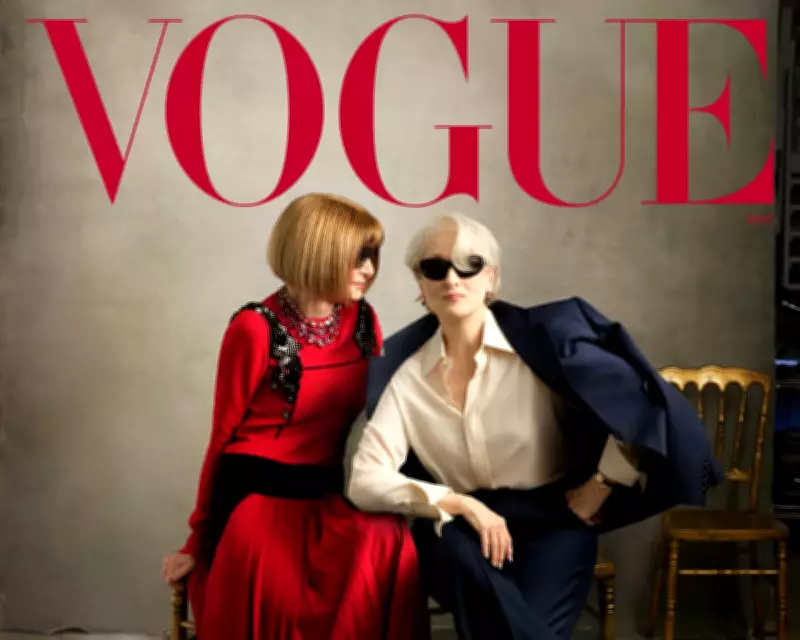
In a stunning and unexpected move, Anna Wintour has graced the cover of Vogue's May issue alongside Meryl Streep, marking a significant moment in fashion publishing history. The cover, titled "Seeing Double. When Miranda met Anna," serves dual purposes: promoting the highly anticipated sequel to The Devil Wears Prada while strategically repositioning Wintour herself from an elusive editor to a carefully curated personal brand.
A Departure from Tradition
Traditionally, when magazine staff leave their positions, colleagues create mock-up covers as humorous farewell gifts. However, Wintour's cover is no joke—it's the genuine article, set to hit newsstands on April 28. This marks the first time an editor has placed themselves as the primary subject on Vogue's cover, a bold departure from industry norms. Both Wintour and Streep are dressed in Prada, adding a playful twist to the promotional effort.
The cover image, first teased on Vogue's Instagram, quickly went viral, amassing over 1.2 million likes and sparking enthusiastic responses from celebrities and the public alike. Model Gigi Hadid commented "Maaj," while actor Mindy Kaling added "Just so good." Public reactions ranged from calling it "actually groundbreaking" to plans for framing the issue.
More Than Just Promotion
While the cover certainly promotes The Devil Wears Prada 2, its significance extends far beyond mere movie marketing. This appearance serves as Wintour's personal power move, coming just ten months after she announced she was "stepping back" as Vogue's editor-in-chief and six months after promoting Chloe Malle to head of editorial content. By appearing on the cover, Wintour powerfully affirms that she remains firmly in control of the magazine she has led for nearly four decades.
When Wintour initially revealed she was relinquishing her editor-in-chief title, many misinterpreted it as a step down. Her cover appearance now makes it abundantly clear that this was no demotion. Her current roles as chief content officer for Condé Nast and global editorial director for Vogue allow her to maintain ultimate authority while delegating day-to-day operations to Malle.
The Mechanics of Power
Press consultant and author Mark Borkowski describes Wintour's cover appearance as "a hell of a smart move." He explains, "This is very much about Wintour not letting go of her power. A lot of people in these types of jobs recognize they are sitting in a chair that has power. Wintour doesn't believe that. She believes she is the power. She's not a personality that's going to fade away into the background."
The cover's creation story itself reveals Wintour's enduring influence. According to Malle's editor's letter, the idea emerged during a car ride where Malle was pitching cover concepts to Wintour—a clear indication that major decisions still require Wintour's approval. Wintour initially rejected the concept, saying "That's very flattering, Chloe, but it's not really my style," only to be persuaded later by Streep herself, whom Wintour called directly.
Evolving Relationship with Her Persona
Wintour's relationship with the Miranda Priestly character has evolved significantly since the first film's 2006 release. While initially dismissive and cagey about comparisons, she has recently embraced the connection, describing Priestly as "a caricature" and acknowledging the character's entertainment value. The social media videos accompanying the photoshoot reinforce this shift, showing Wintour as warm and witty—a sharp contrast to Priestly's icy demeanor.
This strategic engagement with her public persona began earlier this year when Wintour jokingly referred to Anne Hathaway as "Emily" at the Oscars, referencing Emily Blunt's character from the film. Additionally, Vogue's Book Club will next read Lauren Weisberger's novel that inspired the original movie.
Building the Anna Wintour Brand
Borkowski suggests these moves indicate Wintour is beginning to separate herself from the Vogue brand to establish "Anna Wintour, the brand." He notes, "Her life has been defined by Vogue. Back in the day she was recognizable by a very distinctive haircut and a pair of dark glasses. She was a cypher. But now it's all about the narrative of the personal brand."
Amy Odell, author of Anna: The Biography, suggests this cover allows Wintour to reshape her legacy. In her Back Row newsletter, Odell writes, "Anna is a visual editor above all else—a brilliant one—who understands that these images and viral moments have the effect of washing the other stuff away." She compares it to how other public figures have used Vogue covers to redefine their public images at crucial moments.
While Wintour seeks to distinguish between her reality and the fictional world of The Devil Wears Prada, some parallels remain striking. As Miranda Priestly quips in the first film, "Truth is, there is no one who can do what I do." Twenty years later, with everyone discussing Wintour's Vogue cover rather than the movie trailer released the same day, perhaps the same could still be said about the iconic editor herself.