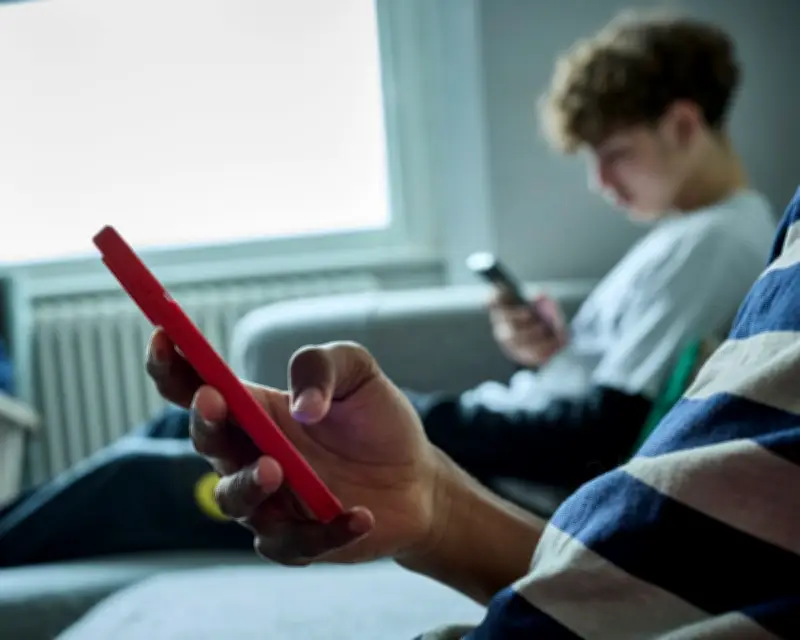
The UK government has announced a ban on social media for under-16s, including Instagram, TikTok, YouTube, Snapchat, Facebook and X, set to take effect from spring 2025. Additionally, livestreaming and stranger communication, even in gaming, will be switched off by default for 16- and 17-year-olds. The ban has sparked controversy and criticism since its announcement.
Teenagers Voice Their Opinions
We asked 16- and 17-year-olds across the UK for their thoughts on the forthcoming ban and restrictions. Here are some of their responses.
'The plan is flawed – it makes no sense'
Mia, 16, from Scotland, expressed frustration: 'I will finish school when I’m 17 and go to university when I’m 17, but wouldn’t be able to livestream? It makes no sense. If I can vote, leave home, get married, pay tax, and join the army, why can’t I use my phone how I would like? I relied on livestream revision sessions for my recent exams, and younger children in my school are worried this resource may not be available. People in rural areas could lose their connection to the world through platforms like TikTok. Using social media to build confidence and discover new hobbies will cease. I hope politicians realise the plan is flawed.'

'To suggest a digital curfew is laughable'
Robert, 16, from south-east England, said: 'While I recognise issues with social media, this seems rushed out as a political win rather than an evidence-based solution. No one should be scrolling Instagram until 3am, but to suggest a digital curfew is laughable. The government has no answers to any “how?” questions, only that this is “Australia plus”... Australia plus what, and how?'
'Kids should be banned, not teens'
Nate*, 16, from South Wales, disagreed with the ban: 'I don’t agree with entirely blocking social media for under-16s. It shouldn’t be our fault that the internet is unsafe; we should blame tech companies. I feel it should be kids under 13 who are banned, not teens. The curfews for 16- and 17-year-olds are utterly ridiculous. At this age, we can have sex. Why should we have a bedtime like babies? We are recognised as young adults, so this curfew isn’t right.'
'I think it will positively affect the young generations to come'
Hayley*, 16, from Shropshire, supported the ban: 'I don’t believe the ban is a bad thing. It has good intent to protect children from predators and addiction. If we can stop future generations from being addicted to social media, that’s great. Social media impacts mental health; we’ve seen a decline in young people’s mental health as social media has grown. Overall, the ban has good intent and will positively affect the young generation to come.'
'Teenagers will find a way around the ban'
Fraser, 17, from Edinburgh, welcomed the ban but doubted its effectiveness: 'I welcome a social media ban, though I’m sceptical. When I was younger, I got around parental controls with ingenuity. Teenagers will definitely find a way around the ban. It’s heartening to hear of the ban, but I’m highly sceptical of the government’s ability to do anything effectively. I hope this ban helps my younger siblings have a better start.'
'It could push young people to less regulated spaces'
Max, 17, from Wiltshire, warned of unintended consequences: 'Supply and demand don’t stop just because the prime minister says so. History shows that adding the allure of petty criminality makes actions more appealing. The ban could push people to less regulated places they wouldn’t have gone to before. Why did the government promise to “tread lightly” on our lives when it plans to increase the law on an already maligned group – teenagers?'
'Decisions about social media use should be made within families, not by government'
Leo, 16, from Cumbria, emphasised family autonomy: 'Many teenagers use social media for creative outlets, education, and support networks, not just entertainment. The ban raises questions about protecting young people versus restricting freedoms. I believe decisions about social media use should be made within families, not by the government.'

'Marginalised groups could miss out on online communities'
Owen, 17, from West Yorkshire, highlighted social benefits: 'I think I’d have been happier and less self-conscious without social media, and kids can do without it. But marginalised groups who struggle in public will be impacted since their friends can be largely online. I found online music communities enriching; we connected over shared love of bands. It would be sad for young people to miss out on those communities. While I don’t agree with a blanket ban, I agree there should be tighter controls on endless scrolling and content restrictions.'
'The ban punishes children, not the tech companies'
Alice*, 17, from Yorkshire, criticised the approach: 'I don’t support a blanket ban; it feels patronising. Some restrictions are needed, but more on companies than children. The ban punishes children rather than tech companies. The policy implies under-16s cannot be trusted with their free-time habits, which I disagree with. Treating social media as universally negative is reductive. For many, it’s not an addiction but something we genuinely enjoy. Online communities can be wholesome and supportive.'
*Names have been changed