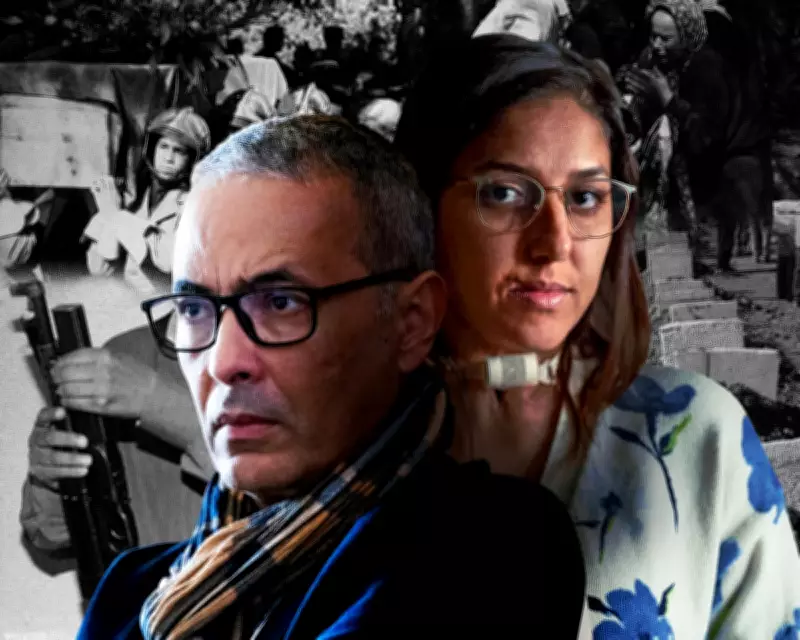
Goncourt Prize Winner Faces Legal Storm Over Alleged Story Theft
In November 2024, the prestigious Goncourt Prize, France's highest literary honor, was awarded to Kamel Daoud for his novel Houris. The ceremony, held in a traditional Paris restaurant, saw judges in dark suits toasting with wine, continuing a legacy that includes giants like Marcel Proust. Winning the Goncourt typically boosts sales by nearly €1 million and secures global recognition. However, Daoud's victory quickly turned controversial when Saâda Arbane, an Algerian woman, accused him of stealing her personal story for the book, leading to lawsuits in both Algeria and France.
A Novel That Touched a Nerve
Houris delves into Algeria's "black decade," the brutal civil war of the 1990s that left up to 200,000 dead. The novel follows Aube, a young woman who survives a throat-slitting massacre as a child, leaving her with a tracheostomy and a barely audible voice. Daoud's work was praised for giving voice to victims, especially women, in a period often silenced by Algeria's reconciliation laws, which restrict discussion of the war. The book was not published in Algeria, where the topic remains taboo and untaught in schools.
Saâda Arbane's Allegations
Eleven days after the Goncourt ceremony, Saâda Arbane appeared on Algerian television, revealing striking similarities between her life and Aube's character. Arbane, 30, survived a terrorist attack at age six that killed her family and left her with a throat scar and breathing apparatus. She claims Daoud learned her story through his wife, Dr. Aïcha Dehdouh, who was Arbane's psychiatrist. Arbane alleges that Daoud used confidential medical details without consent, leading her to sue for invasion of privacy and libel.
Her lawyers list over 30 parallels, including:
- Both are survivors of throat-slitting attacks with tracheostomies.
- Both were adopted by prominent figures (Arbane by a former health minister, Aube by a lawyer).
- Both own hair salons, love horses, and faced bullying for their voices.
- Even specific details, like scar length and apartment locations, match closely.
Arbane says reading the book left her feeling "betrayed and naked," with relatives claiming it "slit her throat a second time."
Daoud's Defense and Political Context
Daoud, an Algerian writer living in exile in France, denies the allegations, calling Aube a "pure fiction" inspired by multiple stories. He argues that Arbane's case is manipulated by the Algerian government to target him as a critic of the regime. Since 2019, Algeria has become increasingly repressive, with President Abdelmadjid Tebboune cracking down on dissent. Daoud points to international arrest warrants and harassment as evidence of state persecution, noting he missed his mother's funeral due to safety concerns.
In emails, Daoud emphasized the broader context: "The period is taboo; whoever talks about it risks going to jail." His lawyer, Jacqueline Laffont-Haïk, stated that legal submissions show Arbane's claims "go against reality," though no specific evidence was provided.
Broader Implications and Literary Ethics
The case raises profound questions about storytelling ethics: Who owns a personal narrative? Is it acceptable for a famous author to profit from a victim's trauma? These issues are compounded by power dynamics—Daoud is a celebrated male writer, while Arbane is a female survivor with a damaged voice. In France, the lawsuit has intertwined with Franco-Algerian diplomatic tensions, often overshadowing Arbane's individual plight. Critics like Elisabeth Philippe note that the debate quickly became politicized, blending with discussions on Islam and immigration.
Despite the controversy, Houris has sold over 450,000 copies, with English rights secured. The French legal case, led by lawyer William Bourdon, who won a similar privacy infringement case in 2011, continues. In Algeria, the lawsuit appears stalled, possibly awaiting the French outcome.
Reactions from the Literary Community
In Algeria, Daoud is a polarizing figure. Some, like critic Faris Lounis, accuse him of catering to French conservatives, while others, like former editor Sofiane Hadjadj, sympathize with his persecution but acknowledge it overshadows Arbane's story. Scholars like Tristan Leperlier critique Houris for relying on clichés, noting that many Algerian women have already written about the civil war.
Daoud's career, built on challenging norms—from rewriting Albert Camus in The Meursault Investigation to critiquing fundamentalism—now faces a test of integrity. In his book Sometimes, One Must Betray, he champions "plurality and wandering," yet the legal battle highlights the sacrifices demanded in storytelling. As Aube reflects in Houris, "I was an offering wondering what the point of its sacrifice had been"—a sentiment echoing in both the novel's themes and the real-life conflict it has sparked.