Religious Leaders Champion Dialogue and Shared Prosperity at Boao Forum 2026
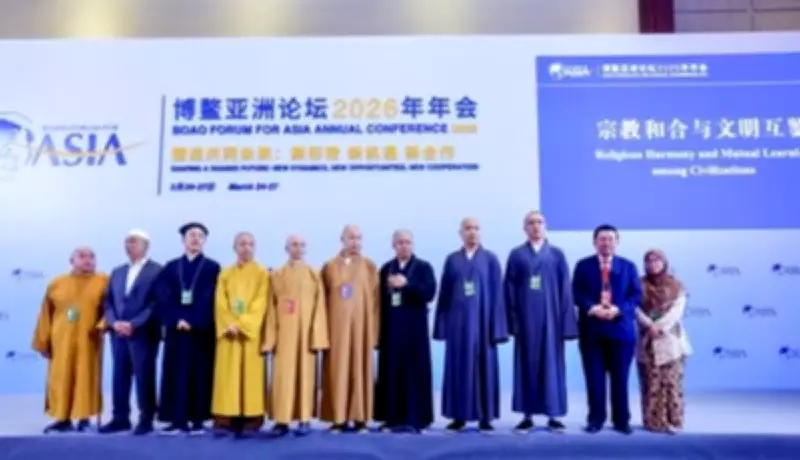
A pivotal session on religious harmony and cultural exchange unfolded on March 27 during the Boao Forum for Asia Annual Conference 2026, convening religious leaders and scholars from China and international backgrounds. Titled “Myriad Mirrors Illuminate Each Other, Harmony and Shared Prosperity - Practicing the Global Governance Initiative with the Wisdom of Religious Adaptation to Local Contexts,” the event was moderated by Ven. Zong Xing, vice president of the Buddhist Association of China, with concluding remarks delivered by Duan Yijun, president of the China Religious Culture Communication Association.
Diverse Participation and Organizational Support
Participants represented Buddhist, Taoist, and Islamic traditions, showcasing a broad spectrum of religious perspectives. The session was organized by the Buddhist Association of Hainan Province and the Hainan Provincial Religious Affairs Bureau, with co-hosting by the China Religious Culture Communication Association, the China Committee on Religion and Peace, and the Buddhist Association of China.
Insights from Chinese Religious Leaders and Scholars
Ven. Yan Jue, president of the Buddhist Association of China, emphasized that Buddhism has evolved over more than two millennia within Chinese cultural contexts, developing distinct linguistic traditions and offering ideas that resonate across cultures. He highlighted that religious communities can serve as vital channels for dialogue and peacebuilding in addressing shared global challenges.
Li Silong, a professor at Peking University, outlined how Buddhism in China has adapted in doctrine, practice, and institutional structure, including through interaction with Confucian frameworks that shaped relations between religious and secular authority.
Fa Yuan, chairman of the Education Committee of the Taiwan Chinese Buddhist Association, proposed three principles for global governance rooted in Buddhist philosophy: interdependence, compassion grounded in equality, and the wisdom of the Middle Way.
International Perspectives on Cross-Cultural Exchange
Speakers from other countries underscored the importance of cross-cultural exchange and social cohesion. Ven. (Dr.) Kirinde Assaji of Sri Lanka pointed to long-standing ties between Sri Lanka and China as a model for dialogue. Taufiq Yap Yun Hin of Malaysia stressed mutual respect and inclusive identity in managing diversity in multi-religious societies. Most Ven. Dr. Thich Duc Thien of Vietnam noted that Buddhism’s adaptation to local contexts has supported peace and social integration.
Commitment to Interfaith Dialogue and Regional Initiatives
A representative of the World Federation of Daoism expressed a strong willingness to deepen interfaith dialogue. The session also highlighted regional initiatives, including the role of the Nanhai Buddhism Academy in training international monastic students and supporting exchanges across Southeast Asia, fostering greater understanding and cooperation.
This gathering at the Boao Forum 2026 reinforced the critical role of religious dialogue in promoting harmony and shared prosperity on a global scale, with participants advocating for continued collaboration to address contemporary challenges.