I feel my blood run cold as the black mamba snakes through the shrubbery at a tremendously alarming speed. It is several metres long and possesses enough venom in a single bite to kill a human in as little as twenty minutes. 'You are not scared, are you?' my driver teases with a smirk. 'Surely not, a big strong man like you?' We only met an hour ago, but we have already bonded in the way I often do with fellow members of the LGBT+ community.
As part of my mission to find Pride around the world, I am here in South Africa for the celebrations in Pretoria. But because no trip to the Rainbow Nation would be complete without a safari expedition, I stop off at Last Word Kitara, one of the many safari lodges that proudly welcomes LGBT+ guests. From the very beginning I am made to feel welcome. This was supposed to be my driver's day off, but when she heard I was coming, she requested to work it anyway. As a queer woman, she is passionate about LGBT+ representation, and she wants the world to know that queer life extends far beyond South Africa's big cities.
As we drive through the wilderness of Greater Kruger National Park, we talk about our respective love lives and she proudly shows me photos of her son who works as a local drag queen. Queer life is everywhere, even in the savanna. That extends to the animal kingdom, too. We take a sharp turn off-road, as a voice over the radio alerts us to a nearby pride of lions. Call it nominative determinism, but they are also a fascinatingly queer species. Lions are famously known to engage in homosexuality, and there have been documented cases of transgender lions, too. At least sort of. The ranger explains that sometimes, when a pride loses their patriarch, a lioness will take over, grow a mane, and develop a deeper roar. It is another fascinating example that debunks the idea that LGBT+ identities are not natural. They have been documented in over 1,500 species, from the depths of the rainforests to the bottom of the ocean.
But as interesting as all of that is, the real story here does not lie with the nation's rainbow animals. Rather, with its rainbow politics. After apartheid ended in 1994, South Africa adopted what is widely considered to be the world's most progressive constitution. In reality, there is still widespread inequality – particularly when it comes to racial segregation – but if there is one place where the country does surprisingly excel, it is in terms of LGBT+ rights. Their constitution was the first in world to explicitly prohibit discrimination based on sexual orientation which became the backbone for further queer progression. South Africa quickly became the 5th country in the world to legalise same sex marriage which is especially impressive when you consider the fact that most of the countries across the wider continent still carry anti-LGBT+ laws.
This is why attending pride here is so important. In the majority of African countries, Pride simply does not exist. And where it does, it is often considered an illegal protest, rather than a celebration. Even in progressive countries there are still barriers. Botswana, for example, has an incredibly positive track record when it comes to LGBT+ rights, and yet in 2025 they were forced to cancel their pride celebrations due to lack of funding. South Africa, however, is famous for its pride celebrations, and a popular destination for LGBT+ travellers as a result. This makes sense, as a study from Booking.com shows that 63% of LGBT+ travellers believe that being able to be their authentic self is one of the most important factors when booking a trip.
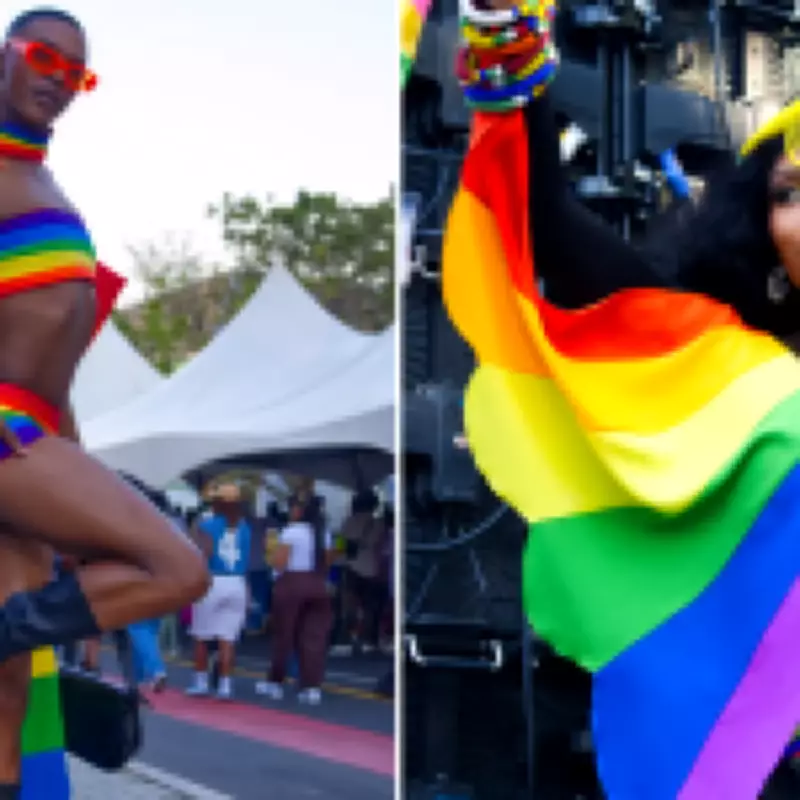
Prides like Johannesburg and Durban are already known as being some of the best celebrations in the world, and Cape Town was recently announced as the host of World Pride in 2028. Soweto Pride is worth mentioning, too, for their commitment to carving out a space for Black queer women especially. Pretoria Pride, however, was an event I knew very little about. Historically it is not a pride that has been given much of the spotlight. But for the local community, the party inside the The Centurion Rugby Club is one of the most important events in the calendar.
'Today we gather not only in joy, but in gratitude,' Reverand Abe Pieterse opens the celebrations by leading us in prayer. 'Gratitude for the courage of those who came before us, for the beauty of who we are, and the diversity that reflects in all of us.' LGBT+ and religious communities are so often pitted against one another, so in a country where religion is so heavily observed and celebrated, it feels powerful to marry the two together. Having a religious leader speak so openly and freely gives permission for both sides to accept one another for who they are. There is no reason why religion and queer identity cannot go hand in hand, and Pretoria pride is a celebration of that.
There is everything from gospel performances from the Johannesburg queer chorus, to a diverse selection of musicians and drag queens from right across the country. Feasts of homemade dishes are pulled out of coolers and piled high on the picnic tables, people of all ages coming together to laugh and play games and bond over good food. Everyone gathers in the way you might expect families to on a Sunday afternoon. Except here family is chosen, and these relationships go deeper than blood.
As the sun goes down, a group comes together in traditional dance. It is something that happens naturally. It starts off small, with just a few people, and before I know it, the whole rugby ground is moving together as one. They invite me to join them, and as I clumsily try not to fall over my own feet, I feel just as welcomed as if I were at a pride event in my home country. Here, everyone is family.
Getting there: Virgin Atlantic flies direct from London to Johannesburg from £566 return. Pretoria is a 30-minute drive from the airport. LGBT+ Inclusive Safari: Pretoria serves as a gateway city to Greater Kruger National Park, one of Africa's largest game reserves. Last Word Kitara is an LGBT+ inclusive safari lodge that is proud to welcome queer guests. They have also recently become a Travel Proud property by completing Booking.com's free LGBT+ inclusivity training.